Photo: Alexis Lours · CC BY 4.0
Common moorhen
Gallinula chloropus
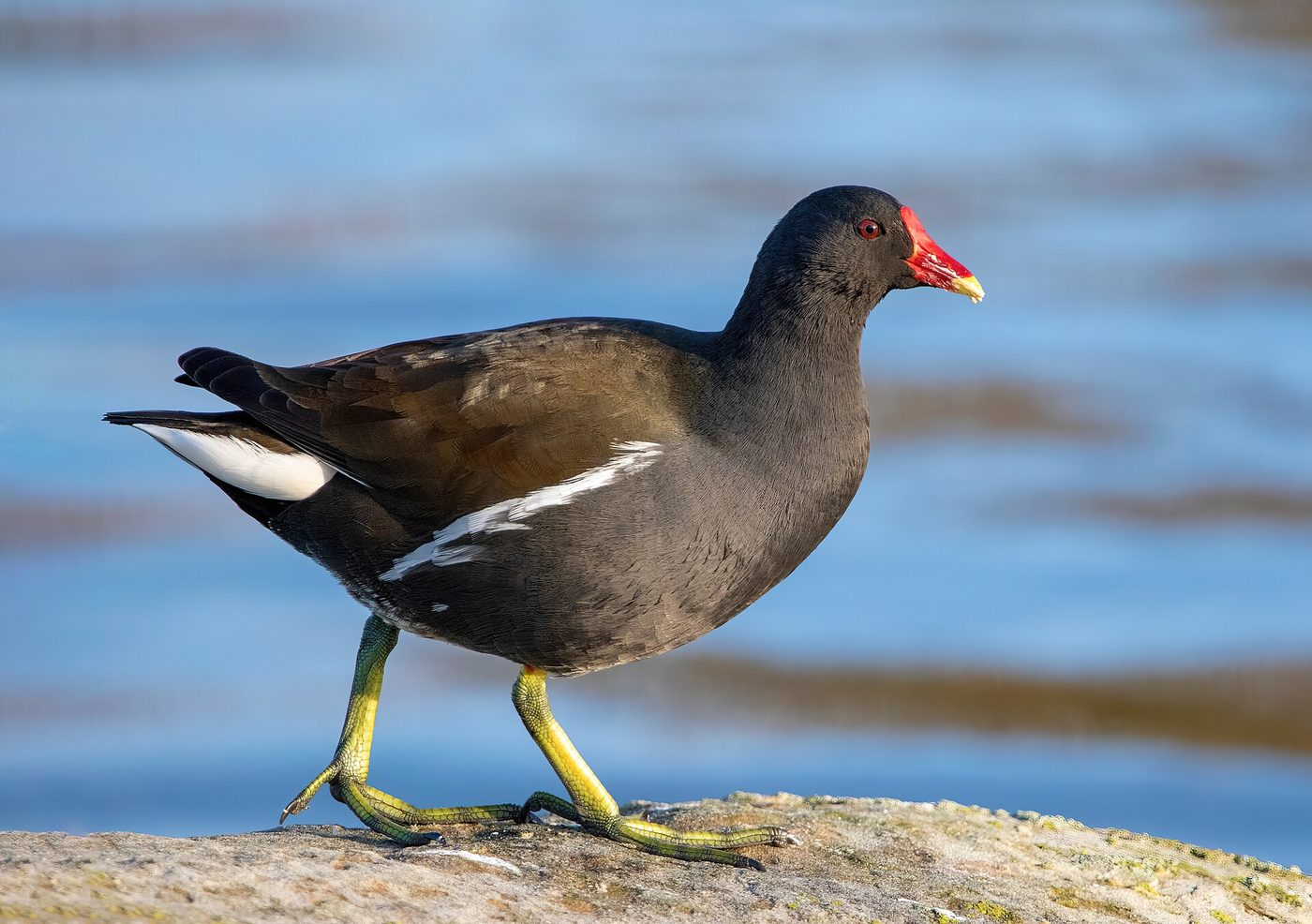
The common moorhen is a dark-plumaged waterbird, recognisable by its red, yellow-tipped bill and bright red frontal shield.
Characteristics
Temperament
Aquatic, shy, adaptable
Diet
Omnivore: aquatic plants, seeds, insects and invertebrates
Description
The common moorhen is a waterbird of the rail family, about the size of a pigeon. It has dark plumage, slate-grey and brown, with a white line along the flanks and white under the tail, clearly seen as it swims with its tail cocked. Its most striking feature is the bright red bill with a yellow tip, extending into a red frontal shield on the forehead. Its long greenish legs end in slender toes.
Habitat and distribution
It is widespread across much of Europe, Asia and Africa. It lives in all kinds of well-vegetated wetlands: ponds, small lakes, canals, ditches and slow watercourses, even in city parks. It is a highly adaptable and common bird.
Behaviour
It swims with a typical jerky bobbing of the head and walks over floating vegetation thanks to its long toes. It is omnivorous, feeding on aquatic plants, seeds, insects, molluscs and small invertebrates. It is rather shy and, at the slightest danger, quickly hides among the reeds. It builds its nest among vegetation, on or just above the water.
Did you know?
Despite its name, it is not related to hens: it belongs to the rails, like the coot. The young of the first brood often help their parents raise the chicks of later broods.
Conservation
It is classed as least concern and is very common and widespread. It benefits from wetlands with vegetated banks; the draining of marshes and water pollution can threaten local populations.
(Note: the mass value given by Wikidata, 348 kg, is clearly wrong: the moorhen actually weighs about 250–400 grams.)
Pros
- Highly adaptable, common even in parks
- Easy to observe near water
- Useful in controlling insects and weed seeds
Cons
- Sensitive to the draining of wetlands
- Affected by water pollution
- Shy, hides at the slightest disturbance