Photo: Taka · CC BY-SA 3.0
Common toad
Bufo bufo
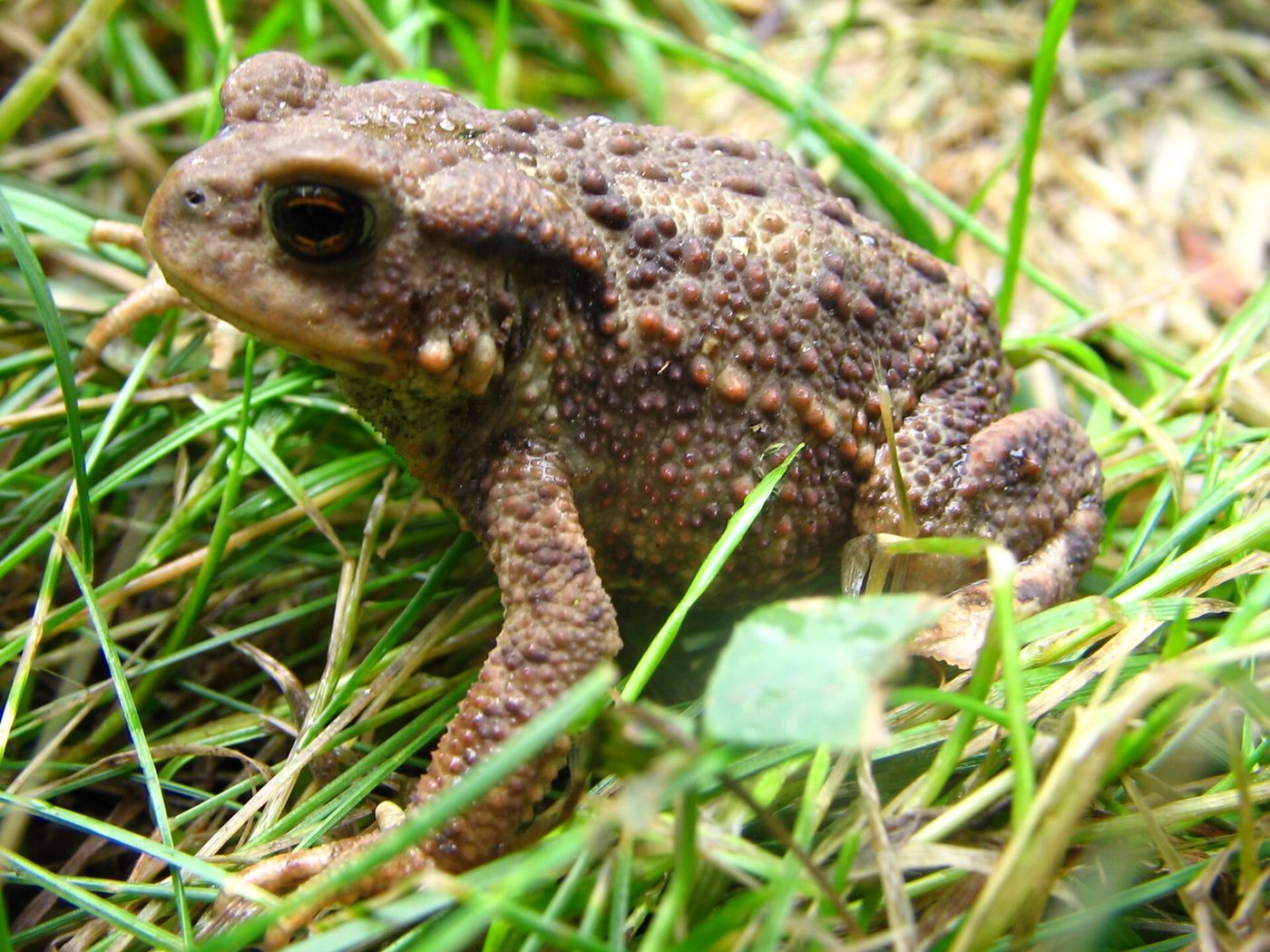
Squat, warty and golden-eyed, the common toad is a tireless devourer of insects and one of the most valuable nocturnal allies of the vegetable garden.
Characteristics
Temperament
Nocturnal, slow and terrestrial outside the breeding season. It does not flee by jumping: it relies on camouflage and the defensive secretions of its glands.
Diet
Carnivore: insects, snails, slugs, earthworms and other small invertebrates, caught with the sticky tongue.
An amphibian of robust build
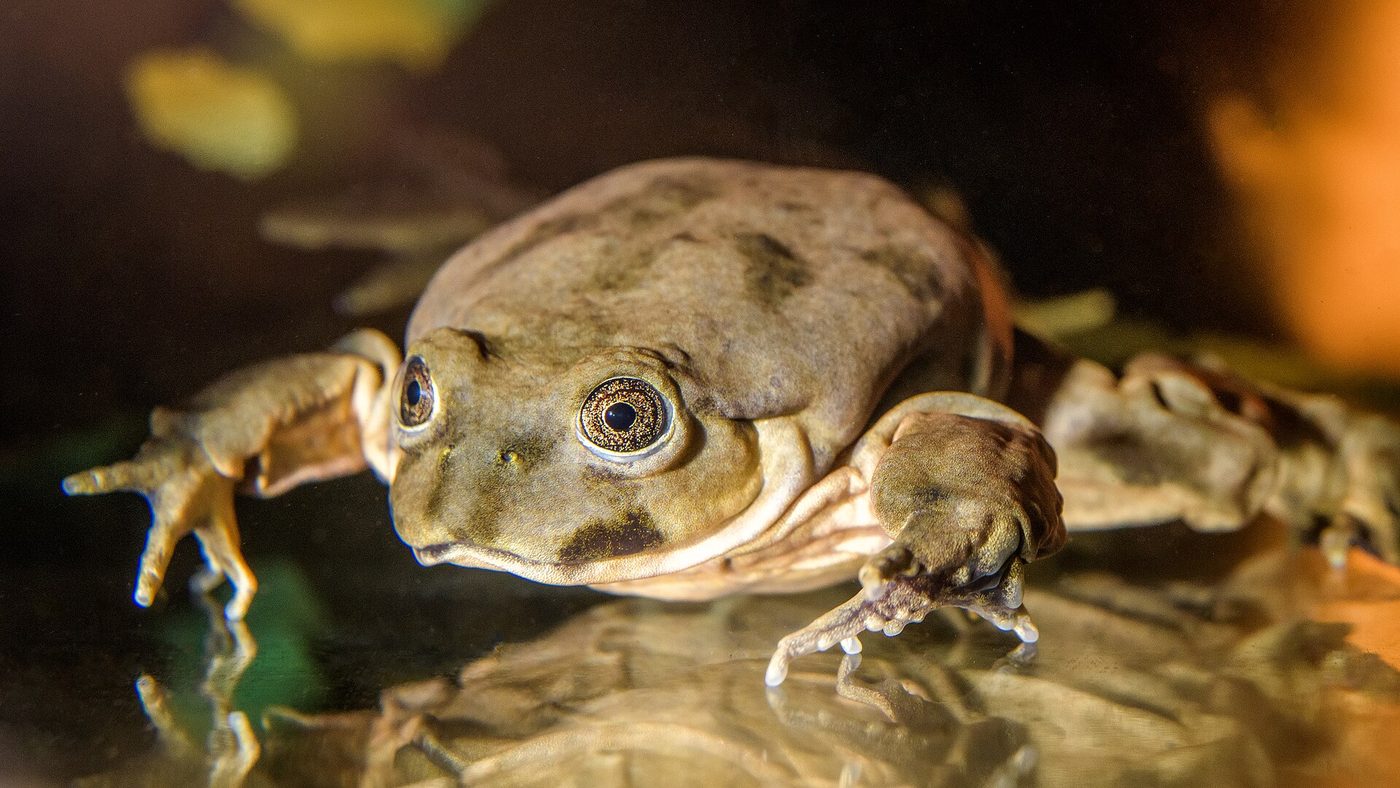
The common toad is one of Europe's largest and most widespread amphibians. It has a squat, massive build and dry skin covered in warts, brown, grey or olive in colour, which camouflages it perfectly on the ground and among dead leaves. Its large, protruding eyes have an iris of a fine copper or gold with a horizontal pupil. Behind the eyes are two large glands, called parotoids, which secrete defensive substances.
Unlike frogs, the toad does not leap nimbly: it moves with a slow, clumsy walk or in small hops, relying on chemical defence rather than flight.
Where it lives
The common toad is extremely adaptable and lives in a great variety of terrestrial habitats: woods, meadows, hedgerows, cultivated fields, parks and gardens. Outside the breeding season it is a mostly terrestrial animal, sheltering by day under stones, logs and in the leaf litter, emerging to hunt with the cover of night and damp.
The great spring migrations
One of the most fascinating spectacles tied to this species is the breeding migration. In spring, thousands of toads set off together towards the ponds where they were born, sometimes covering long distances. During these journeys they often cross roads, which unfortunately makes them frequent victims of traffic: in many areas barriers and protected crossings are set up to help them.
An ally of the garden
The common toad is a voracious nocturnal predator of insects, snails, slugs, earthworms and other small invertebrates. It catches prey with a swift flick of its sticky tongue. This diet makes it a valuable natural helper in controlling the pests of vegetable plots and gardens, which is why its presence should be encouraged.
Conservation
The common toad is listed as least concern, but its populations suffer from the loss and pollution of wetlands, agricultural intensification and above all road mortality during migrations. Protecting ponds and creating safe crossings are important measures for its conservation.