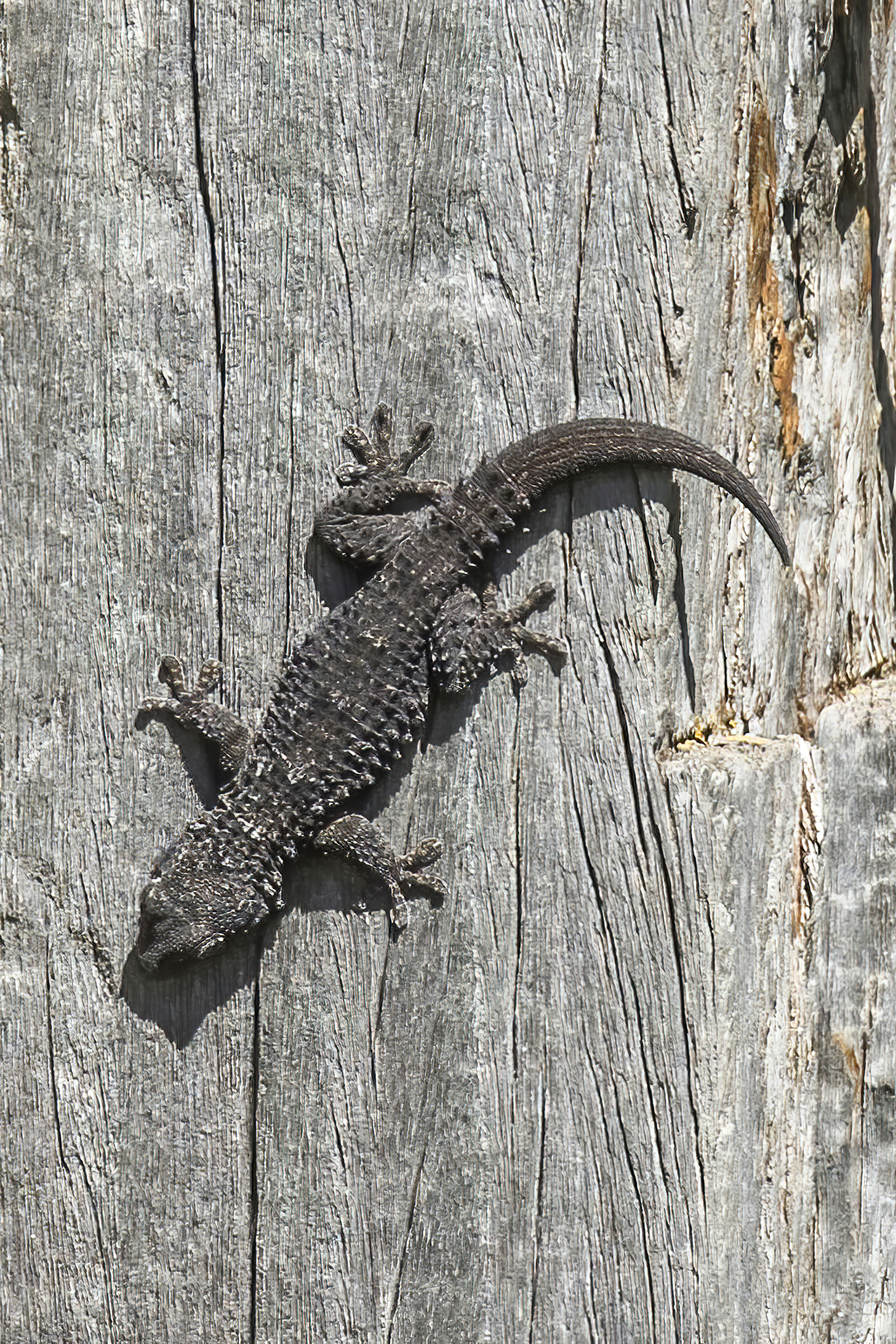
Common Wall Gecko
Tarentola mauritanica
Characteristics
Temperament
A small nocturnal reptile, solitary and territorial, yet extraordinarily tolerant of human proximity. Shy and camouflaged by day, in the evening it becomes an active hunter by the lights. Males defend their stretch of wall and can make calls. Not a "cuddly" animal — it should not be handled — but completely harmless, useful and fascinating to watch. In a terrarium it needs heat, vertical shelters and live prey, but it remains a wild creature, not a tame one.
Diet
A nocturnal and crepuscular insectivore. It hunts moths and night butterflies, mosquitoes, flies and other dipterans, beetles, spiders, crickets and various small arthropods, occasionally larger prey within reach. It lies in wait motionless by streetlamps and outdoor lamps, exploiting the "restaurant" that light creates for insects, and catches prey with a lightning strike. Because of this diet it is a valuable, free ally against mosquitoes and pesky insects around houses.
The Common Wall Gecko (Tarentola mauritanica), also known as the Moorish gecko, is the house gecko of the western Mediterranean: the small reptile that appears motionless on walls in summer, beside the lamps, hunting insects. Famous for:
- Adhesive toe pads: feet fitted with special lamellae that let it climb smooth, vertical surfaces and even walk upside down on ceilings
- Large lidless eyes: protected by a fixed transparent "lens", with a vertical pupil, adapted to nocturnal life
- "Spiny" skin: grey-brownish, covered in raised tubercles that give it a rough, camouflaged look
- Its bond with human homes: it readily lives on walls, façades and ruins, and is one of the most "domestic" of wild reptiles
- Usefulness: by devouring moths, mosquitoes and other nocturnal insects, it is a valuable, free ally against summer nuisances
- Its voice: unlike almost all reptiles, it can make small calls and squeaks
IUCN status: Least Concern (LC), common and widespread. It is the first gecko in this portal and opens the Geckos group: alongside lizards, chameleons, agamas, iguanas and monitors, it represents one of the most fascinating and successful reptile families, that of the small nocturnal climbers with "magic" toes.
Classification and category
Order Squamata (the scaled reptiles, including lizards and snakes), suborder of the saurians, family Phyllodactylidae (it was once classified among the Gekkonidae, the geckos in the strict sense), genus Tarentola. It is one of the largest and sturdiest geckos in Europe. Geckos are a large grouping of reptiles easily recognized by some unique traits: adhesive toe pads (lamellae), absent in ordinary lizards; eyes without movable eyelids, covered by a fixed transparent scale; the ability to vocalize, very rare in other reptiles; and largely nocturnal habits. Not to be confused with true lizards (usually diurnal, with lidded eyes and feet without adhesive pads), already present in the portal in the Lizards group. Etymology: the genus name "Tarentola" and the common Italian "tarantola" come from the city of Taranto — the same origin as the "tarantula" spider — which for centuries fuelled the false belief that the gecko was venomous; "mauritanica" means "of Mauretania", the ancient Roman province of North Africa. Parameters: Total length up to about 15 cm including the tail (body 7-8 cm). Weight a few grams (about 5-12 g). Size small, but among the largest geckos in Europe. Longevity remarkable for such a small animal — commonly 5-8 years, with cases exceeding 10. Reproduction: oviparous; the female usually lays 1-2 hard-shelled eggs, sometimes twice a year, hidden in cracks in walls and rocks.
Habitat and distribution
The Common Wall Gecko is a typically western Mediterranean species: the Iberian Peninsula, southern France, Italy (including most of the islands), and the north-western coasts of Africa (the Maghreb). It has also been introduced to various other regions of the world (the Americas included). Preferred habitats: rocky, sunny environments (rock faces, dry-stone walls, quarries, cliffs); human structures (it is a markedly synanthropic species, preferring walls, façades, ruins, fences and the inside or outside of houses); and near light sources (at night it gathers by streetlamps and outdoor lamps, where insects abound). It is a thermophilic, heat-loving animal: by day it may bask hidden in a crevice, while at night it comes out to hunt. In colder regions it spends the winter in dormancy (a kind of hibernation), sheltering in wall cracks. Its extraordinary ability to live in close contact with humans makes it one of the most familiar and widespread reptiles of the Mediterranean. IUCN: Least Concern. A common, adaptable species, in some areas even expanding, partly thanks to accidental introduction into new territories.
Diet
The Common Wall Gecko is an insectivorous predator active mainly at night and dusk. It eats: moths and night butterflies, attracted to lights; mosquitoes, flies and other dipterans; beetles, spiders, crickets and various small arthropods; and occasionally larger prey within its reach (even small geckos). Hunting strategies: ambush by lights (it stations itself motionless near a lamp and waits for insects to pass within range, exploiting the "restaurant" created by human lighting); the lightning strike (it catches prey with a quick lunge and its mouth); and nocturnal patience (it alternates long waits with short moves, blending in with the substrate). Crucially, because of this diet the gecko is a valuable, free ally of humans. Keeping moths and especially mosquitoes in check around houses makes it a summer guest to welcome, not to chase away.
Physical features
A small reptile with a stocky, flattened, "spiny" look. Body and skin: grey-brownish colouring, variable, able to lighten or darken to camouflage and thermoregulate; skin covered in raised tubercles (the characteristic "studs"), giving it a rough look; a flattened body and sturdy legs, ideal for clinging to surfaces. The head and eyes: a broad, flattened head; large eyes without movable eyelids, protected by a fixed transparent scale (which it cleans by licking with its tongue) and fitted with a vertical pupil. The "magic" toes: expanded toe pads bearing adhesive lamellae — millions of microscopic setae exploit weak adhesive forces (van der Waals forces) that let it cling even to glass; and small claws on the toes. Performance: extreme climbing (it scales smooth walls and walks upside down on ceilings); caudal autotomy (it can voluntarily shed its tail to escape predators, then regrows it, stubbier and different); and vocalization (it makes squeaks and calls, rare among reptiles).
Behaviour and curiosities
The Common Wall Gecko is a solitary, nocturnal, territorial animal. Males defend their stretch of wall or rock from rivals, and in spring-summer it is easy to hear their calls on warm nights. Though wild, it has learned to live with humans like few other reptiles, becoming a familiar presence of many Mediterranean summers.
Toes that defy gravity: the gecko's "superpower" lies in its toe pads — each toe is covered in lamellae bearing millions of tiny filaments called setae, themselves branched into even smaller structures; this huge number of contact points exploits the weak molecular van der Waals forces, summing them to support the animal's weight, which is why the gecko can stay stuck to glass or walk on the ceiling; this natural "dry glue" is studied by engineers to create bio-inspired adhesives and materials. The spare tail: like many lizards, the gecko practises autotomy — it can deliberately shed its tail when seized by a predator; the shed tail keeps moving for a few moments, distracting the attacker and giving the gecko time to flee; the tail then regrows, but usually with a slightly different shape and colour, as it is supported by a cartilaginous structure. The reptile that "talks": unlike most reptiles, which are silent, geckos are noted for their ability to vocalize; the wall gecko can make small squeaks, clicks and shrill calls, especially during interactions between individuals or when disturbed — a surprising behaviour that adds to these animals' "different" charm. The scary name: the scientific name "Tarentola" and the Italian "tarantola" come from the city of Taranto, the same origin that named the tarantula spider; this association, together with its unusual look, for centuries fuelled the false, widespread belief that the gecko was venomous or dangerous; in reality the Common Wall Gecko is completely harmless to humans — not venomous, it does not bite unless handled, and its presence indoors is actually a benefit. The always-open eyes: the gecko has no movable eyelids; its eyes are protected by a fixed transparent scale, a kind of permanent "contact lens" that keeps the eye always open; to clean it of dust, the gecko uses its tongue, periodically licking its eye — a curious, typical gesture; the vertical pupil, able to narrow to a slit, protects it from bright light and helps it see well even at night. The household good-luck charm: in many parts of the Mediterranean the gecko is now considered, contrary to the old negative superstitions, a welcome and even auspicious guest; seeing it appear on the wall on summer evenings is a sign that the warm season has arrived, and its silent work against mosquitoes and pesky insects has made it, for those who know it, a small, welcome guardian of homes.
Pros
- Alleato gratuito contro zanzare, falene e insetti molesti d'estate
- Del tutto innocuo per l'uomo (non velenoso, non aggressivo)
- Resistente e adattabile; IUCN Least Concern, comune e diffuso
- Affascinante da osservare: si arrampica sui vetri e cammina sui soffitti
Cons
- È un animale selvatico, non va maneggiato (può perdere la coda per stress)
- In terrario richiede calore, UV moderati, ripari verticali e prede vive
- Notturno: di giorno resta nascosto e poco visibile
- Vittima di pregiudizi infondati (falsa fama di velenosità)