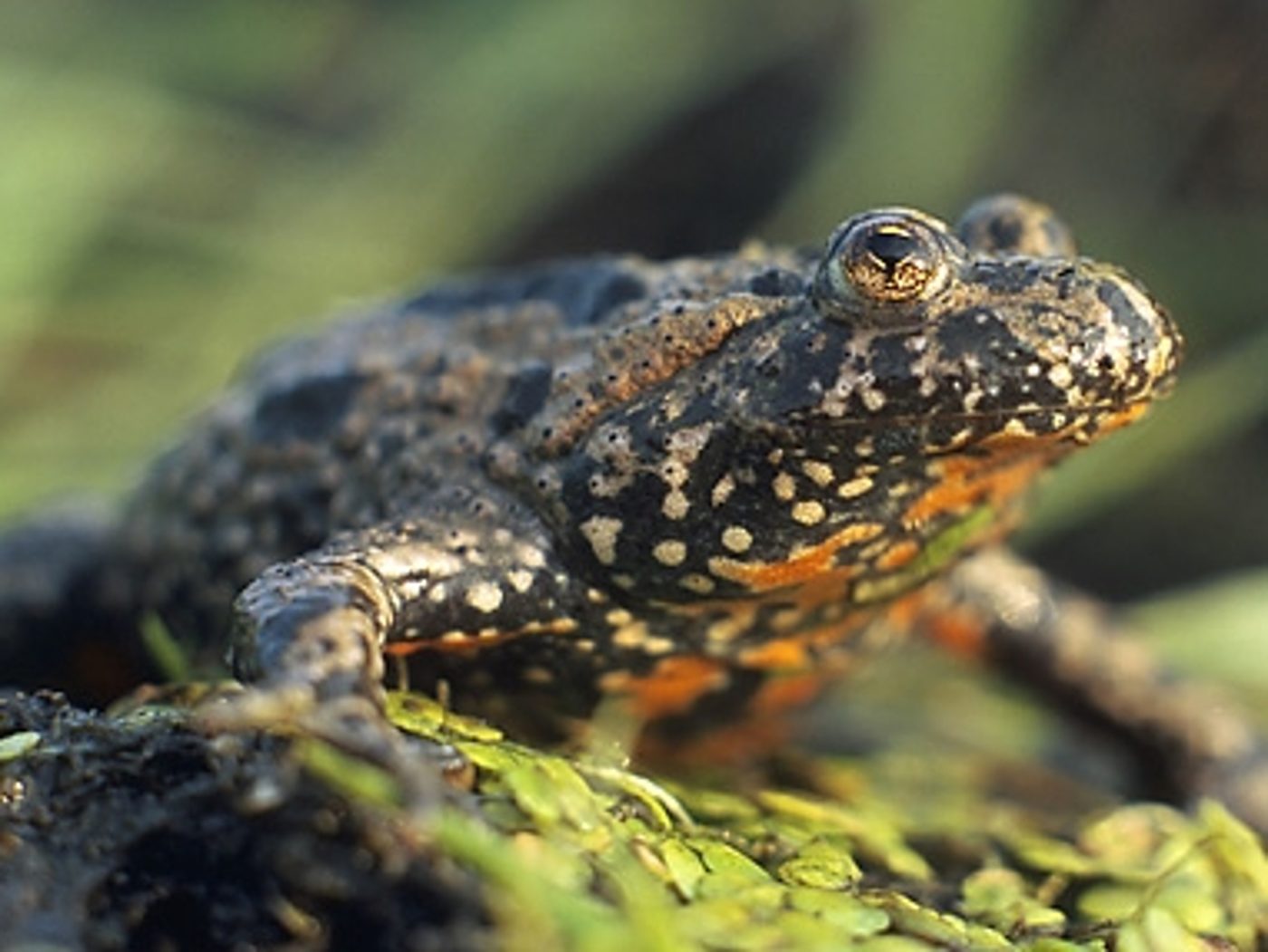
Photo: Marek Szczepanek · CC BY-SA 3.0
European fire-bellied toad
Bombina bombina
A small European amphibian with a camouflaged back and a fire-red belly, the European fire-bellied toad flashes its bright underside to warn off predators.
Characteristics
Temperament
Aquatic, active by day and night, melodious call
Diet
Carnivore: insects, worms, small invertebrates
An amphibian with a fiery belly
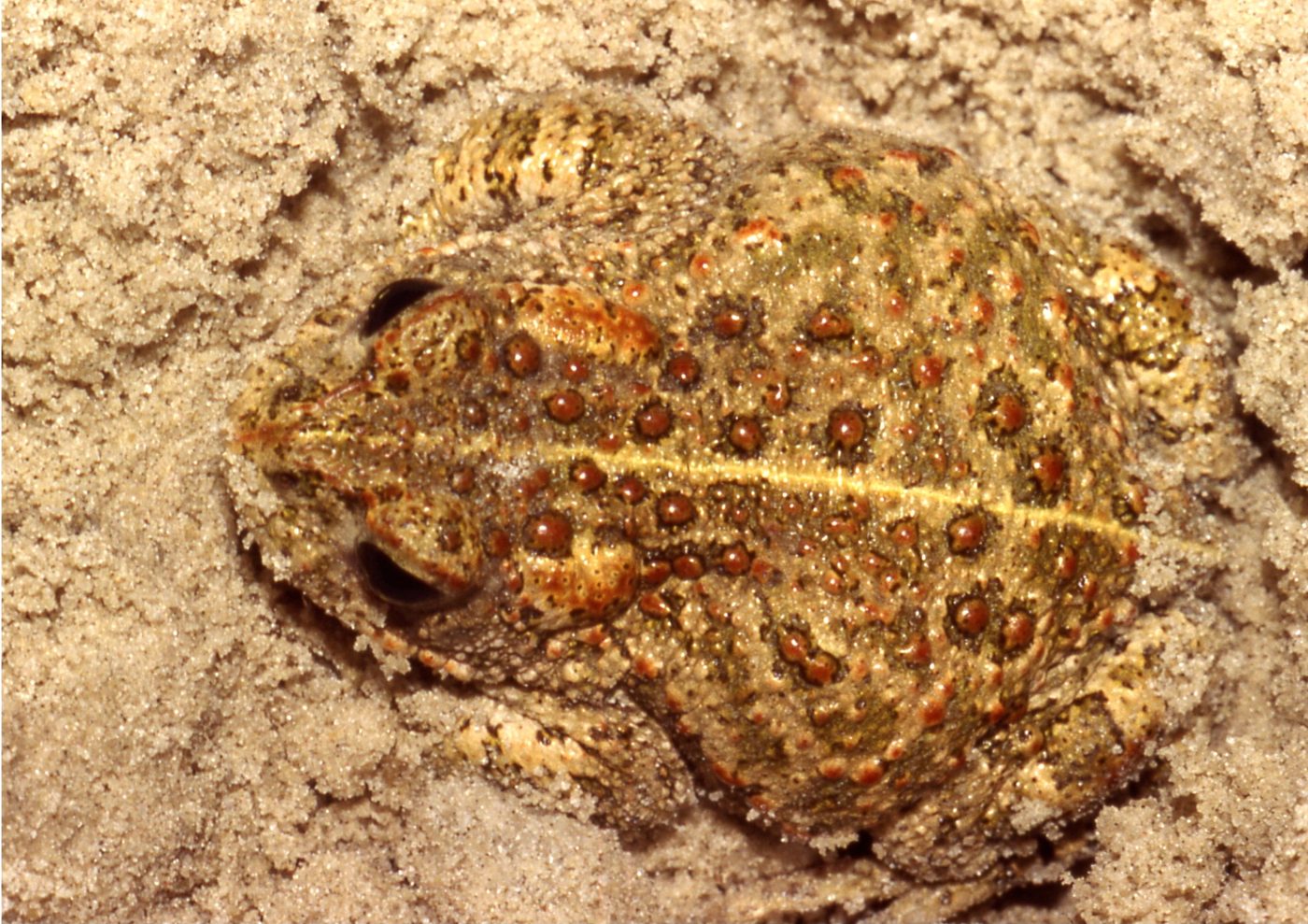
The European fire-bellied toad is a small, squat anuran only a few centimetres long, with warty skin and a grey-brown or greenish back that blends perfectly into mud and aquatic plants. Its most famous feature is hidden underneath: the belly is mottled with bright red-orange on black. When threatened, the animal arches its body and lifts its limbs to show off these vivid colours — a clear warning signal (aposematism) that reminds predators of the unpleasant taste and toxic secretions of its skin.
Habitat and distribution
It lives in central and eastern continental Europe, favouring lowland areas with pools, ponds, marshes and shallow, sunlit still waters. It is closely tied to water and spends much of the warm season there.
Behaviour
On spring and summer evenings the males give a distinctive, melodious, repeated call, a "whoop… whoop…" that gives the animal its name and rings out in chorus from the water. It feeds on insects, worms and other small invertebrates. In winter it leaves the water and shelters on land, overwintering hidden in the ground.
Curiosities
The "boat posture" (unkenreflex) in which it arches its back and limbs to display its belly is a behaviour typical of the fire-bellied toads. Where its range overlaps with the yellow-bellied toad, the two species can hybridise.
Conservation
The IUCN lists the species as Least Concern, but in many regions it is declining due to the drainage of wetlands, intensive agriculture and water pollution. Conserving small lowland pools is essential to its survival.
Pros
- Spectacular warning red belly
- Distinctive melodious chorus call
- Indicator of wetland health
Cons
- Declining due to wetland loss
- Irritant skin secretions: not to be handled
- Depends on well-preserved pools and ponds