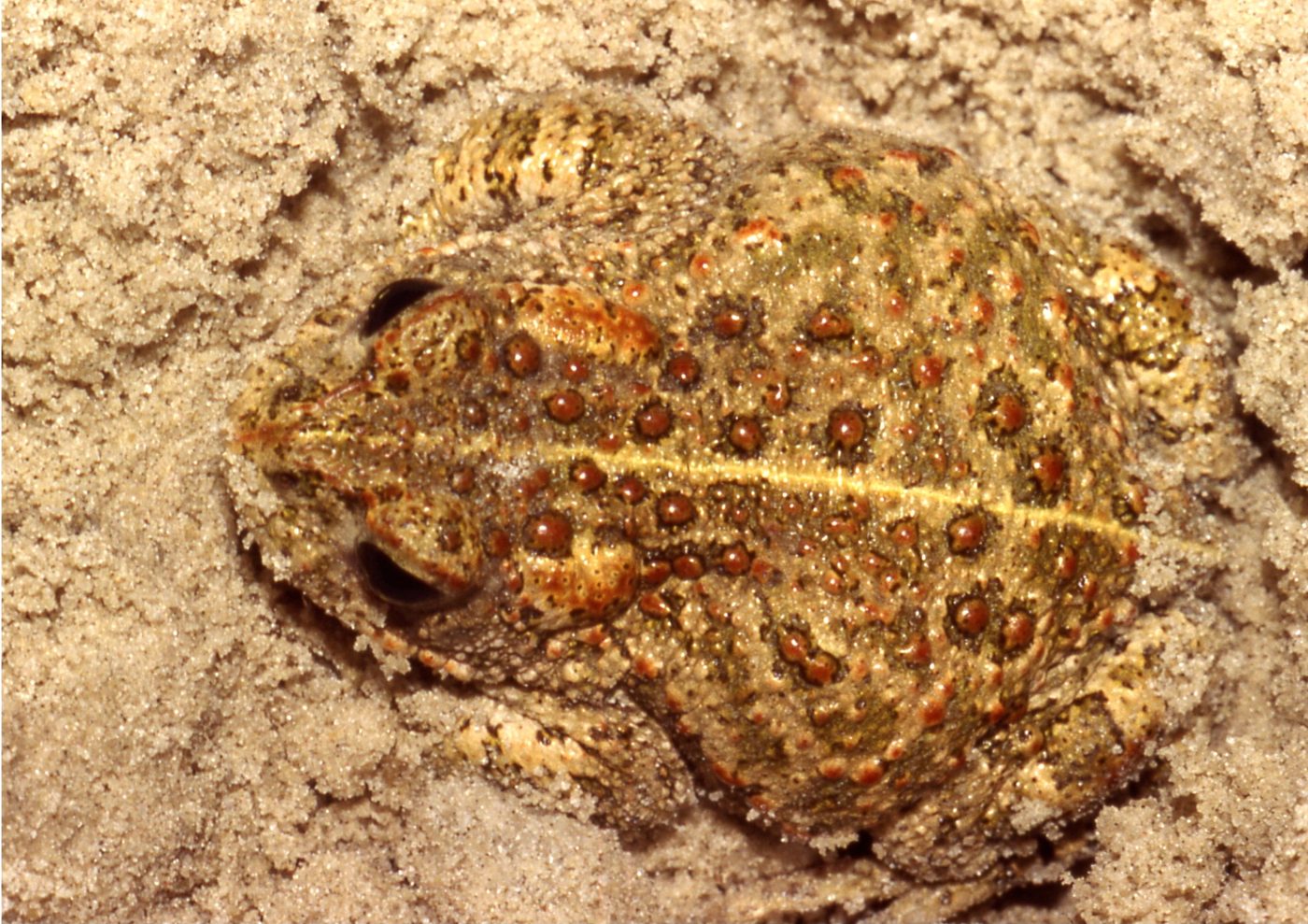
Photo: Christian Fischer · CC BY-SA 3.0
Natterjack toad
Epidalea calamita
The natterjack toad is a small amphibian with a distinctive yellow stripe down its back, which runs instead of hopping and calls loudly on spring nights.
Characteristics
Temperament
Nocturnal, terrestrial, runner
Diet
Insects and small invertebrates
Description
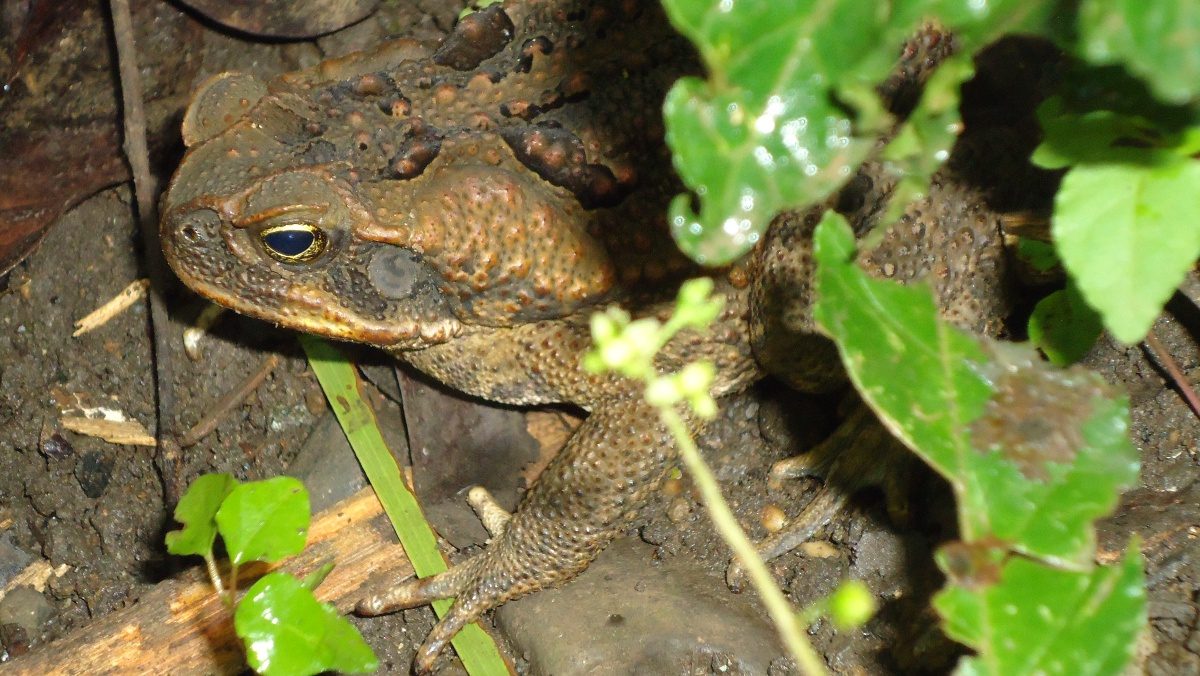
The natterjack toad is a small anuran amphibian of the toad family, the only species in its genus. Adults measure about 6-7 centimetres. It has a stocky, very warty body, greyish-brown or olive in colour, and is distinguished from the common toad by a clear yellow or pale-green stripe running down the middle of the back. It has relatively short legs, which give it a characteristic gait: it walks and runs instead of hopping, as many other toads do.
Habitat and distribution
It occurs across much of western, northern and central Europe. It favours sandy, open, warm habitats: dunes, heaths, quarries, gravel beds and disturbed ground. It is highly adaptable and survives even in fairly dry areas, provided it has temporary pools in which to breed.
Behaviour
It is mainly nocturnal and terrestrial. On spring nights the males utter a powerful, vibrating call, among the loudest of European amphibians, which carries a great distance to draw females to the breeding pools. It feeds on insects and other small invertebrates. It breeds in shallow, temporary waters, often poor in predators.
Did you know?
Unlike most toads, which move in small hops, the natterjack runs nimbly over the ground, giving it its name and its unmistakable gait. The powerful chorus of calling males is one of the characteristic sounds of heathland nights.
Conservation
It is classed as least concern globally, but is protected in many European countries. It depends on open sandy habitats and temporary pools; drainage, urbanisation and the closing over of open habitats locally threaten its populations.
Pros
- Runs instead of hopping, a unique gait
- Powerful call, among the loudest of amphibians
- Highly adaptable, tolerates dry habitats
Cons
- Depends on sandy habitats and temporary pools
- Protected: must not be disturbed or caught
- Locally threatened by drainage and urbanisation