Photo: Peter Paplanus · CC BY 2.0
Tiger salamander
Ambystoma tigrinum
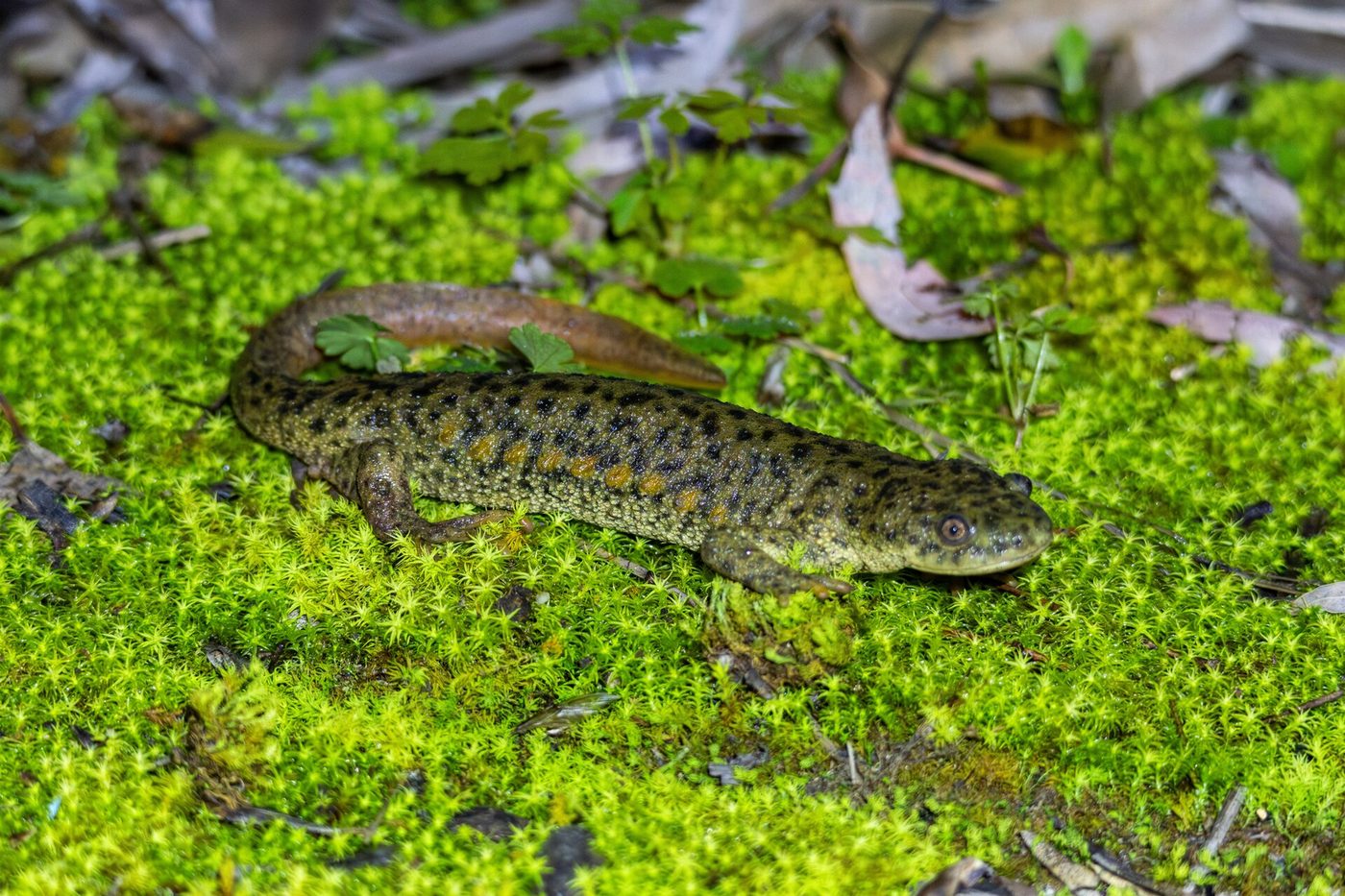
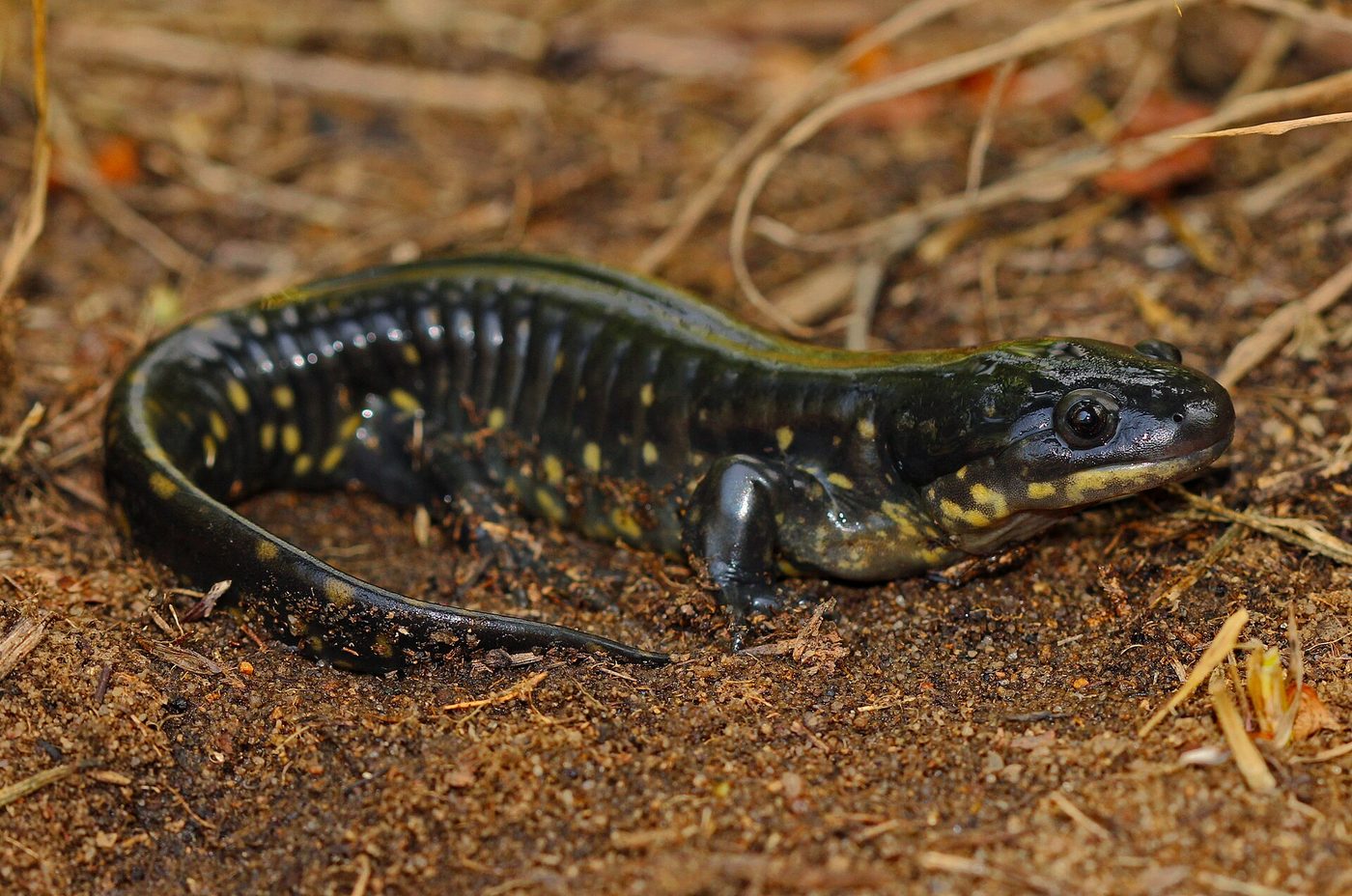
One of the largest terrestrial salamanders in North America, the tiger salamander is named for its bold yellow blotches on a dark ground and lives mostly underground.
Characteristics
Temperament
Nocturnal, burrowing, shy
Diet
Carnivore: worms, insects, snails, invertebrates
A salamander with tiger markings
The tiger salamander is among the largest terrestrial salamanders in North America, reaching over 30 centimetres in length. Its body is stout, with a broad head and small eyes, and it wears an unmistakable livery: yellow-olive blotches and bars on a brown or blackish ground, a pattern reminiscent of a tiger and the source of its name. It belongs to the mole salamander family (Ambystomatidae), the same as the axolotl.
Habitat and distribution
It lives across much of temperate North America, in very varied habitats — grasslands, woods, fields — as long as there is soft soil to dig in and pools or ponds for breeding. It is closely tied to an underground life.
Behaviour
Like other mole salamanders, it spends most of its life hidden in burrows and tunnels it digs in the ground, emerging mainly on damp, rainy nights. It feeds on worms, insects, snails and other small invertebrates. In spring it moves to pools to breed, where it lays its eggs; the aquatic larvae, with external gills, develop until metamorphosis.
Curiosities
Under some conditions the larvae may not complete metamorphosis and remain aquatic while becoming adult and reproductive, a phenomenon called neoteny — the same that permanently characterises the axolotl. The tiger salamander is sometimes kept in a terrarium, where it can live for over ten years.
Conservation
The IUCN lists the species as Least Concern: it is common and widespread. Loss of wetlands, pollution and the introduction of fish into breeding pools can nonetheless have local effects.
Pros
- Among the largest terrestrial salamanders in North America
- Unmistakable yellow-blotched livery
- Long-lived, common and not threatened
Cons
- Lives mostly hidden underground
- Depends on clean pools to breed
- Delicate in a terrarium: specific humidity and temperature