European garden spider
Araneus diadematus
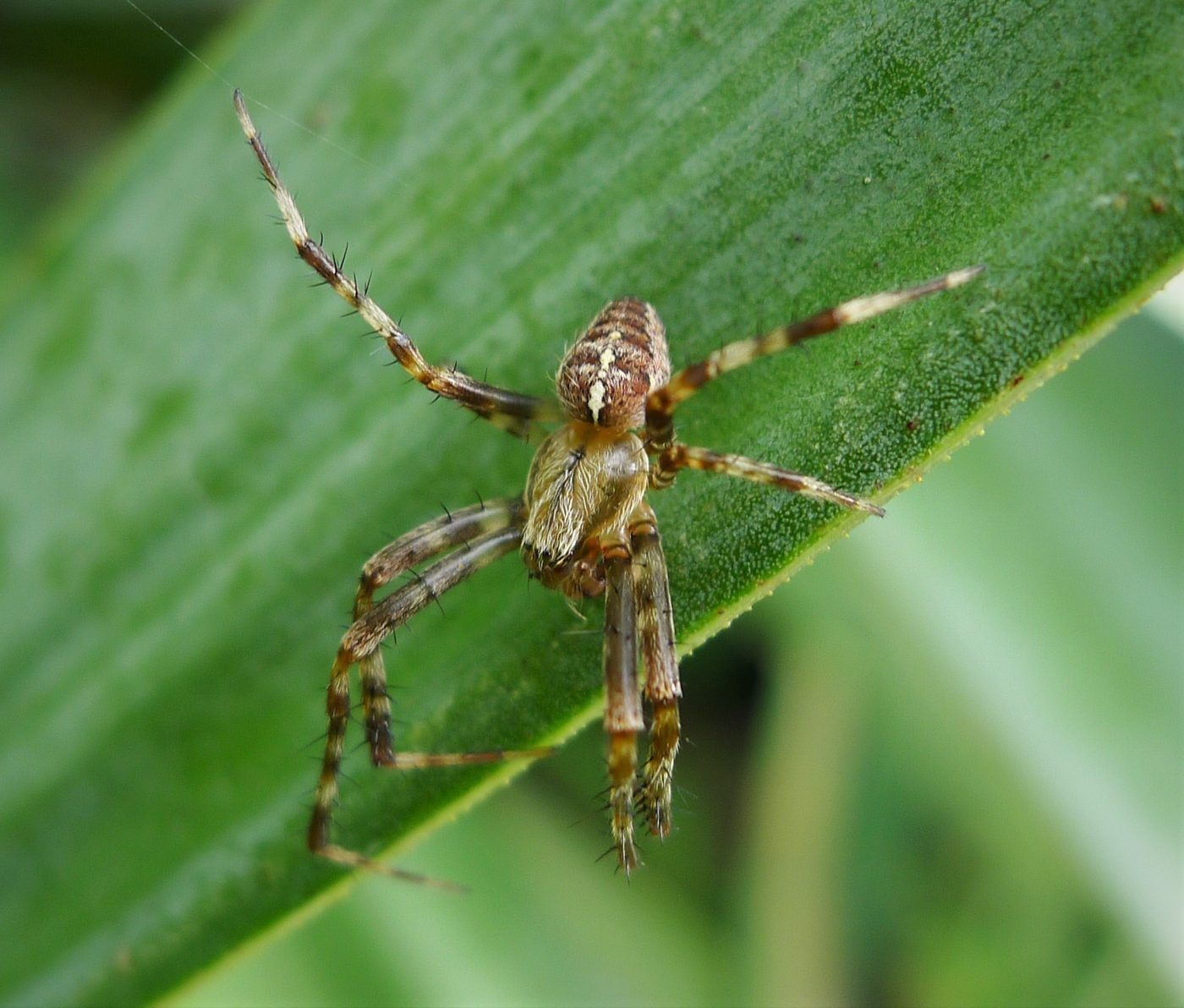
Recognisable by the white cross on its back and by its perfect spiral webs, the garden spider is one of the most common and fascinating arachnids of Europe.
Characteristics
Temperament
A solitary, patient arachnid, builder of orb webs. It waits motionless for the vibrations of prey; shy, it is not aggressive towards people.
Diet
Predator: flies, mosquitoes, butterflies and other flying insects caught in the web and immobilised with venom.
A spider with a cross on its back
The European garden spider is among the most widespread and best-known arachnids of Europe. Its distinctive feature is a pattern of white spots on the abdomen forming a characteristic cross, from which its name derives. The body colour is very variable, from yellowish to dark brown, allowing it to blend into different settings. The female is markedly larger than the male, as is common in many spiders. Its long legs are suited to moving nimbly over the threads of the web.
The architect of the spiral web
What makes this spider famous is its orb web, one of the most elegant structures in the natural world. Through a series of precise movements, the spider first builds a frame and spokes, then weaves over them a spiral of sticky thread meant to catch prey. The web is often remade each day: the spider consumes the old silk, recycling its proteins, and builds a new one. At the centre or in a refuge at the edge, the spider patiently awaits the vibrations that signal trapped prey.
How it hunts
When an insect gets caught in the web, the garden spider senses its vibrations through the threads. It then rushes to the prey, quickly wraps it in silk and injects the venom that immobilises it and begins its digestion. It feeds on flies, mosquitoes, butterflies and other flying insects. Its venom is effective on insects but entirely harmless to people.
Life cycle
The adults are most visible in late summer and autumn, when they reach their largest size. After mating, the female lays her eggs in a cocoon of silk, which she protects until her death, which comes with the first cold. The young hatch in spring and disperse, sometimes letting themselves be carried by the wind hanging from a thread of silk.
A discreet ally
The garden spider is common and raises no conservation concern. Like all spiders it plays a valuable ecological role, controlling insect populations, including many species that are a nuisance to people. Despite the widespread fear of spiders, this species is harmless and useful, and its presence in the garden should be welcomed.