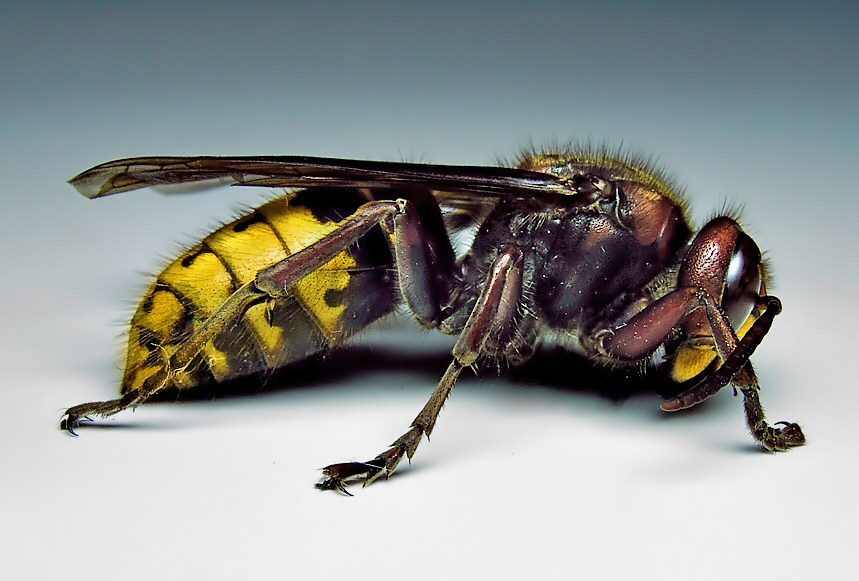
Photo: PiccoloNamek · CC BY-SA 3.0
European hornet
Vespa crabro
The European hornet is the largest wasp in Europe, a social insect in brown and yellow that builds paper nests and hunts other insects.
Characteristics
Temperament
Eusocial, predatory, not aggressive unless disturbed
Diet
Insects (for the larvae); adults: sap, fruit and sugars
Europe's largest wasp
The European hornet is the largest European vespid, considerably bigger than a common wasp. Its body is robust, with a reddish-brown head and thorax and a yellow abdomen crossed by dark bands. The wings have a slightly reddish tinge. In everyday speech the term hornet is often wrongly applied to the carpenter bee and the bumblebee too, which belong to different groups.
Habitat and range
It is widespread across much of Europe and Asia; it has also been introduced to North America, where it is the only true hornet species present. It lives in woods, countryside, parks and gardens, often near hollow trees and old buildings.
Social behaviour and nest
It is a eusocial insect: it lives in annual colonies founded in spring by a single queen. The workers build a paper-like nest, made by chewing wood fibres and plant material, usually in tree cavities, lofts or nest boxes. It feeds on other insects — flies, bees, wasps, grasshoppers — which it catches to rear its larvae, while the adults feed on sap, ripe fruit and sugary substances.
Notable facts
Despite its imposing look and deep hum, the hornet is less aggressive than commonly believed: it stings only if the nest is disturbed or it feels threatened. It is a useful predator that helps control the populations of other insects. Unlike many wasps, it is also active at night and is drawn to lights.
Conservation
The species is not considered threatened and remains common. In some European countries it is protected, because it plays an important ecological role as a predator and occasional pollinator. Nests should not be destroyed without need.
Pros
- Useful predator of flies and other insects
- Builds elaborate paper nests
- Less aggressive than commonly believed
Cons
- The sting is painful and best avoided
- Nests near homes can cause problems