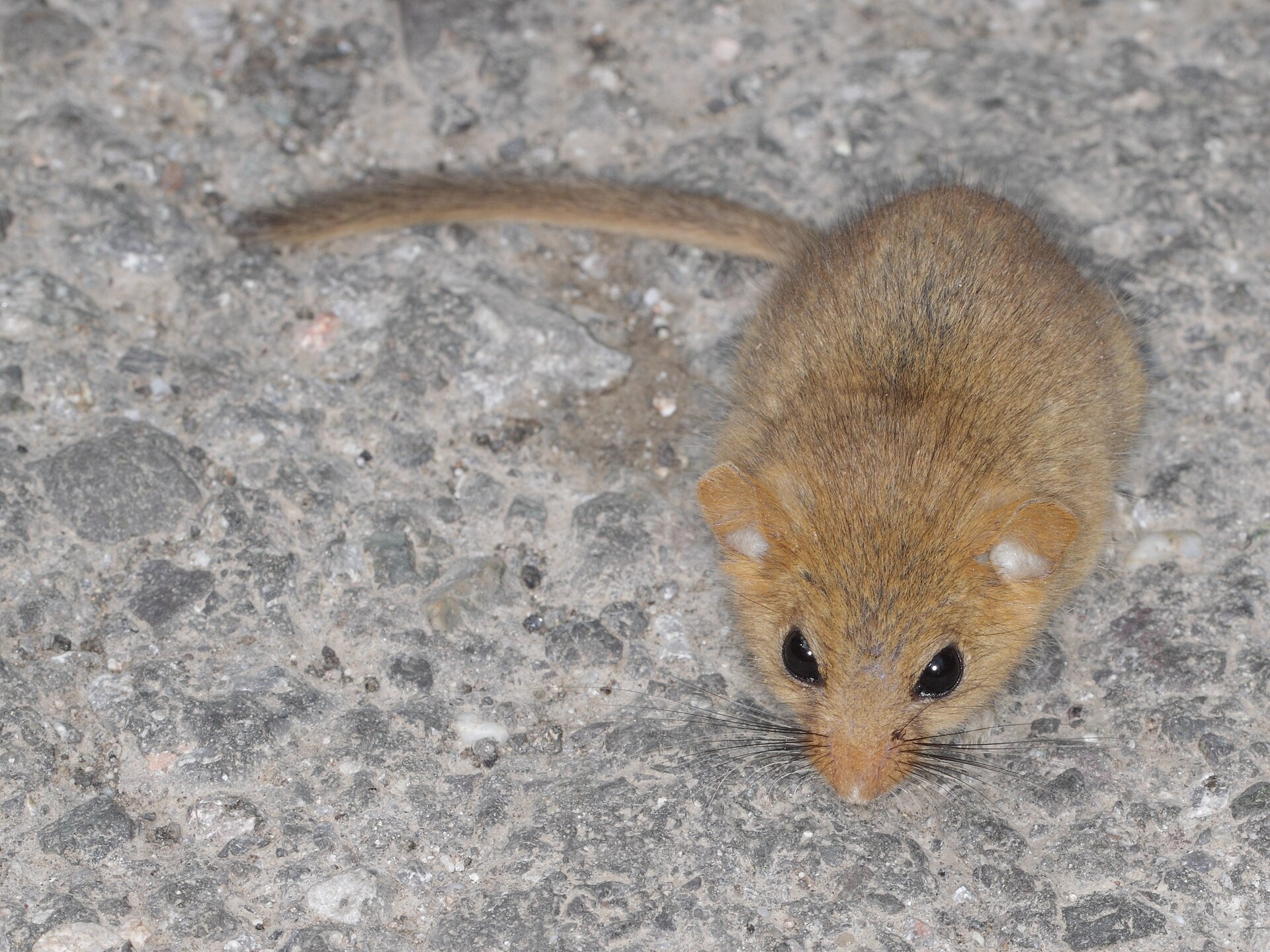
Hazel Dormouse
Muscardinus avellanarius
Characteristics
Temperament
Nocturnal, arboreal, shy and a proverbial sleeper. It lives hidden among hedgerows, brambles and undergrowth, climbing nimbly and hardly ever coming to the ground. It spends over half the year in hibernation and can enter torpor even in summer on cold days. Tends to be solitary, a skilled builder of spherical nests. A delicate animal and an indicator of healthy habitats. Not a pet: a small wild rodent protected in various areas.
Diet
A season-following herbivore-omnivore. It eats flowers, pollen and nectar in spring; fruit and berries (blackberries) in summer; nuts, hazelnuts, seeds and acorns in autumn, vital for laying down fat before hibernation; and insects in summer as a protein source. Too small to make large caches, it "follows" the food available month by month and fattens its own body before sleeping. It opens hazelnuts leaving an unmistakable smooth, round hole — a true "signature".
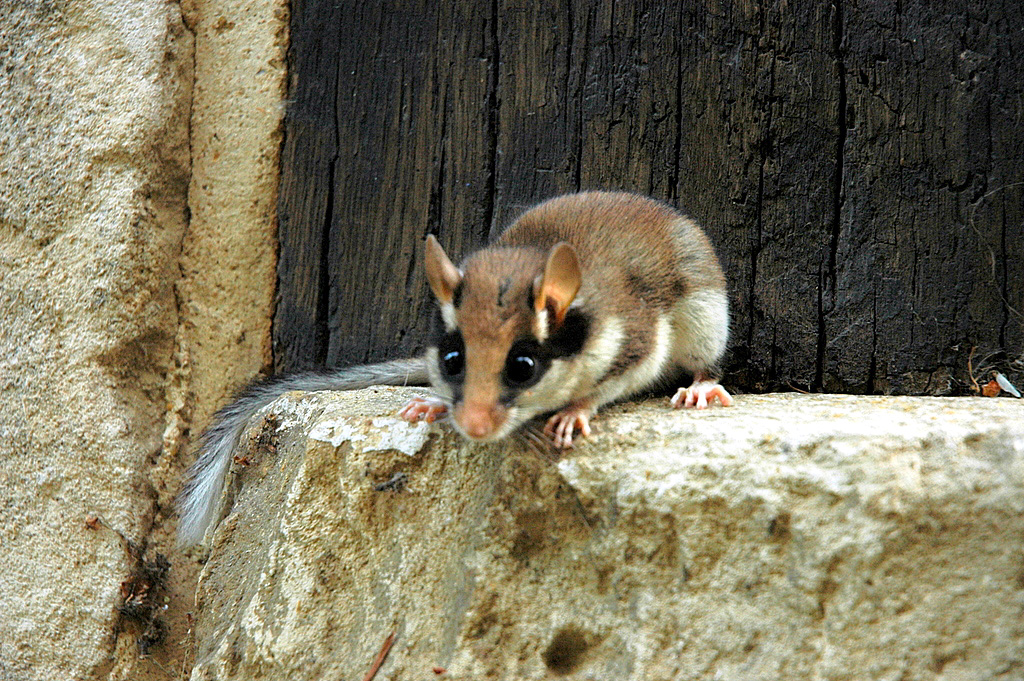
The Hazel Dormouse (Muscardinus avellanarius), also the "common dormouse", is Europe's smallest dormouse and one of the continent's most charming rodents. Famous for:
- Its adorable looks: tiny, with golden-orange fur, a pale belly, big black eyes and a furry tail (not naked like a mouse's)
- Life in the trees: a very nimble climber, it lives among hedgerows, brambles and undergrowth and very rarely comes to the ground
- The long hibernation: it sleeps for over half the year, from autumn to spring — truly a "sleeper"
- A passion for hazelnuts: the name avellanarius means "of the hazel"; it opens nuts leaving an unmistakable smooth, round hole
- The woven nest: it builds spherical nests of grasses and stripped bark among the branches
- Literary fame: it is the sleepy Dormouse at the Mad Hatter's tea party in Alice in Wonderland
IUCN status: Least Concern (LC) globally, but in some parts of northwestern Europe it is declining and strictly protected. It is regarded as an indicator species of well-preserved, well-connected woods and hedgerows: where the dormouse thrives, the forest habitat is healthy.
Classification and category
Order Rodentia, family Gliridae (the dormice) — the same as the edible dormouse (Glis glis) and the garden dormouse. It is the only species in the genus Muscardinus. Not to be confused with the other dormice or with true mice: the edible dormouse (Glis glis) is much larger, grey and with a bushy, squirrel-like tail, while the hazel dormouse is tiny and golden-orange; mice and rats (family Muridae) have a naked, scaly tail, whereas the dormouse and other glirids have a furry tail — a quick way to tell them apart. Etymology: "Muscardinus" is said to recall the animal's "musky" scent; "avellanarius" comes from Latin avellana, the hazelnut (from the town of Avella), underlining its link with the hazel; the Italian name "moscardino" is an affectionate diminutive evoking its small size and grace. Parameters: Body 6-9 cm. Tail 5.5-8 cm (furry, nearly as long as the body). Weight 15-40 g (heavier in autumn, before hibernation, when it lays down fat). Longevity up to about 5 years — exceptional for so small a rodent, a "bonus" made possible by long hibernation, which slows ageing. Reproduction: 1-2 litters a year; gestation ~22-24 days; litters of 3-7 young, raised in the summer nest.
Habitat and distribution
The Hazel Dormouse occurs across much of Europe and into Anatolia: from western and southern Europe (including Italy, where it is widespread) through Central Europe to Anatolia; absent from the coldest, northernmost areas. Preferred habitats — always rich in dense vegetation above ground: deciduous and mixed woods with dense understory (especially coppice rich in hazel, and woodland edges); hedgerows and scrub (mature, well-connected hedges are vital, acting as "corridors" between woods); and bramble thickets and shrub patches (blackberry, honeysuckle and other flowering, fruiting shrubs). The dormouse is almost exclusively arboreal: it moves among branches and shrubs hardly ever touching the ground, and it is precisely the continuity of vegetation (connected hedges, bushes and canopies) that determines its presence. Habitat fragmentation — cut hedges, isolated woods — is one of its main threats. It is nocturnal and tends to be solitary. IUCN: Least Concern, but with declining populations in some areas (in the UK it is a protected species and the subject of reintroduction programmes). Its sensitivity makes it a valuable indicator of the quality of woods and hedgerows.
Diet
A herbivore-omnivore that follows the seasons, shifting its diet to whatever the vegetation offers: flowers, pollen and nectar (in spring, when fruit and seeds are scarce); fruit and berries (blackberries and other summer fruit); nuts, hazelnuts, seeds and acorns (in autumn, vital for laying down the fat needed for hibernation); and insects (mainly in summer, as a protein source, important during pregnancy and lactation). Feeding strategies: the food calendar (too small to store large caches, it "follows" seasonal availability — flowers in spring, fruit in summer, nuts in autumn); the "signed" hazelnut (to open nuts it gnaws a smooth, round hole with a characteristic rim — this hole is a field sign used by naturalists to confirm the dormouse's presence); and pre-hibernation fattening (in autumn it stores energy in its own body, as fat, rather than in a larder, to face the months of sleep). Crucially, its survival depends on diverse, species-rich habitats that provide food throughout the active season, which is why it is so tied to well-structured woods and hedges.
Physical features
A tiny, endearing rodent perfectly adapted to life among the branches. Fur and colours: a warm golden-orange/tawny coat on the back; paler, often whitish belly and throat; a soft, "plump" look, especially before hibernation. The distinguishing traits: a furry tail, nearly as long as the body — the feature that clearly sets it apart from mice (which have a naked tail); big, protruding black eyes, those of a nocturnal animal; small, rounded ears; and prehensile toes and feet, with pads suited to gripping slender twigs. Performance: acrobatic climbing (it moves among thin branches and stems with great agility, even upside down); nest-building (it weaves spherical nests from grasses, leaves and stripped bark); torpor (besides winter hibernation, it can enter daily torpor to save energy on cold days); and keen nocturnal senses for moving in the dark.
Behaviour and curiosities
A nocturnal, arboreal animal with legendary sleep. It spends the active season climbing among hedges and shrubs in search of food, and the cold part of the year deeply asleep. Its life is set by the rhythm of the seasons and of hibernation.
The "sleeper par excellence": the dormouse spends over half the year in hibernation, usually from October to April or May; during this time it shelters in a round, compact nest, often at ground level among leaves or under a stump, drastically lowers its body temperature and heart rate, and lives off its stored fat; even in the active season, on cold or rainy days, it can enter daily torpor to save energy. The "signed" hazelnut: one way naturalists confirm the dormouse's presence in a wood is to look for the nuts it has opened — each rodent leaves a different mark on the shell, and the dormouse makes a smooth, round hole with a bevelled inner rim and tooth marks angled toward the hole, a true "signature" distinguishing it from mice, voles and squirrels. Surprising longevity: for so tiny a rodent, the dormouse lives long — up to about 5 years, against the few months or single year of many mice; the secret is hibernation, since by sleeping away much of the year the animal "slows" its metabolism and, in a sense, its life, long escaping predators and bad weather. The master nest: the dormouse is a skilled builder, making different nests — spherical summer nests woven of grasses and bark strips (especially honeysuckle) and hidden among branches, used for resting and raising young, and a more compact, insulated winter nest for hibernation; these characteristic nests are another useful sign for monitoring the species. Alice's Dormouse: the hazel dormouse (or a very similar one) entered popular culture through Lewis Carroll's Alice in Wonderland, where "the Dormouse" is the perpetually sleepy character at the Mad Hatter's tea party, forever dozing off and stuffed into a teapot — a literary tribute to this little animal's proverbial sleep. The indicator of healthy woods: because it needs rich, diverse and above all well-connected habitats (continuous hedges and woods it can travel through without coming to the ground), the dormouse's presence signals a healthy forest environment, which is why it is studied and protected as an "umbrella species": protecting it means safeguarding whole systems of hedges and woods and all the species that live there.
Pros
- Piccolo roditore europeo grazioso e iconico (il 'Ghiro' di Alice)
- IUCN Least Concern a livello globale
- Specie indicatrice di boschi e siepi sani e ben connessi
- Longevo per la taglia (fino a ~5 anni) grazie al letargo
Cons
- Non è un animale da compagnia (selvatico e protetto in varie aree)
- Molto sensibile alla frammentazione di boschi e siepi
- In declino in alcune regioni dell'Europa nord-occidentale
- Difficile da osservare: notturno e attivo solo metà dell'anno