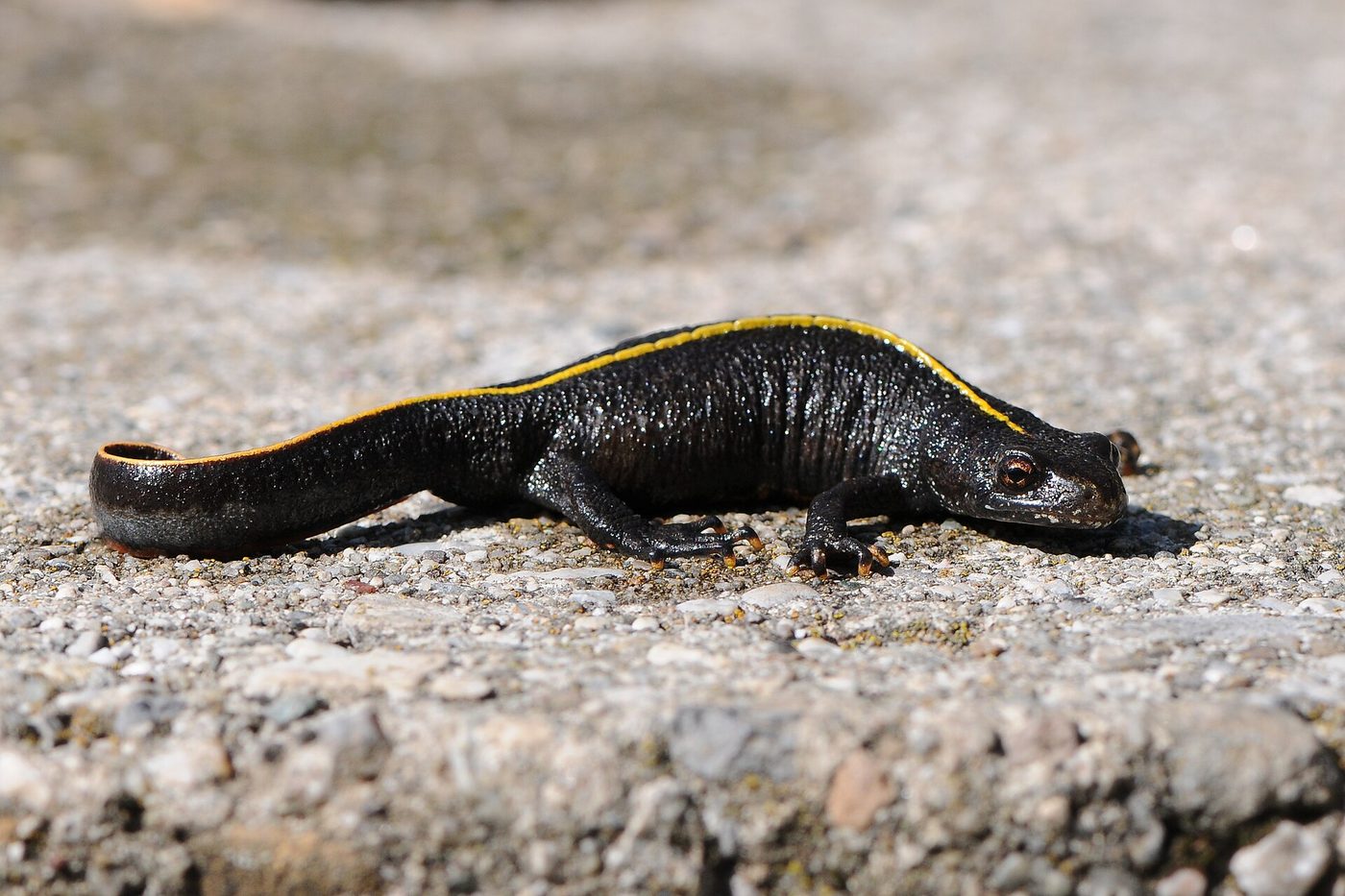
Photo: Böhringer Friedrich · CC BY-SA 2.5
Italian crested newt
Triturus carnifex
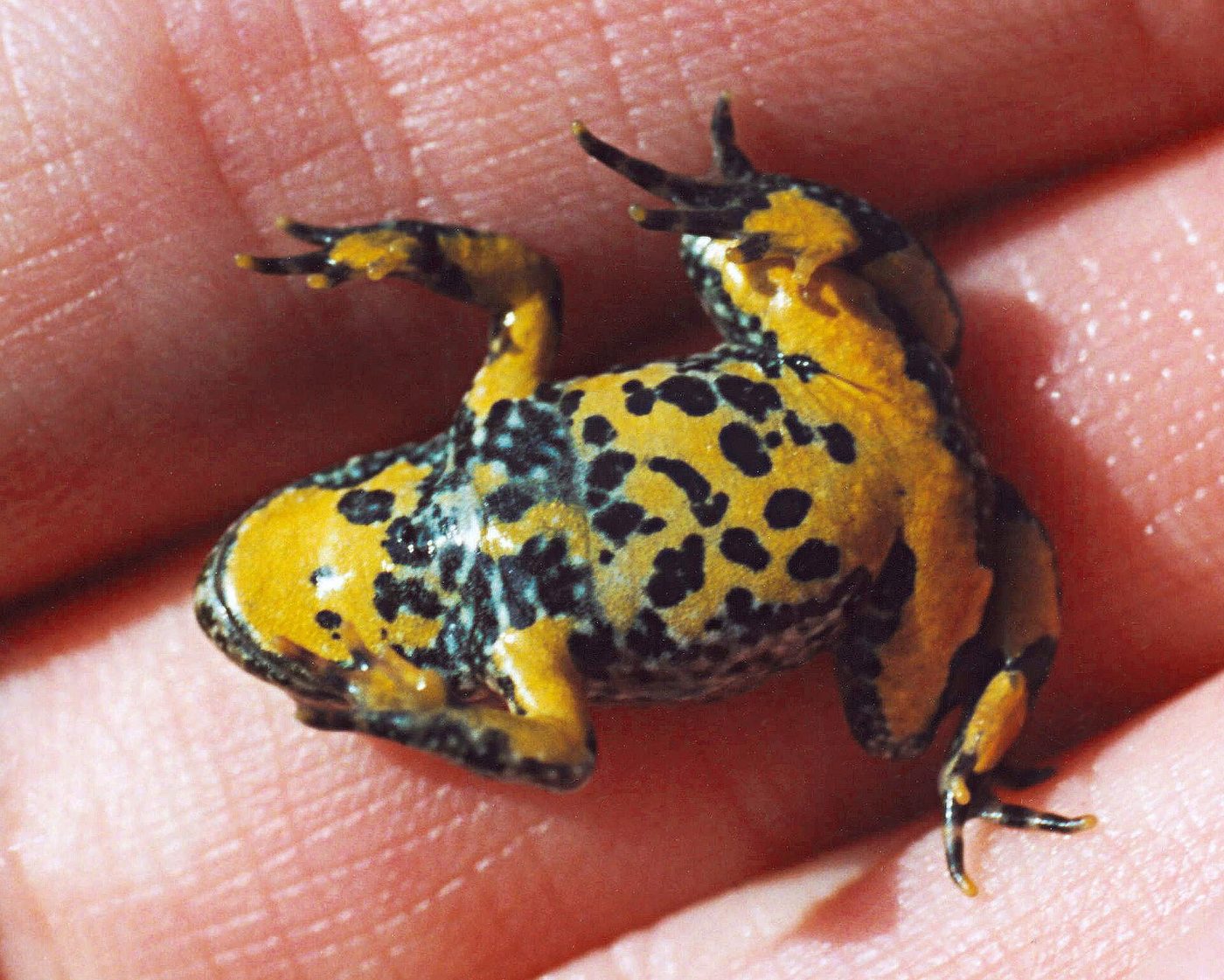
The Italian crested newt is a large amphibian with a yellow-orange belly spotted with black, the male sporting a striking dorsal crest.
Characteristics
Temperament
Amphibious, nocturnal, shy
Diet
Invertebrates, tadpoles and small amphibians
Description
The Italian crested newt is one of the largest European newts, belonging to the family Salamandridae. It has a sturdy body, a dark brownish-black back with granular skin and a belly of vivid yellow-orange, scattered with irregular black spots. In the breeding season the male develops a striking serrated dorsal crest, making it unmistakable.
Habitat and distribution
It occurs in the Italian peninsula, the Alpine regions and part of the Balkans. It frequents still, well-vegetated aquatic habitats such as ponds, pools, water troughs and small lakes, set in woodland or hill landscapes. Outside the breeding season it leads a terrestrial life, hidden in damp places.
Behaviour and reproduction
In spring it returns to water to breed: the male displays its crest and performs a courtship dance before the female, depositing a sperm packet that she picks up. The eggs are laid singly, folded into the leaves of aquatic plants. It feeds on invertebrates, tadpoles and small amphibians.
Did you know?
The scientific name carnifex, 'executioner', probably alludes to its intense colours. The bright orange belly is a form of aposematism, warning predators of its unpleasant skin secretions.
Conservation
It is classed as vulnerable and is protected. The main threats are the disappearance of the small wetlands where it breeds, water pollution and the introduction of predatory fish. Protecting ponds and pools is vital for its survival.
Pros
- Large and striking, with a spectacular crest in males
- Indicator of well-preserved wetlands
- Long-lived, can exceed ten years
Cons
- Vulnerable and protected species
- Depends on small wetlands to breed
- Threatened by predatory fish and pollution