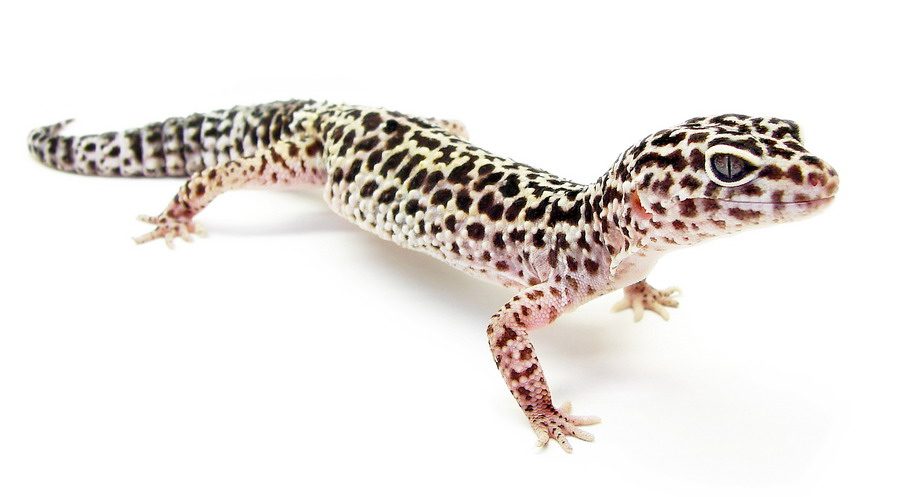
Photo: Matt Reinbold · CC BY-SA 2.0
Leopard gecko
Eublepharis macularius
Small, docile and spotted like a big cat, the leopard gecko is one of the most beloved terrarium reptiles: a calm lizard with movable eyelids and a plump tail.
Characteristics
Temperament
Nocturnal, calm and docile, relatively inactive. Solitary; it stores fat in its tail and can shed it for defence, then regenerate it.
Diet
Insectivore: live insects and other small invertebrates, its exclusive diet.
A small spotted lizard
The leopard gecko is a small reptile native to the arid, rocky regions of southern Asia. Its name comes from its yellowish livery dotted with dark spots, recalling a leopard's coat. It is a sturdy animal, with a broad head and a stocky, fleshy tail. Unlike many other geckos, it has movable eyelids that let it close its eyes, and it lacks the adhesive pads under the toes: for this reason it does not climb smooth surfaces but moves on the ground.
A tail that is a pantry
The leopard gecko's stocky tail is not only a characteristic feature but a real energy reserve: here the animal stores fat, which it uses in times of food scarcity. Like many lizards, it can also shed its tail in an instant to escape a predator, a defence mechanism called autotomy. The tail regrows, but in a stockier form and of different appearance. A fat, full tail is therefore a good sign of health for this animal.
Nocturnal habits
The leopard gecko is a nocturnal and crepuscular animal. By day it takes refuge in burrows and crevices to escape the heat, and by night it comes out to hunt insects and other small invertebrates, its exclusive diet. It needs no large spaces and is relatively inactive, which adds to its reputation as a calm animal.
A popular terrarium reptile
Thanks to its docile nature, small size, ease of care and the great variety of colourings obtained in captivity, the leopard gecko is one of the most widespread reptiles as a terrarium animal, often recommended to beginners. It nonetheless requires an adequate terrarium, with the right temperature, a humid hide and a diet of live insects.
Conservation
The leopard gecko is classified as least concern and is not a threatened species; the specimens on the market come largely from breeders. As with any pet reptile, it is important to learn well about its needs before getting one, to ensure it a long, healthy life, which can exceed fifteen years.