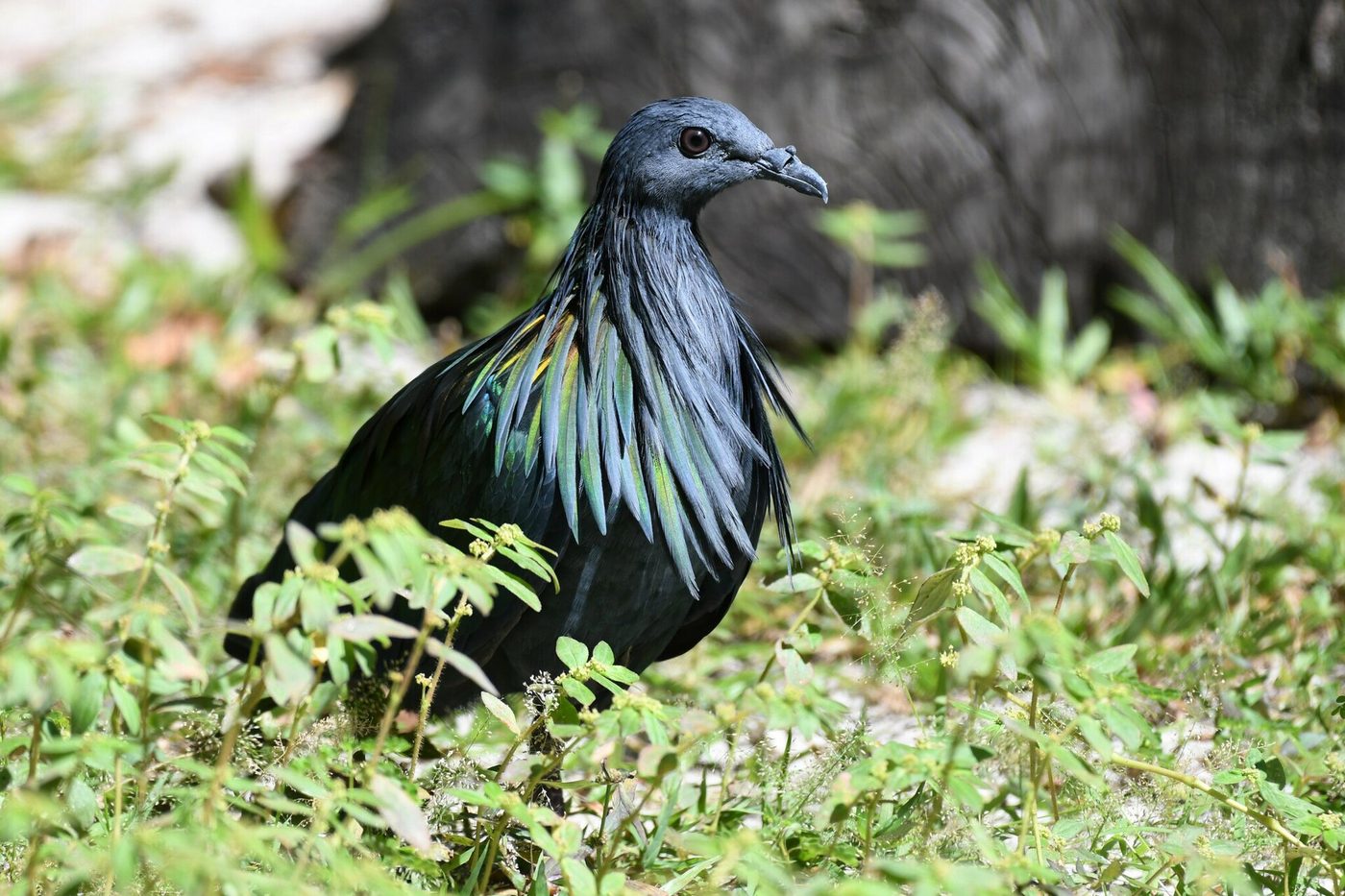
Photo: ziggypop74 · CC BY 4.0
Nicobar pigeon
Caloenas nicobarica
With its neck adorned by long iridescent feathers shining with green, copper and blue, the Nicobar pigeon is the closest living relative of the dodo.
Characteristics
Temperament
Ground-dwelling, nomadic, gregarious
Diet
Omnivore: seeds, fallen fruit and small invertebrates
A pigeon of metallic colours
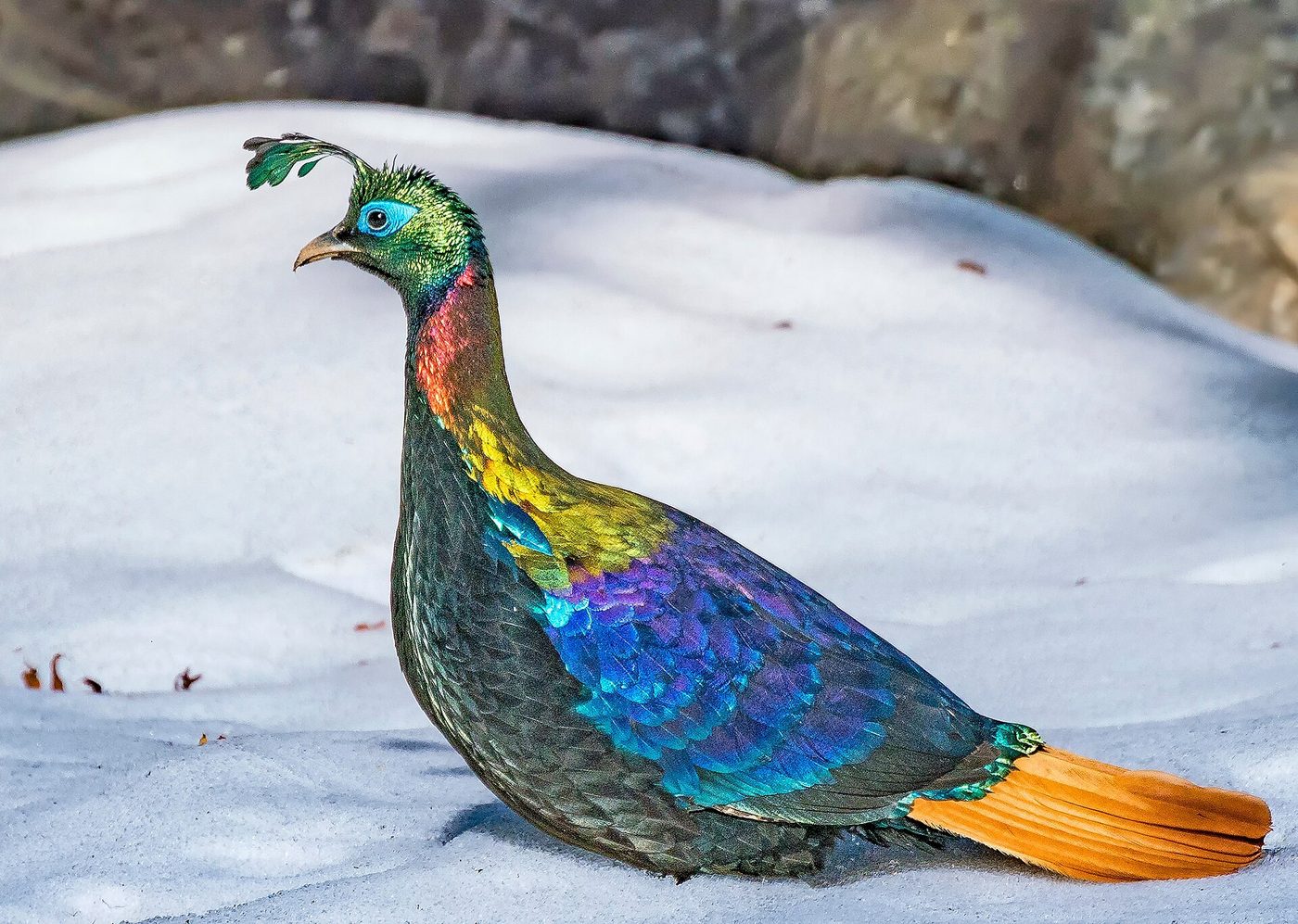
The Nicobar pigeon is one of the most beautiful birds among the pigeons. Its most extraordinary feature is the long feathers adorning its neck, called hackles, which hang like a mane or cape and shine with intense metallic sheens of green, copper, blue and violet depending on the light. Its body is a dark, iridescent grey-green, while its short tail is a pure white that contrasts sharply with the rest of the plumage. A surprising fact is that this bird is considered the closest living relative of the famous and now extinct dodo.
Habitat and distribution
It lives on small islands and in coastal regions across a wide area of the Indo-Pacific, from the Andaman and Nicobar Islands, through the Indonesian archipelago, right to the Solomons and Palau. It is a nomadic bird, moving between the islands in search of food, travelling in flocks.
Behaviour and feeding
It is mainly ground-dwelling: it walks a great deal on the ground, in the undergrowth, and climbs into the trees mainly to rest and nest. It feeds on seeds, fallen fruit and small invertebrates. It has a sturdy gizzard with small stones that allow it to crush even the hardest seeds. It prefers small islands free of ground predators, where it can feed and breed in safety.
Conservation
The Nicobar pigeon is classified as a near-threatened species. It is threatened by hunting, by capture for the aviary-bird trade and by the destruction of the small islands where it lives, particularly vulnerable to the introduction of predators such as rats and cats. The protection of these islands is fundamental for its survival.
Pros
- Spectacular iridescent plumage
- Closest living relative of the dodo
- Elegant mane of neck feathers
- Skilful nomad between the islands
Cons
- Near-threatened species
- Captured for the aviary trade
- Vulnerable to predators introduced on the islands