Palm cockatoo
Probosciger aterrimus
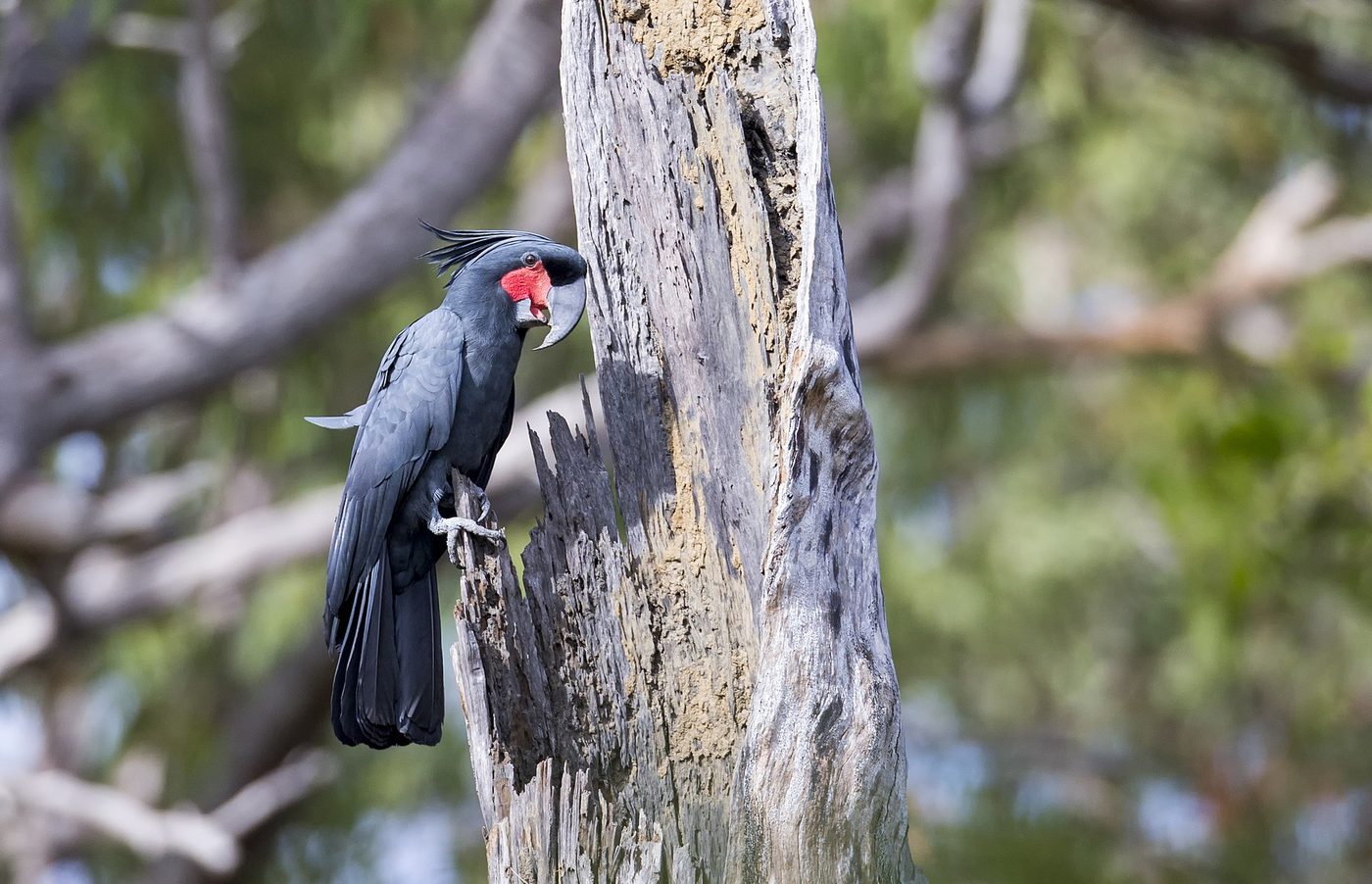
The palm cockatoo is the world's largest cockatoo, an imposing smoky-black parrot with red cheeks and a huge beak, famous for its drumming behaviour.
Characteristics
Temperament
Intelligent and territorial; lives in small groups.
Diet
Herbivorous: very hard seeds, nuts, fruit, shoots and grubs.
The largest of the cockatoos
The palm cockatoo (Probosciger aterrimus) is the largest living cockatoo and has the largest beak of the entire parrot order. Its plumage is a smoky grey-black, topped by a long, erectile crest of pointed feathers. Two patches of bare red skin stand out on its cheeks and flush an even deeper red when the bird is excited or alarmed. It is the only species of its genus.
Habitat and range
It lives in the rainforests and woodlands of New Guinea, the Aru Islands and the far northern tip of the Cape York Peninsula in Australia. Unlike many cockatoos, which gather in noisy flocks, it tends to keep to small groups of only a few birds.
Behaviour and diet
With its powerful beak it cracks open very hard seeds, nuts and fruit that other birds could not break, supplementing its diet with shoots and insect grubs. It is famous for an extraordinary behaviour: during courtship the male grabs a stick or seed pod and uses it as a drumstick to beat rhythmically on a hollow trunk — one of the very few cases of tool use among birds.
Did you know?
Each male seems to have its own recognisable rhythmic style. Breeding is very slow: a pair often raises just one chick every one to two years, which makes the species especially fragile.
Conservation
The IUCN lists it as Near Threatened. Forest destruction, fires and capture for the illegal exotic pet trade threaten its populations, which recover extremely slowly because of their low reproductive rate.
Pros
- The world's largest cockatoo
- Uses tools to 'drum' (rare among birds)
- Very powerful beak and spectacular crest
Cons
- Near Threatened
- Very slow breeding, one chick every 1–2 years
- Threatened by illegal trade and fires