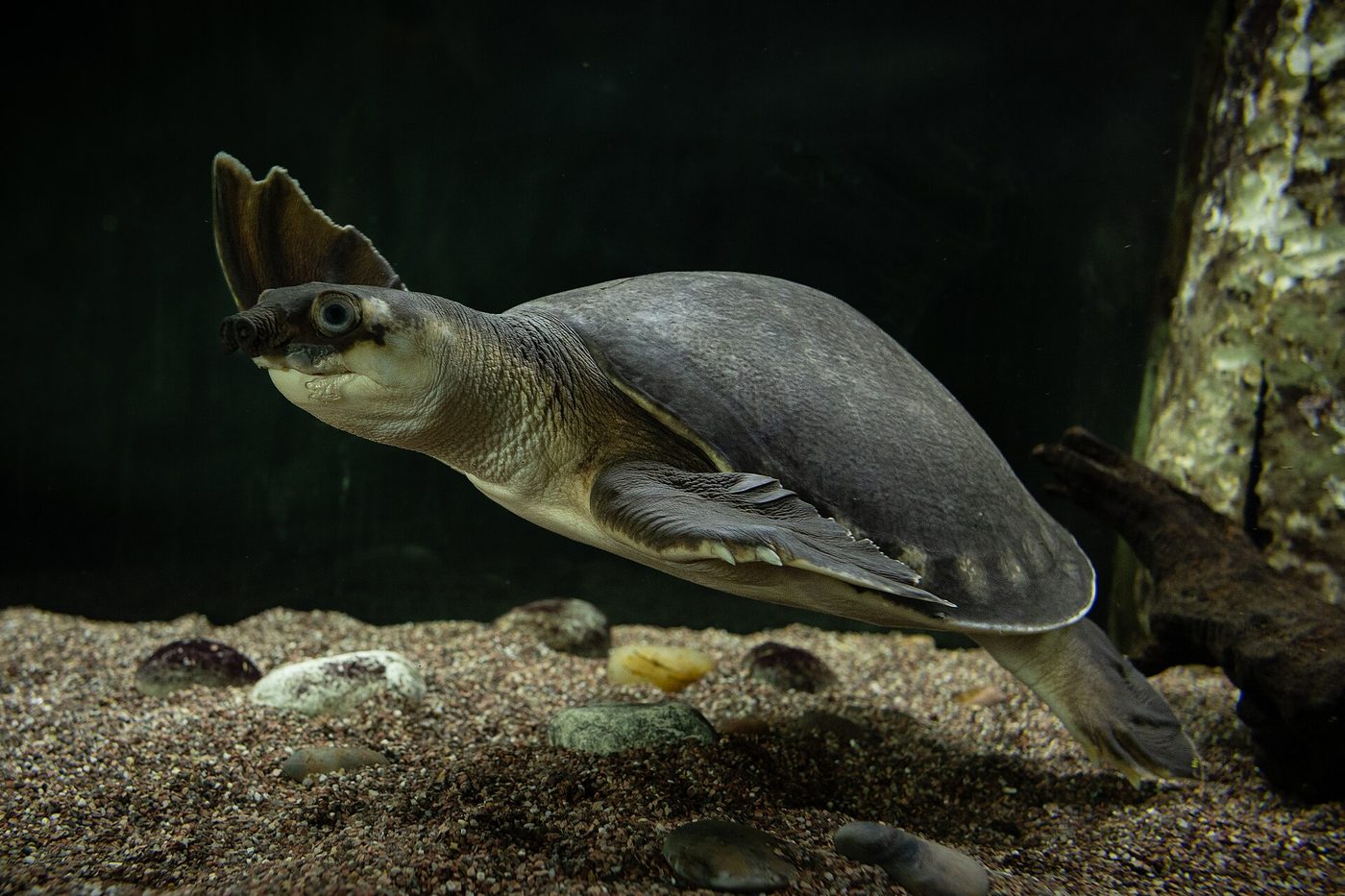
Photo: Mattia Nocciola · CC BY-SA 4.0
Pig-nosed turtle
Carettochelys insculpta
The only freshwater turtle with sea-turtle-like flippers and a leathery shell, the pig-nosed turtle breathes through a comical snorkel-like snout.
Characteristics
Temperament
Aquatic, shy; a skilled swimmer
Diet
Omnivore: fruit, leaves, algae, molluscs, crustaceans
A turtle out of the ordinary
The pig-nosed turtle is a truly singular reptile: it is the only freshwater turtle to have true swimming flippers like those of sea turtles, instead of the clawed feet of other freshwater turtles. Its shell is not covered in horny scutes but in smooth, leathery skin of a greyish-olive colour. Its most comical feature is the snout, which ends in a short fleshy proboscis with nostrils at the tip, like a pig's snout: the animal uses it as a snorkel to breathe while staying just below the surface. It is the only living species of its family; all its other members are extinct.
Habitat and distribution
It lives in the rivers, lagoons and swamps of southern New Guinea and northern Australia, including the famous Fly River. It also tolerates the brackish waters of estuaries. It spends most of its life in the water, rarely coming ashore.
Behaviour and reproduction
It is omnivorous, feeding on fallen fruit, leaves, algae, molluscs, crustaceans and aquatic insects. Females lay their eggs on sandy banks; as in many turtles, the sex of the young depends on the incubation temperature. The embryos complete development but wait for flooding or a drop in oxygen to hatch all together.
Curiosities
Its flippers and soft shell make it a skilled, fast swimmer, more like a small sea turtle in appearance than a river turtle. It is in high demand in the illegal exotic pet trade, which worsens its plight.
Conservation
The IUCN classifies the species as Endangered, and it is listed on CITES Appendix II. The main threats are the collection of eggs and adults for consumption and the pet trade, along with habitat loss.
Pros
- The only freshwater turtle with true flippers
- Leathery shell and comical proboscis snout
- Last survivor of an ancient family
Cons
- Endangered, protected by CITES
- In high demand in the illegal trade
- Complex aquatic needs: not for beginners