Photo: ladydragonflycc · CC BY 2.0
Roseate spoonbill
Platalea ajaja
With its bright pink plumage and curious spoon-shaped bill, the roseate spoonbill is an elegant wading bird of the American wetlands.
Characteristics
Temperament
Social, colonial, tied to wetlands
Diet
Carnivore: fish, shrimp, aquatic insects
A wading bird with an unusual bill
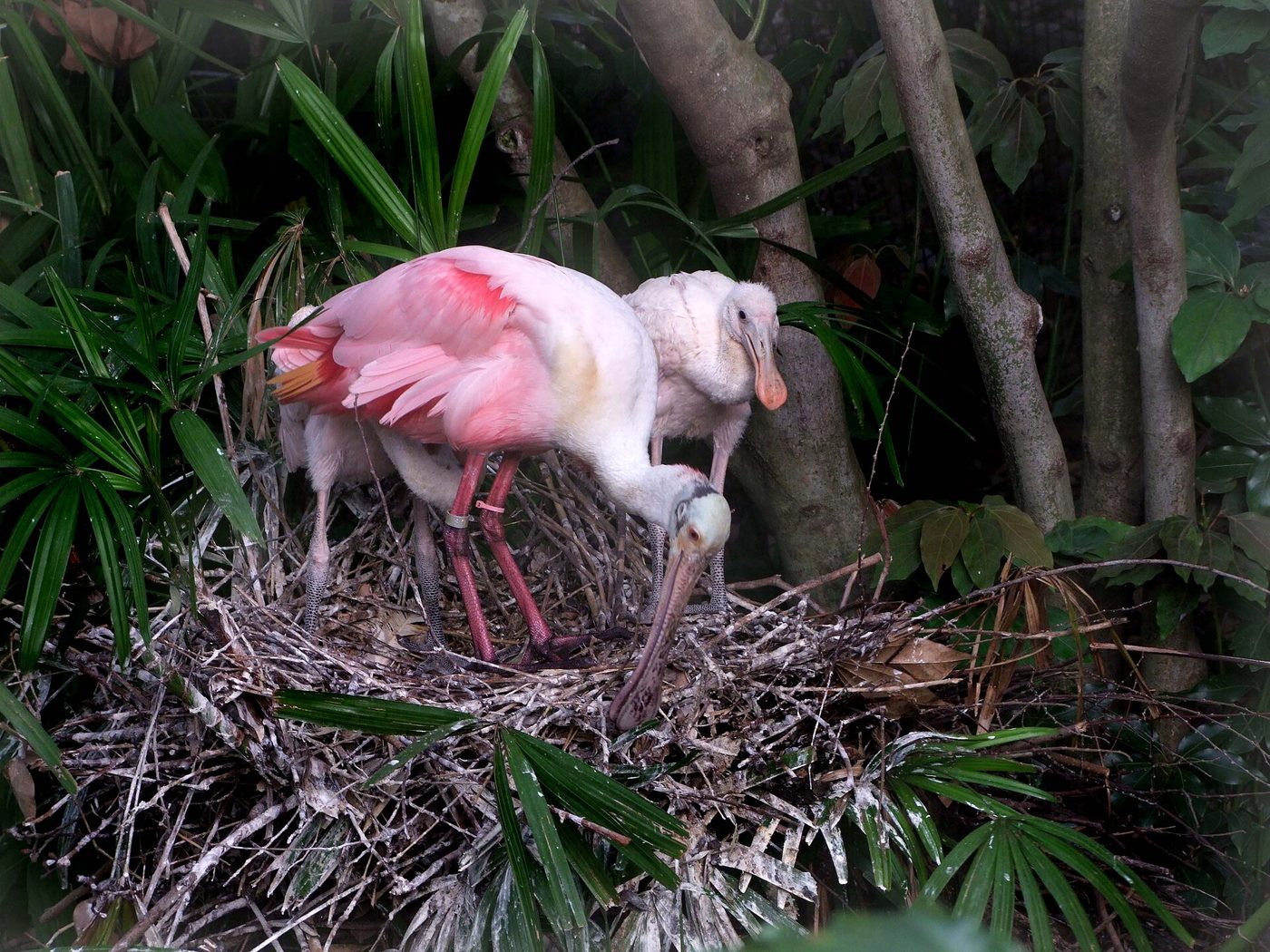
The roseate spoonbill is one of the most striking and recognisable waterbirds of the Americas. Its most characteristic feature is its bill, long, flat and broadened at the tip into a spoon or spatula shape, from which it takes its name. Its plumage is an elegant pink, more intense on the wings and paler on the neck and back, with red legs and a head that is sometimes bare in adults. Its long wading legs allow it to move nimbly through shallow waters.
Habitat and distribution
It lives in the wetlands of the Americas, from the southern United States to South America. It frequents marshes, lagoons, estuaries, mangroves and shallow bodies of water, both fresh and brackish, where it finds food in abundance. It is a bird tied to rich, well-preserved aquatic environments, often in the company of other wading birds.
Behaviour and feeding
The roseate spoonbill feeds in a characteristic way: it walks in shallow waters, sweeping its half-open bill back and forth underwater, filtering the mud and catching small fish, shrimp, aquatic insects and other small organisms thanks to the sensitivity of its bill. Its splendid pink colour is not innate but derives from its diet: just like flamingos, the spoonbill takes up the pigments present in the small crustaceans it feeds on, which colour its feathers.
Curiosities
The intensity of the pink varies from individual to individual and with age, and is linked to the quality of the diet: the pinkest specimens are often the best fed. The roseate spoonbill nests in colonies, often on trees or bushes near the water, together with other waterbirds.
Conservation
The roseate spoonbill is classified as a species of least concern, with populations on the whole stable. In the past, however, it was intensively hunted for its coloured feathers, used as ornaments, becoming scarce in some areas. Thanks to protection the populations have recovered. Protecting wetlands remains essential for its survival.
Pros
- Spectacular, unmistakable pink plumage
- Spoon-shaped bill, a unique adaptation
- Populations on the whole stable
- Elegant and fascinating to watch
Cons
- Depends on well-preserved wetlands
- Hunted in the past for its feathers
- Its colour depends on the quality of the diet