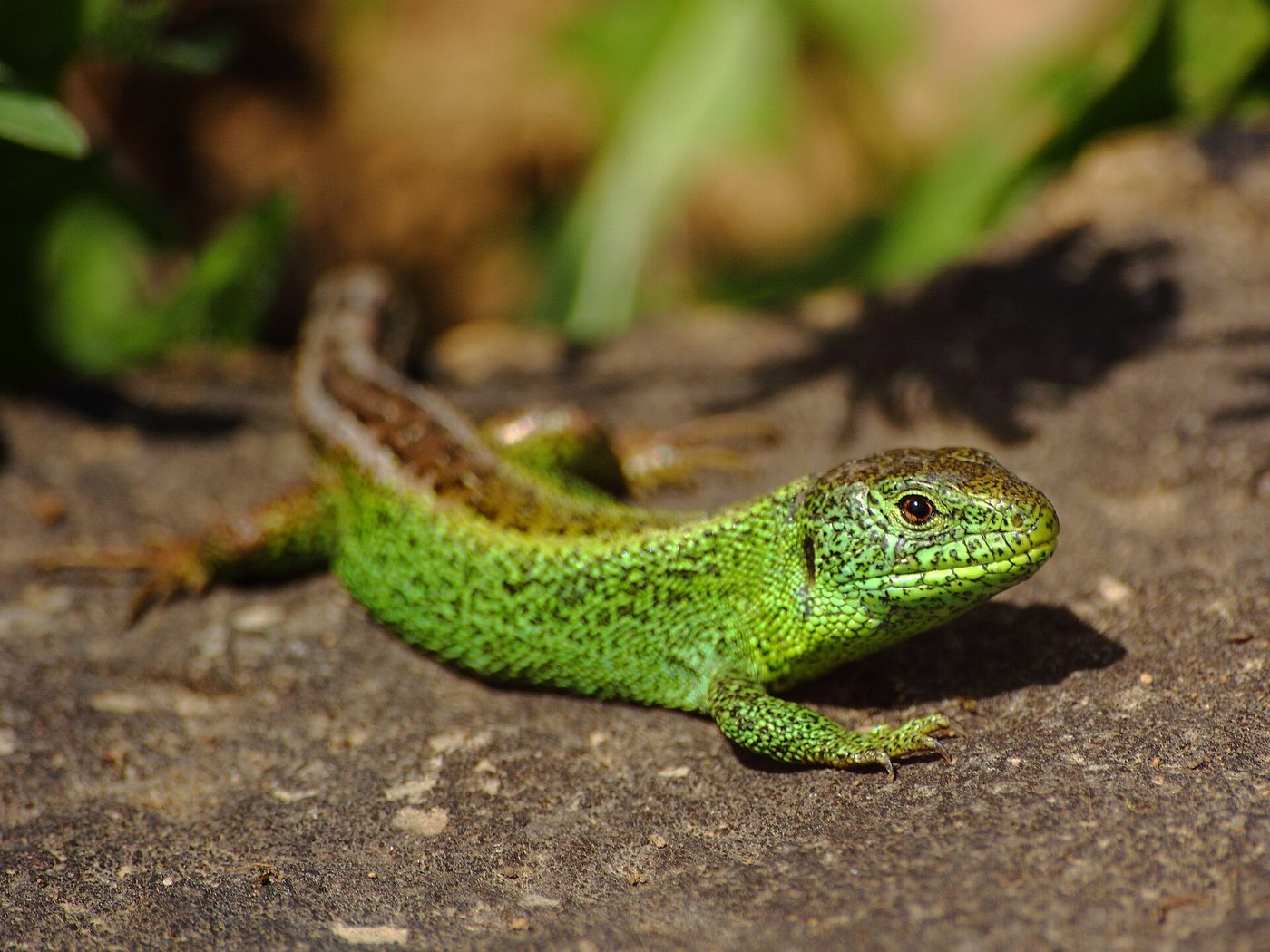
Photo: Christoph Caina · CC BY 3.0
Sand lizard
Lacerta agilis
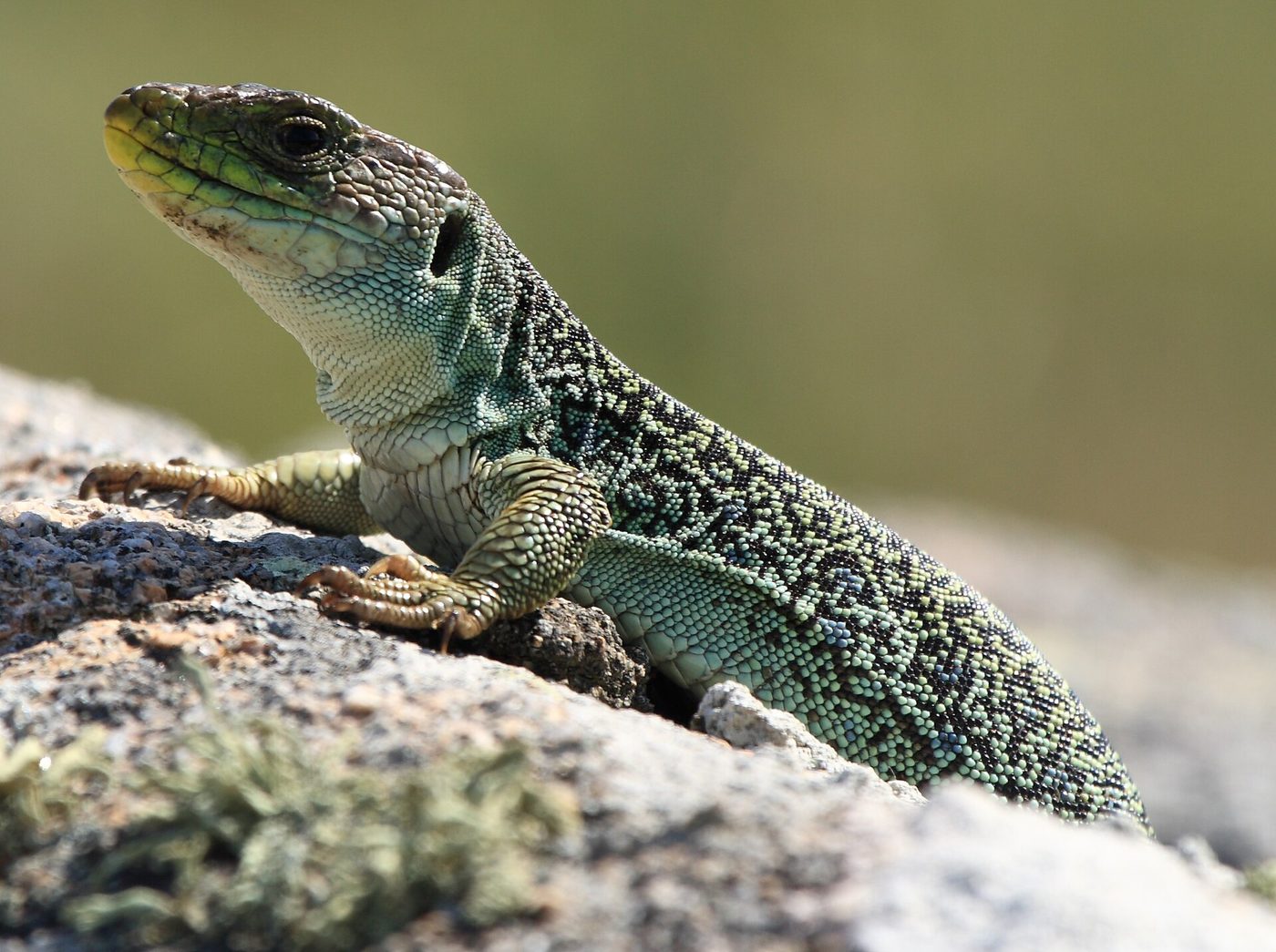
Sturdy, with vivid green flanks in courting males, the sand lizard is one of the most widespread and striking lizards of Europe.
Characteristics
Temperament
Diurnal, territorial and tied to its habitat, dependent on the sun to become active. Shy but less swift than other lizards; when threatened it takes refuge in vegetation.
Diet
Insectivore: insects, spiders, earthworms and other small invertebrates hunted in the warm hours.
A lizard of hidden colours
The sand lizard is a saurian of stockier, sturdier build than the common wall lizards, with a relatively large head and strong legs. For much of the year its colour, brown with dorsal bands and markings resembling pale eyespots edged in dark, keeps it inconspicuous. But in the breeding season the males transform: their flanks flare into a brilliant green, the more intense the fitter the animal, a signal meant to impress females and rivals alike.
Females and young, by contrast, stay in soberer tones of brown and grey.
Where it lives
Despite its name, the sand lizard is not tied to sand but to a wide variety of warm, structured habitats: heaths, clearings, woodland edges, grassy banks, dunes and dry meadows. It needs a mosaic of low vegetation for shelter, soft ground in which to lay its eggs and open areas where it can warm in the sun. It is found across much of Europe and temperate Asia.
What it eats and how it breeds
It feeds on insects, spiders, earthworms and other small invertebrates, which it hunts actively in the warm hours. Unlike many Mediterranean lizards, the sand lizard lays its eggs in the ground, where the sun's warmth ensures their incubation. The female digs a small hole in sandy or soft soil, a behaviour that helped give the species its common name.
Behaviour
It is a diurnal, territorial reptile, tied to small areas it knows in detail. Like all reptiles it depends on the sun to become active and spends many hours thermoregulating. As the cold approaches it enters winter rest, taking refuge in ground cavities until spring.
Conservation
The sand lizard is listed as least concern on a global scale, but in several northern parts of its range it is in decline and locally protected. The loss of open, structured habitats, intensive land management and urbanisation threaten its more marginal populations.