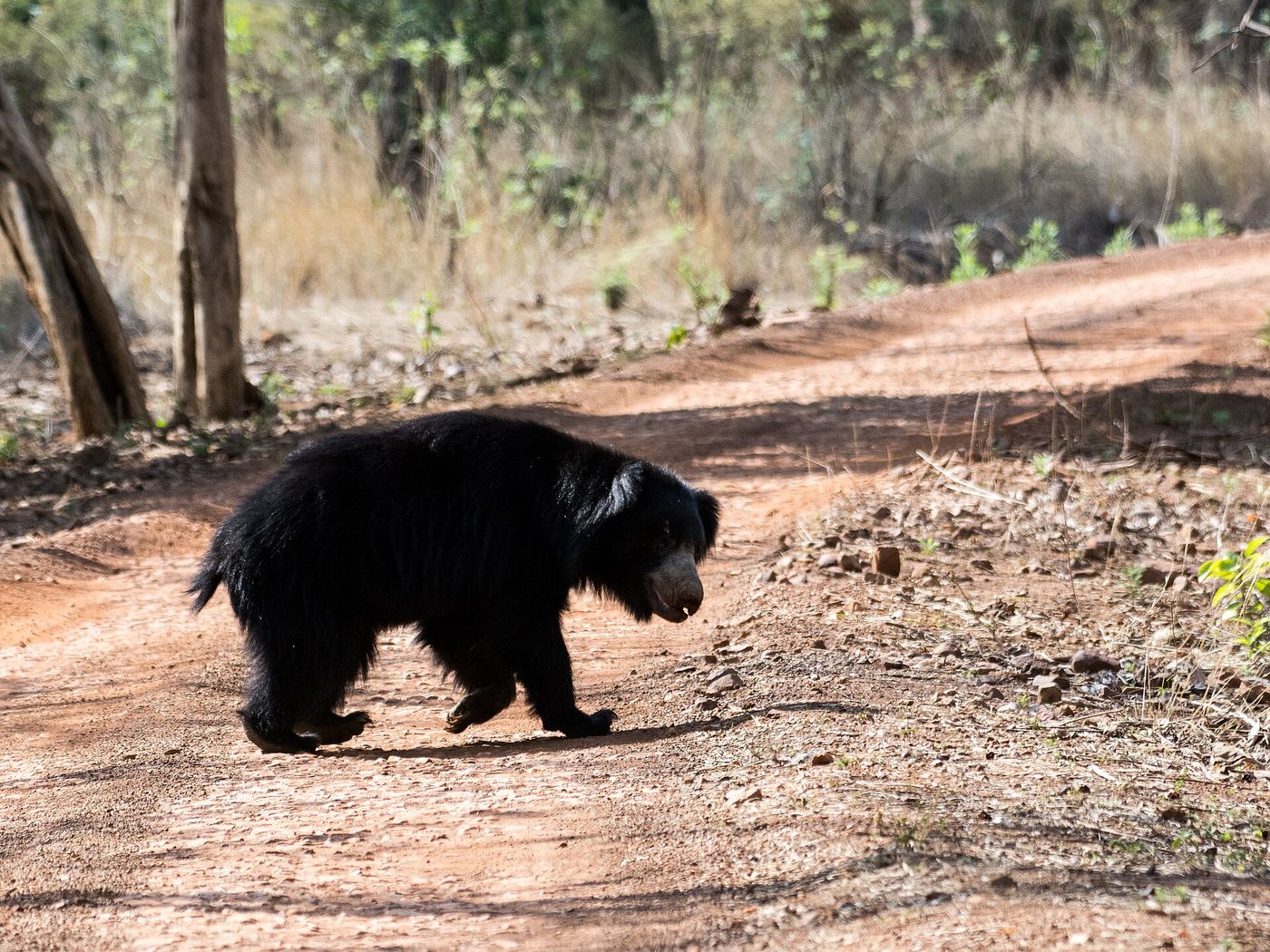
Photo: Saumitra Newalkar · CC BY-SA 4.0
Sloth bear
Melursus ursinus
With its long shaggy coat and highly mobile lips, the sloth bear is an unusual bear of South Asia, specialised in devouring termites and ants.
Characteristics
Temperament
Nocturnal, solitary, defensive if disturbed
Diet
Insectivore and omnivore: termites, ants, fruit, honey
A bear of unusual appearance
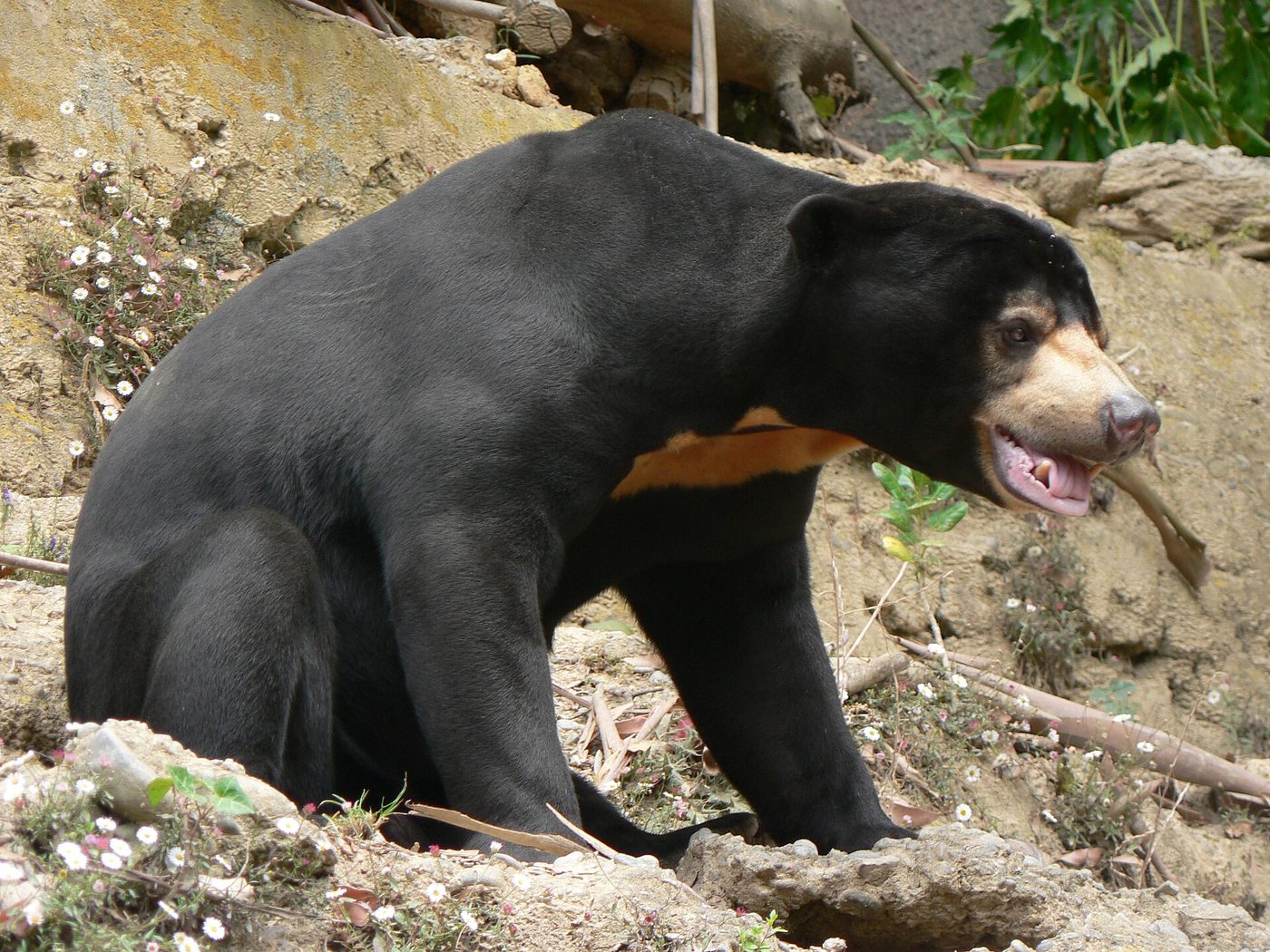
The sloth bear is one of the most peculiar bears in the world. It has a sturdy body covered with a long, shaggy, untidy black coat, often with a striking pale patch in the shape of a 'V' or 'Y' on the chest. Its muzzle is elongated, with extremely mobile, protruding lips and nostrils it can close at will: adaptations that gave it its name and that are closely linked to its particular diet. Its long, curved claws also make it unmistakable.
Habitat and distribution
It lives in the Indian subcontinent, across India, Sri Lanka and neighbouring countries, in environments ranging from forests to grasslands and hilly areas. It is an animal tied both to wooded areas and to open spaces rich in termite mounds, its main source of food. It also frequents areas near human settlements, which sometimes leads to encounters and conflicts.
Behaviour and diet
The sloth bear is above all insectivorous: it feeds largely on termites and ants, which it flushes out by opening the nests with its powerful claws. Then, thanks to its prehensile lips and closable nostrils, it literally sucks up the insects like a powerful living 'vacuum cleaner', producing sounds audible even at a distance. It supplements its diet with fruit and honey, of which it is fond. It is mainly nocturnal and, despite its clumsy appearance, can be surprisingly fast and determined in defending itself.
Curiosities
Unlike many other bears, the sloth bear does not hibernate. Females show a particular maternal behaviour: they often carry their cubs on their backs, a characteristic image of this species. Its highly mobile lips make it one of the most singular mammals in the way it feeds.
Conservation
The sloth bear is classified as a vulnerable species. The main threats are habitat loss and fragmentation, poaching and conflicts with humans. In the past it was also sadly exploited for entertainment. Protecting its forests and reducing conflicts with local communities are essential to ensure a future for this unique bear.
Pros
- Unique adaptations for eating termites
- Valuable regulator of social insects
- Fascinating maternal behaviour (cubs on the back)
Cons
- Vulnerable species
- Can come into conflict with humans
- Threatened by poaching and habitat loss