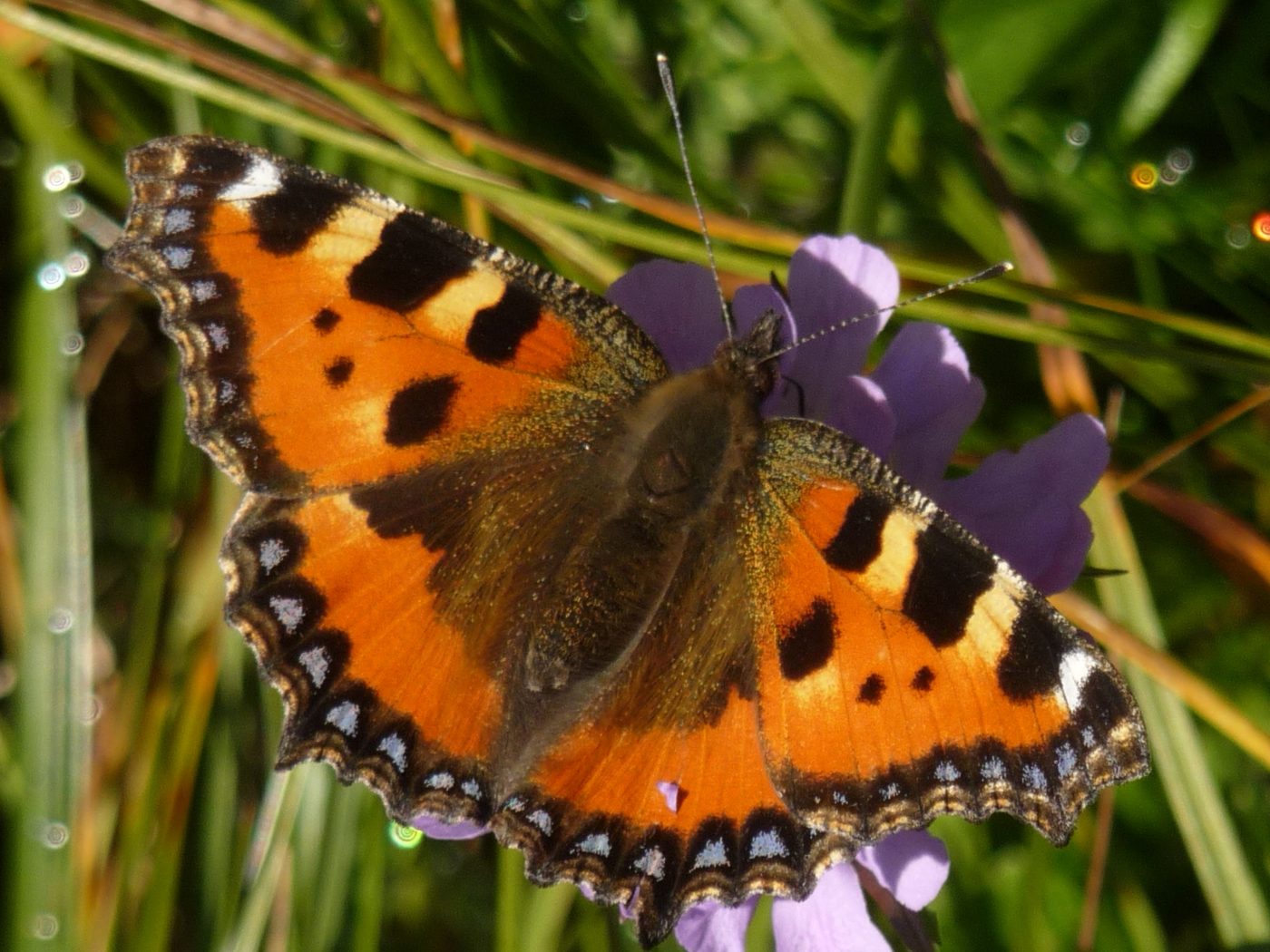
Photo: Philipp Schäufele · CC BY-SA 3.0
Small tortoiseshell
Aglais urticae
The small tortoiseshell is a common orange-and-black butterfly, among the first to appear in spring after hibernating as an adult.
Characteristics
Temperament
Diurnal, lively, sun-loving
Diet
Adults: nectar; caterpillars: nettle
Description
The small tortoiseshell is a medium-sized day-flying butterfly of the family Nymphalidae, with vivid, unmistakable colours. The upperside of the wings is a warm orange, edged with a row of blue lunules on a dark ground, with black and yellow marks towards the front margin. The underside, by contrast, is dark brown and camouflaged: with wings closed the butterfly blends into bark or dead leaves.
Habitat and distribution
It is widespread across much of Eurasia, from the lowlands to high mountain elevations. It frequents open, flowery habitats: meadows, gardens, roadsides, clearings and human settlements, wherever there are flowers to sip nectar from and nettles for breeding.
Life cycle
Females lay their eggs in batches on the leaves of common nettle, on which the gregarious black caterpillars feed. It is one of the butterflies that overwinter as adults: the adults seek shelter in tree cavities, attics and sheds, then reappear among the first at the spring awakening.
Behaviour and facts
The adults feed on the nectar of many flowers and love to bask in the sun with wings spread. In warmer climates they may have two broods a year. The small tortoiseshell is the national butterfly of Denmark.
Conservation
It is a common, widespread species, but like all grassland butterflies it benefits from flowery areas and untreated nettles. The loss of these habitats and pesticide use can reduce its populations locally.
Pros
- Vivid, unmistakable colours
- Among the first butterflies to appear in spring
- Useful pollinator of flowery meadows
Cons
- Depends on nettles for the caterpillars
- Sensitive to pesticide use
- Can suffer from the loss of flowery areas