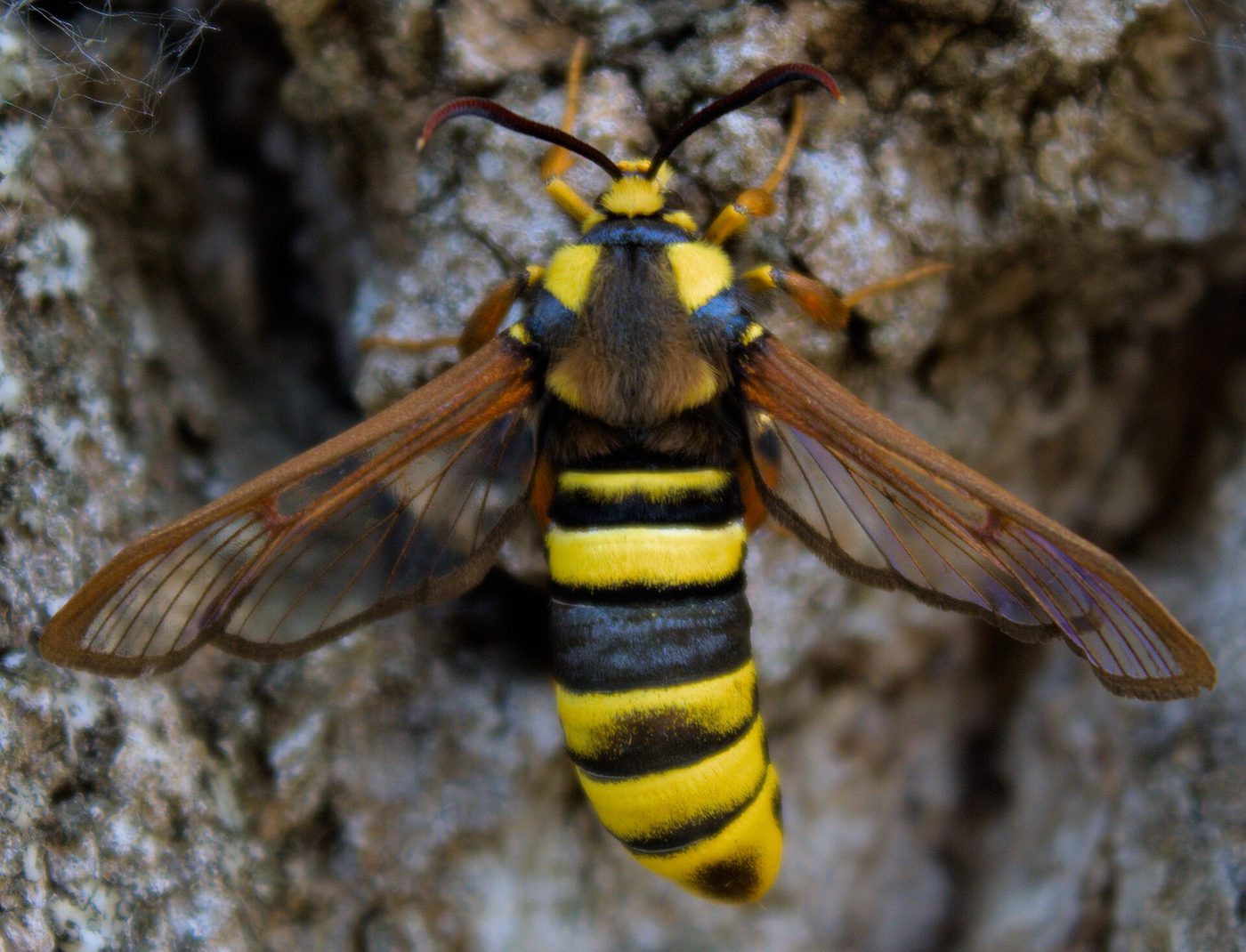
Photo: Colette Kerr · CC BY-SA 4.0
Hornet moth
Sesia apiformis
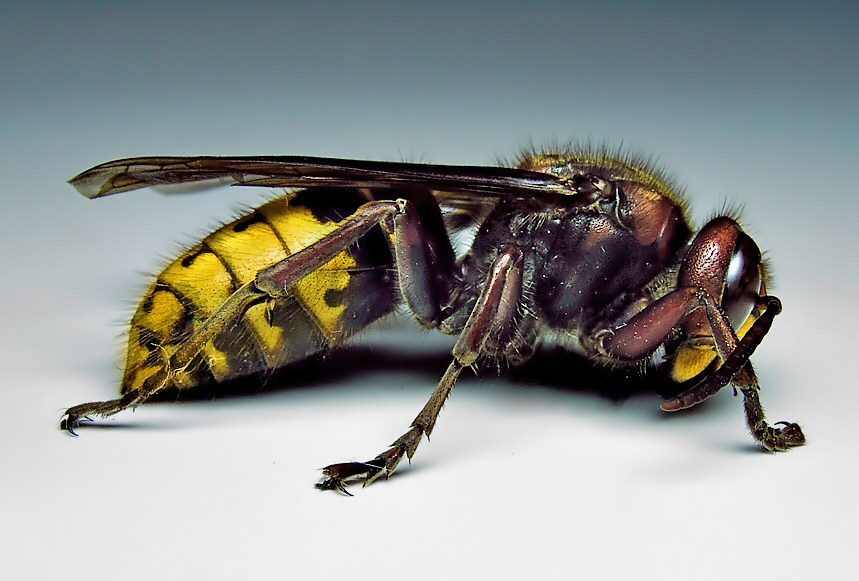
The hornet moth is a day-flying moth that mimics a hornet astonishingly well, with transparent wings and a yellow-and-black body: a case of mimicry.
Characteristics
Temperament
Day-flying, mimetic, harmless
Diet
Wood-boring larvae in poplars; adults little active
Description
The hornet moth is a large moth of the clearwing family, with a deceptive appearance: it resembles a hornet astonishingly well. It has a stout, yellow-and-black banded body and largely transparent, scaleless wings, just like those of a wasp. Its buzzing flight also adds to the deception. Unlike a hornet, however, it is completely harmless and has no sting.
Habitat and distribution
It is native to Europe and the Near East, and has also been introduced to North America. It lives where poplars grow, its host plants: tree lines, riverside woods, parks and tree-lined avenues. The adults fly by day in spring and summer.
Behaviour and life cycle
Females lay their eggs at the base of poplar trunks. The larvae, whitish caterpillars, bore galleries into the wood and roots, where they develop for one or two years before turning into adults. This activity can weaken and seriously damage the trees.
Mimicry and facts
The resemblance to a hornet is a classic example of Batesian mimicry: by imitating a dangerous, armed insect, the harmless moth deters predators. It is one of the most successful deceptions in the insect world.
Notes and impact
Because the larvae bore into poplar wood, the species is regarded as a pest harmful to these trees, particularly in plantations and tree lines, where it can contribute to the dieback of the plants.
Pros
- Extraordinary hornet mimicry
- Completely harmless, without a sting
- Classic example of Batesian mimicry
Cons
- Larvae damage poplars by boring into the wood
- Regarded as a pest in poplar plantations
- Long larval cycle, one or two years in the trunk