Photo: Rainer Theuer. · Public domain
Great crested newt
Triturus cristatus
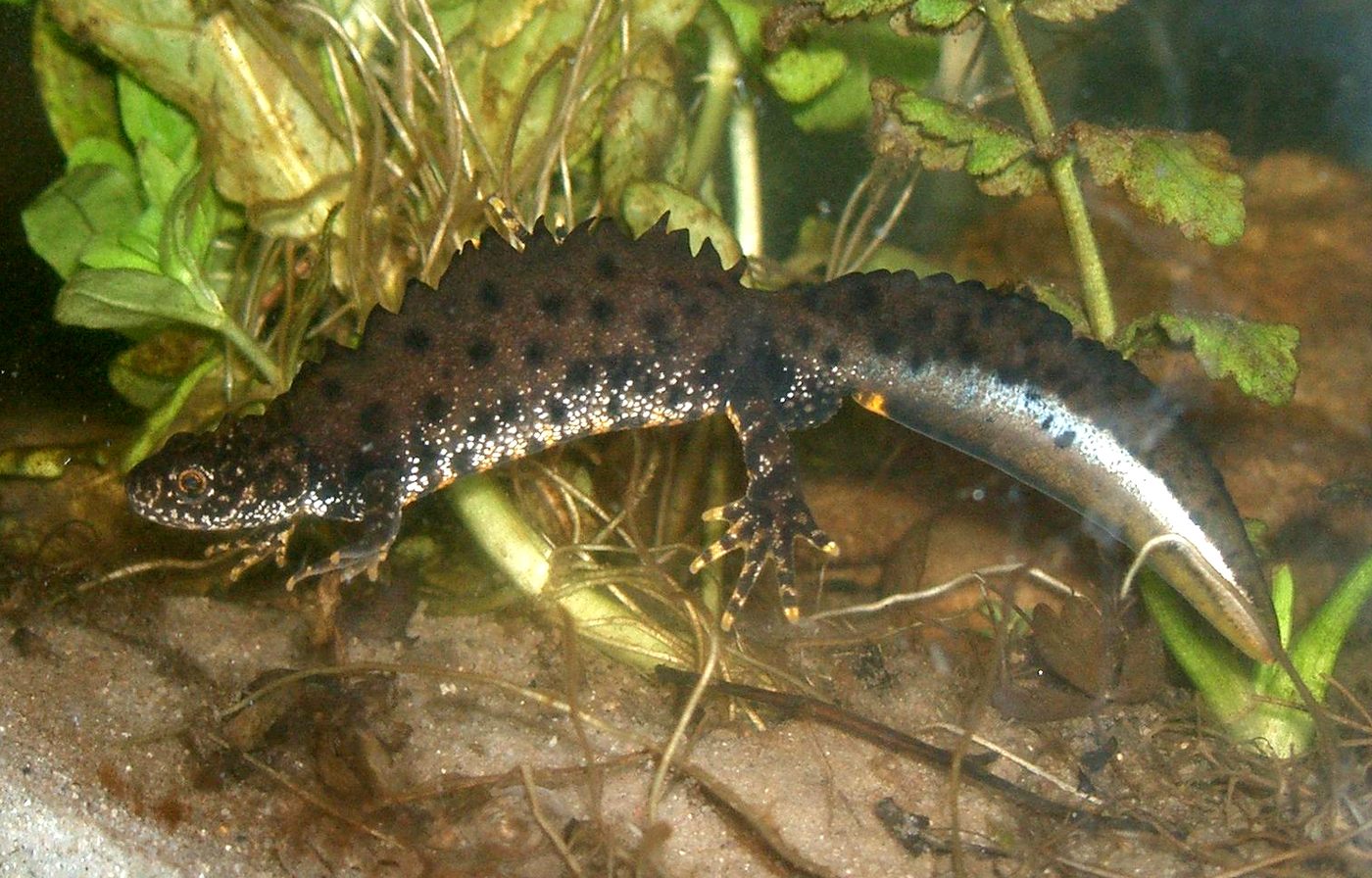
Europe's largest newt, the great crested newt is named for the jagged crest the male grows in spring to court, backed by a vividly coloured belly.
Characteristics
Temperament
Nocturnal, secretive; aquatic in spring, terrestrial otherwise
Diet
Carnivore: invertebrates, tadpoles, small amphibians
The giant among European newts
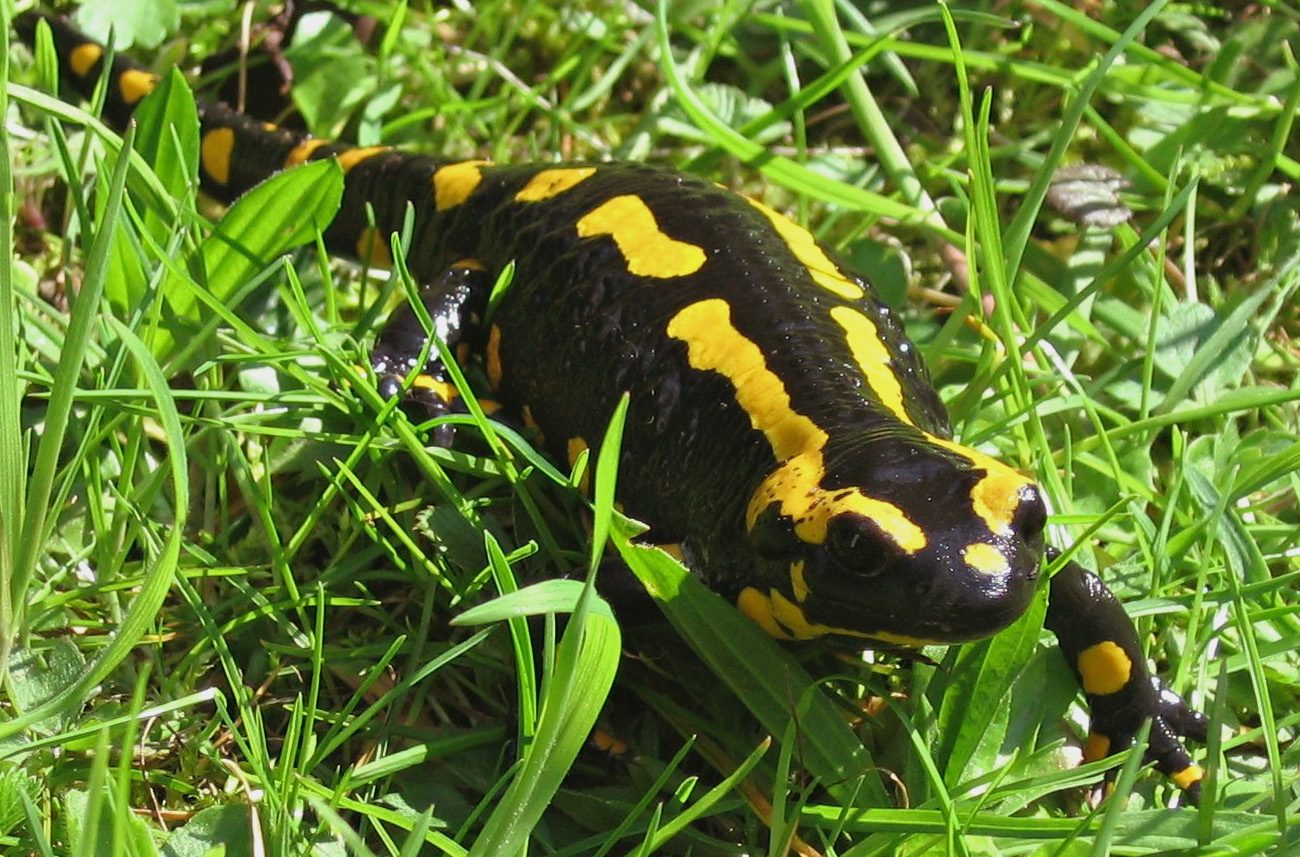
The great crested newt is the largest and most imposing of Europe's newts: females can reach 16 cm in length. Its back and flanks are a dark, almost black brown speckled with granular skin, while the belly is a vivid yellow-orange blotched with black — a pattern unique to each individual. During the breeding season the male grows a spectacular jagged crest running along the back and tail, broken at the tail base, set off by a silvery stripe along the sides.
Habitat and distribution
It is widespread across much of northern and central Europe, from Great Britain to western Siberia, but absent from the more southern regions such as the Iberian Peninsula. It lives in countryside with ponds, pools and small well-vegetated water bodies, surrounded by meadows and woods where it spends its terrestrial phase.
Behaviour and reproduction
It leads a double life: in spring it moves to water to breed, while for the rest of the year it lives on land, hidden under logs and stones, hunting at night. The male courts the female with an elaborate dance, waving his tail to fan his pheromones towards her. The female lays her eggs by carefully folding the leaves of aquatic plants around each one.
Curiosities
Its skin secretes tetrodotoxin, a toxic substance that deters predators: the bright belly serves as a warning. The great crested newt is an umbrella species for conservation: protecting its ponds safeguards the whole community of amphibians and invertebrates that live there.
Conservation
Globally the IUCN lists it as Least Concern, but in many countries it is declining and strictly protected by law. The main threats are the loss of ponds, pollution and the introduction of predatory fish.
Pros
- The largest and most spectacular newt in Europe
- Breeding crest and vividly coloured belly
- Umbrella species for pond conservation
Cons
- Declining and protected: must not be caught or disturbed
- Depends on clean, well-vegetated ponds
- Sensitive to pollution and introduced fish