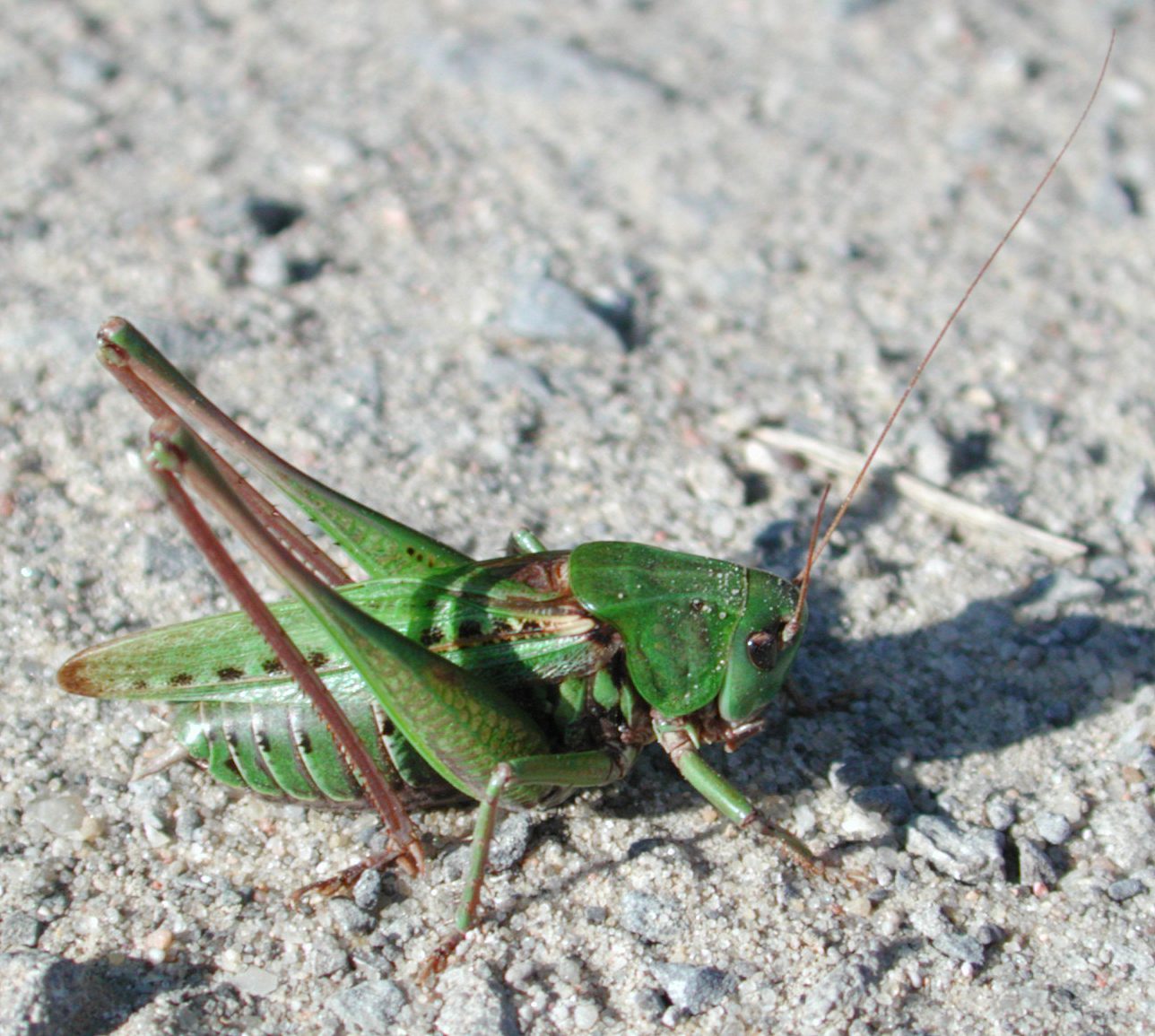
Photo: G.-U. Tolkiehn · CC BY 2.5
Wart-biter
Decticus verrucivorus
The wart-biter is a large green bush-cricket mottled with dark, once used to 'bite' warts, hence its curious common and scientific names.
Characteristics
Temperament
Diurnal, omnivorous, jumper
Diet
Omnivore: other insects and plant matter
Description
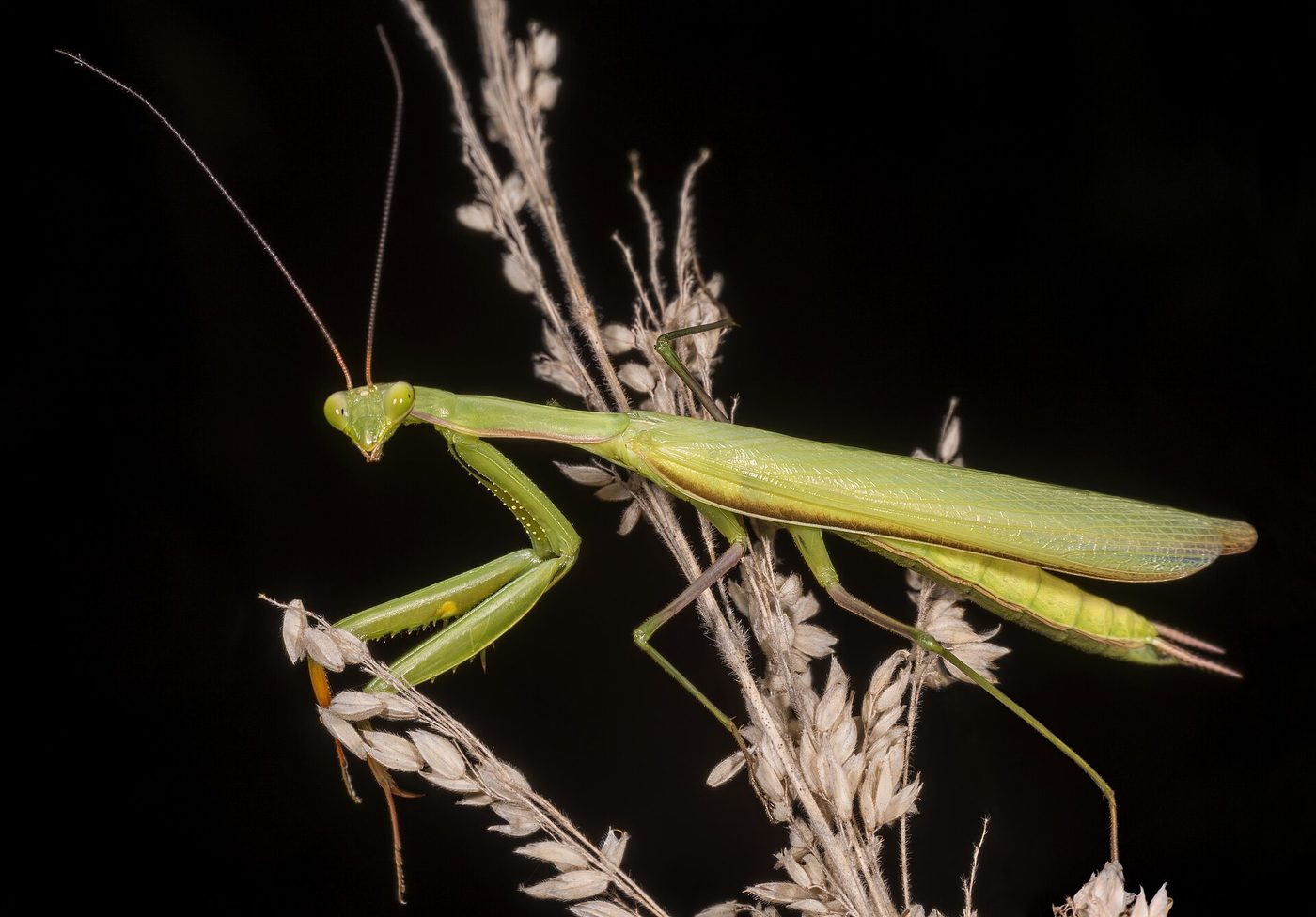
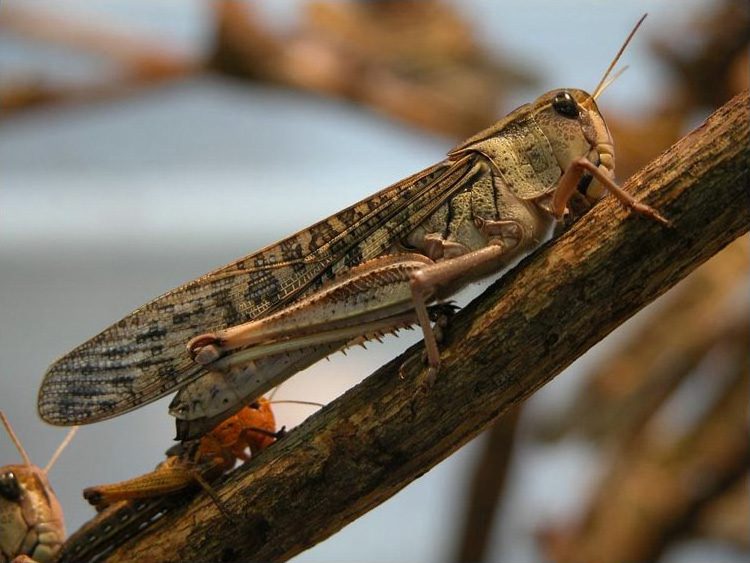
The wart-biter is a large orthopteran insect of the bush-cricket family, that is a long-antennaed cricket. It has a robust, stocky body, bright green or yellowish, densely mottled with dark brown. It has large hind legs suited to jumping and powerful jaws. Females bear a long sabre-shaped ovipositor.
Habitat and distribution
It occurs across much of Eurasia. It frequents meadows, pastures and open, sunny clearings, often in hilly and mountainous habitats rich in tall grass and scrub. It favours habitats that are not intensively farmed.
Behaviour and song
It is an omnivorous insect: it feeds on other insects, which it hunts actively, but also on plant matter. It is active by day, when the males utter a characteristic song, a series of short repeated 'ticks' produced by rubbing the wings. With its powerful jaws it can give a firm bite if handled.
Did you know?
Its curious name, both common and scientific ('verrucivorus', meaning 'wart-eater'), comes from an old folk practice, especially Swedish, of letting the insect bite warts, in the hope that its acidic digestive juices would make them disappear.
Notes and conservation
It is a cricket tied to open, well-preserved grassland. In some regions, such as the United Kingdom, it has become rare and protected due to the loss and fragmentation of these habitats through agricultural intensification.
Pros
- Large, striking mottled green cricket
- Characteristic song of repeated ticks
- Indicator of open, well-preserved grassland
Cons
- Depends on non-intensive meadows and pastures
- Powerful jaws can bite if handled
- Rare and protected in some regions