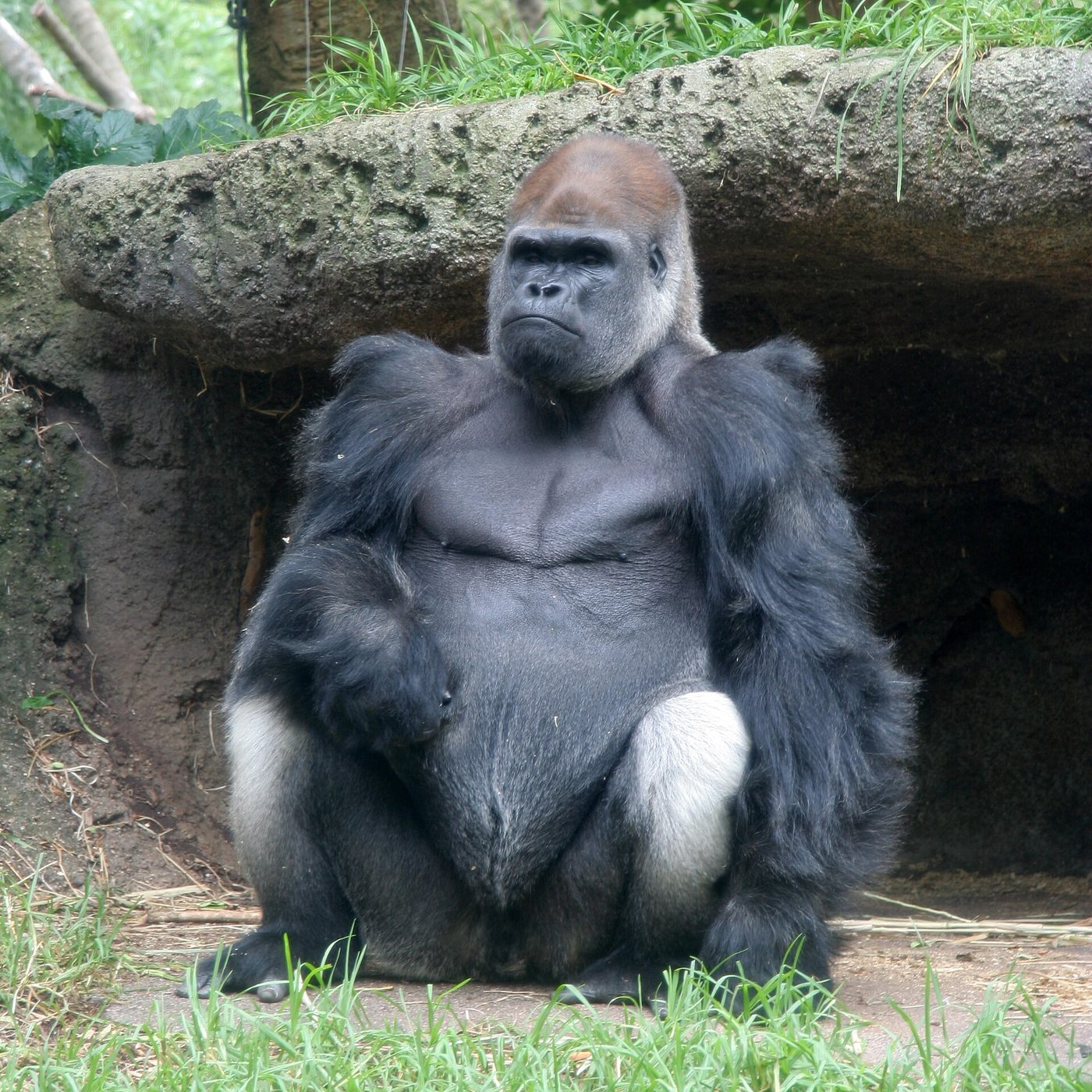
Western gorilla
Gorilla gorilla
The largest living primate, a gentle giant of the African forests, the western gorilla combines extraordinary strength with a surprisingly peaceful social life.
Characteristics
Temperament
Social and mostly peaceful despite its strength. It lives in groups led by a dominant male (silverback); chest-beating is ritual intimidation, not aggression.
Diet
Herbivore: leaves, shoots, stems, fruit and occasionally small invertebrates, in large quantities.
The gentle giant
The western gorilla is the largest of the living primates. Despite its imposing bulk and extraordinary strength, it is a mostly calm and peaceful animal, far from the fierce image attributed to it by films. Adult males develop a characteristic saddle of silvery fur on the back, hence the name 'silverback' by which they are commonly called. The body is massive, the arms long and powerful, and it walks leaning on the knuckles of its hands.
Life in the group
Gorillas live in family groups led by a dominant male, the silverback, who protects the troop, decides its movements and mediates conflicts. The group includes several females and their young. Social life is rich and based on close bonds: gorillas embrace, play, groom one another and communicate with a wide repertoire of sounds, expressions and gestures. The famous chest-beating of males is mostly a signal of ritual intimidation, a way to avoid physical conflict rather than to provoke it.
An imposing herbivore
In spite of its strength, the gorilla is essentially herbivorous. It feeds on leaves, shoots, stems, fruit and occasionally small invertebrates. To sustain its enormous body it must eat large quantities of vegetation each day, spending many hours foraging in the forest.
Remarkable intelligence
The gorilla is among the most intelligent animals. It shows abilities in learning and tool use, and in captivity some individuals have learned elements of sign language. It is capable of complex emotions, of empathy and grief, and its evolutionary closeness to humans makes it a fascinating mirror of our own nature.
Conservation
The western gorilla is classified as critically endangered. It is gravely threatened by the destruction of forests, poaching and epidemics such as the Ebola virus, which have decimated entire populations. Its survival depends on the protection of the forests of Central Africa and on the fight against illegal trade. It is one of the most powerful symbols of the fragility of biodiversity.