Photo: Polyoutis · CC BY-SA 4.0
Aardvark
Orycteropus afer
With a pig's snout, a rabbit's ears and a kangaroo's tail, the aardvark is one of Africa's most bizarre mammals: a nocturnal digger that devours termites.
Characteristics
Temperament
Solitary, nocturnal and shy. A tireless digger; it has weak sight but excellent smell and hearing, which it uses to find insect colonies.
Diet
Insectivore: almost entirely termites and ants, caught with its long sticky tongue after opening the termite mounds.
An animal that looks assembled
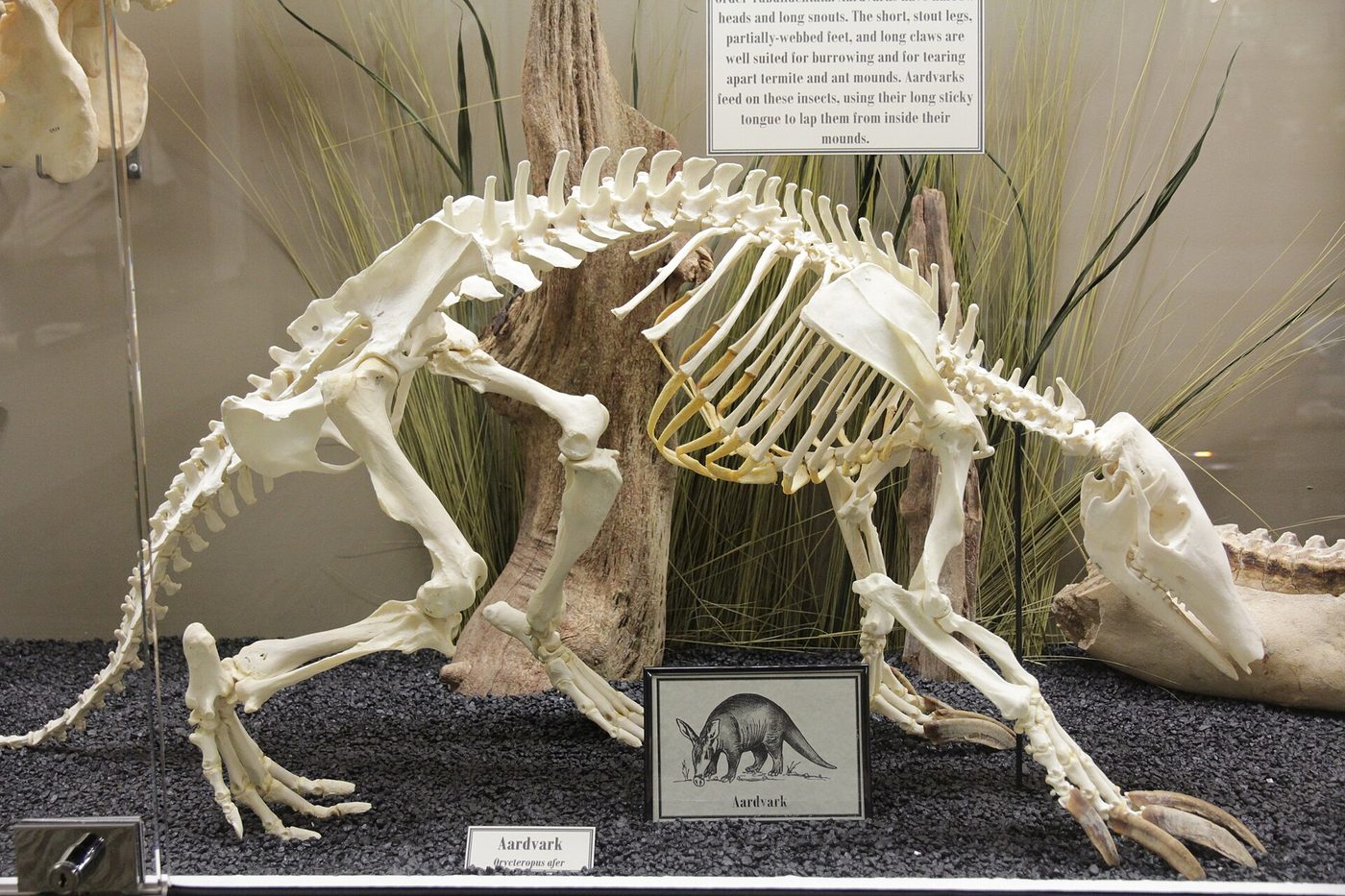
The aardvark is one of the most singular and hard-to-classify mammals in the world. It seems put together from parts borrowed from other animals: it has an elongated, mobile snout recalling that of a pig, long rabbit-like ears, a stocky body, powerful legs with strong claws and a thick kangaroo-like tail. Its name comes from a word meaning 'earth pig', for its appearance and digging habits. In fact it is not related to pigs or to other ant-eaters: it is the only living representative of its entire order.
A tireless digger
The aardvark is a formidable digger. With its powerful forelegs and strong claws it can demolish the hardest termite mounds in a few minutes and dig rapid underground burrows, which it uses as shelter from the heat and from predators. Its tunnels are so large and widespread that they become refuges for many other savanna animals too, which use its abandoned burrows.
A meal of termites and ants
The aardvark's diet is almost entirely of termites and ants. After opening a termite mound with its claws, it inserts its long snout and catches the insects with a very long, thin, sticky tongue that it can extend for tens of centimetres. A single aardvark can devour tens of thousands of insects in one night. Its nostrils have hairs and closing mechanisms to keep out dust and insects while it digs.
Nocturnal habits
The aardvark is a solitary, nocturnal animal. By day it rests in its burrow to escape the heat, and by night it comes out to search for food, travelling even long distances following by smell the trails of insect colonies. It has weak sight but excellent smell and hearing.
Conservation
The aardvark is classified as least concern and has a very wide range across much of sub-Saharan Africa. It is not a globally threatened species, though locally it may suffer from hunting and habitat destruction. Its role as a digger also makes it an 'ecosystem engineer', important for the whole savanna ecosystem.