Photo: FunkMonk · CC BY-SA 3.0
Saola
Pseudoryx nghetinhensis
Nicknamed the 'Asian unicorn', the saola is an elusive and extremely rare bovid of the Annamite forests, one of the most mysterious and threatened mammals on the planet.
Characteristics
Temperament
Shy, solitary, elusive
Diet
Herbivore: leaves and forest vegetation
The Asian unicorn
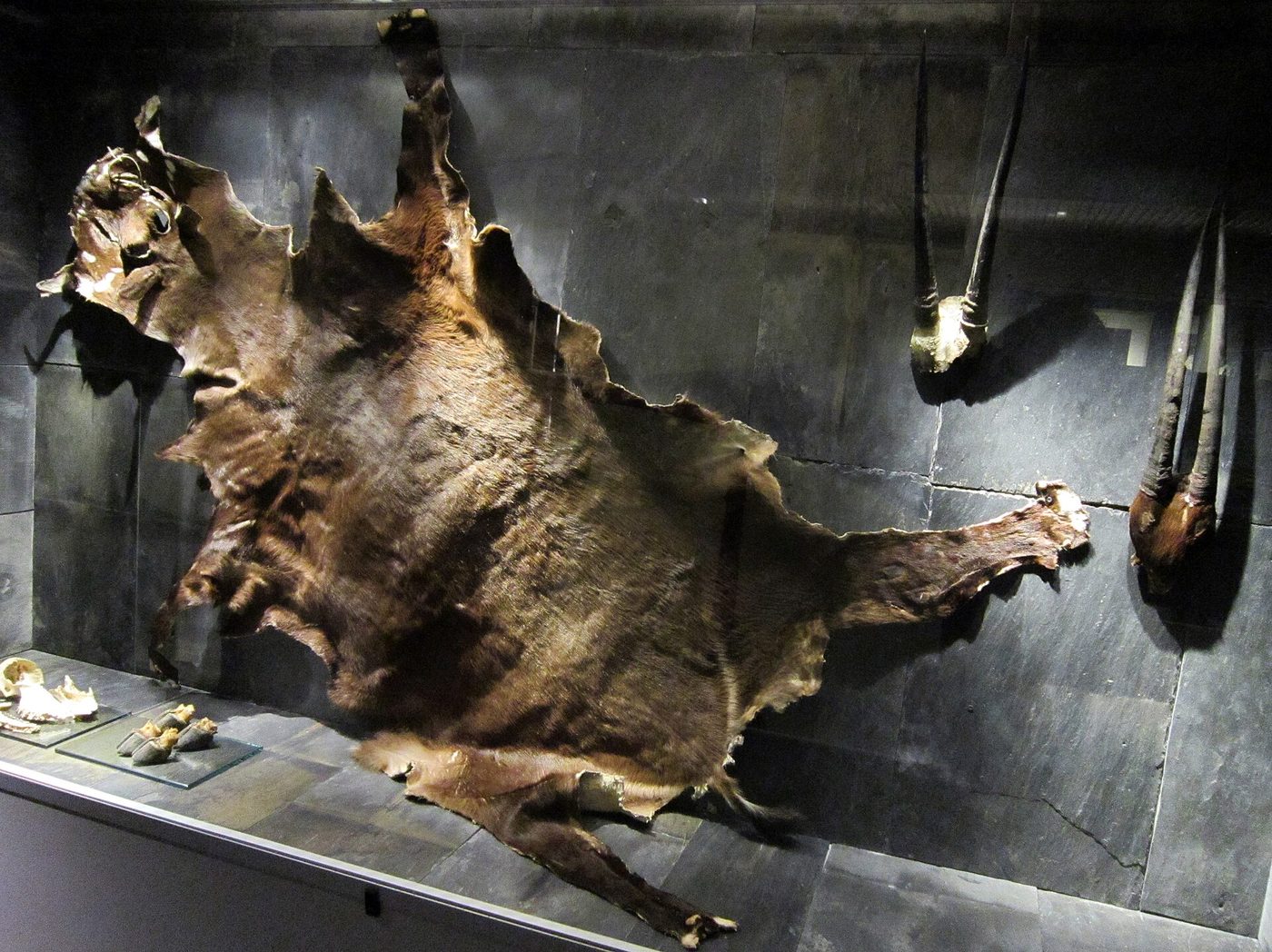
The saola is a medium-sized bovid of elegant, distinctive appearance. Its coat is a dark, almost chestnut brown, enlivened by striking white markings on the face, which give it an unmistakable look. Its most famous feature is its horns: two long, thin and almost straight ones, running parallel backwards and present in both sexes. It is precisely these horns, which in profile may look like a single one, that have earned it the nickname 'Asian unicorn'.
Habitat and distribution
It lives in the dense humid forests of the Annamite Range, on the border between Vietnam and Laos. It is a shy, solitary animal, tied to the most remote and undisturbed forests, where it moves through the thick vegetation. Precisely because of its rugged habitat and elusive habits, it is extremely difficult to observe in the wild.
A recent discovery and a great rarity
The saola was described by science only in 1993, following the discovery of some remains in Vũ Quang National Park: one of the most sensational zoological discoveries of the twentieth century, being a large mammal until then unknown to science. Since then it has been seen alive very few times, and the rare individuals kept in captivity did not survive long. It is considered one of the rarest mammals in the world.
Conservation
The saola is classified as a critically endangered species and is among the most threatened animals on the planet. The main causes of its decline are the illegal snares set for other animals, in which it is accidentally caught, and habitat loss. Its survival depends on the strict protection of the last Annamite forests and the removal of snares.
Pros
- Elegant, unmistakable appearance
- The famous 'Asian unicorn'
- One of the great modern zoological discoveries
- Symbol of Annamite forest conservation
Cons
- Critically endangered species
- Victim of illegal snares
- Does not survive in captivity