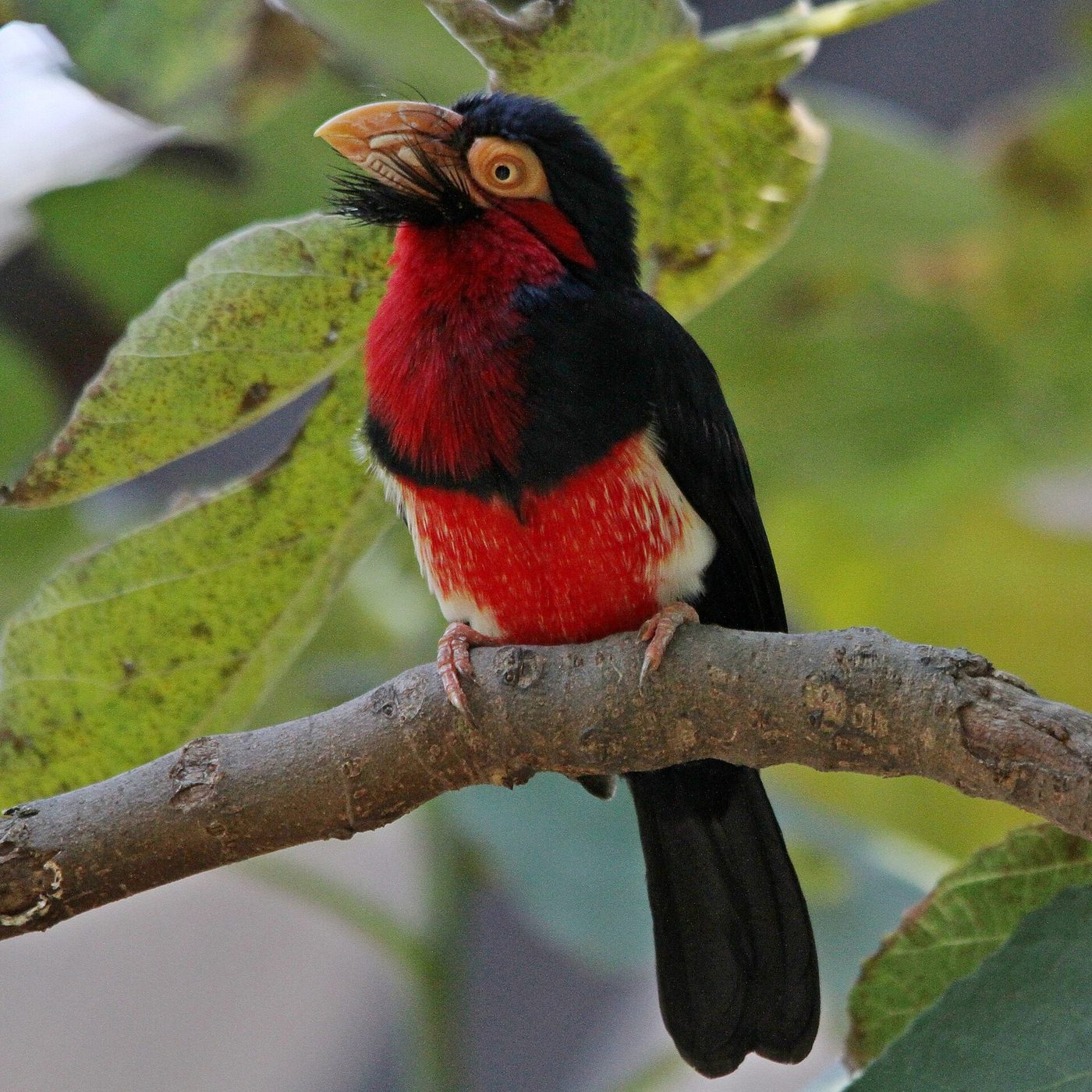
Bearded barbet
Lybius dubius
A striking bird of West Africa, the bearded barbet has a heavy pale bill fringed with bristles and boldly contrasting black, white and red plumage.
Characteristics
Temperament
Social, lively, frugivorous
Diet
Frugivore: figs and other fruit, insects
A bird with a bristly 'beard'
The bearded barbet is a stocky, robust bird of West Africa, with boldly coloured plumage: black head, back and wings, white belly and rump and a striking bright-red breast. Its most distinctive feature is the heavy pale bill, at the base of which sprout stiff bristles like a little beard — hence the name 'barbet', shared by the whole family.
(Note: the mass value given by Wikidata, 89 kg, is plainly wrong for a bird of this size; its true weight is about 90 grams.)
Habitat and distribution
It lives in Africa north of the equator, in the western belt of the continent, from Senegal to central Africa. It frequents wooded savannas, scrub, gardens and cultivated areas rich in fruit trees, especially figs.
Behaviour and diet
It feeds mainly on fruit, particularly figs, of which it is very fond, supplementing its diet with insects. It is a social bird, often seen in pairs or small groups. Like many barbets, it nests in cavities it excavates in tree trunks or in termite mounds, where it raises its brood in shelter.
Curiosities
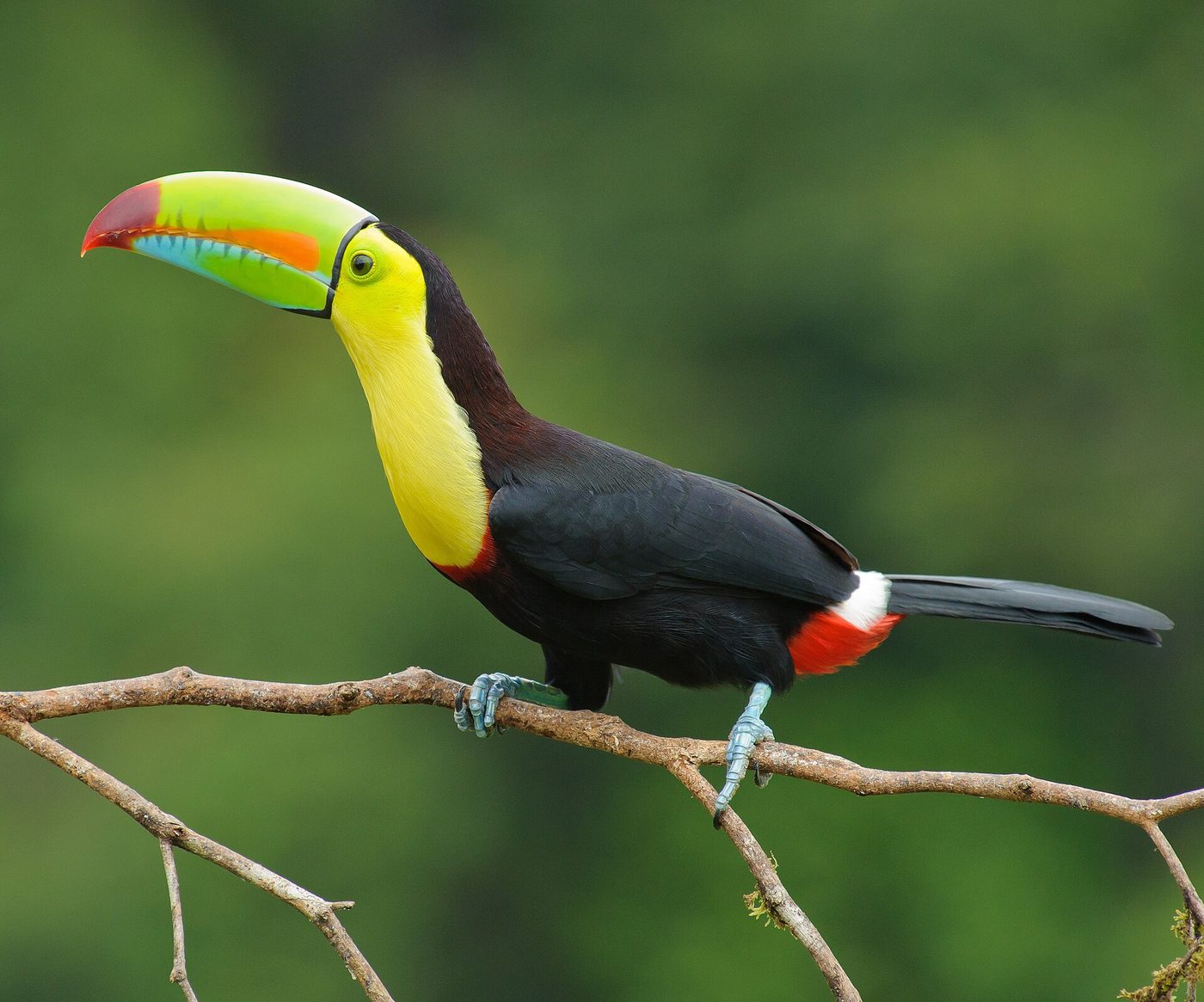
Barbets are close relatives of toucans and woodpeckers, and like the latter they are skilled wood-excavators. The bearded barbet is among the species described by science as early as the eighteenth century, thanks to its range being relatively accessible to European explorers.
Conservation
The species is common and widespread within its range and is not considered threatened. The availability of fruit trees and suitable nesting sites is important for its maintenance.
Pros
- Boldly contrasting plumage and bright-red breast
- Distinctive heavy bristled bill
- Common and widespread within its range
Cons
- Depends on fruit trees and nest sites
- Not a cage bird
- Inconspicuous unless moving