Photo: Christian Fischer · CC BY-SA 3.0
Common spadefoot
Pelobates fuscus
The common spadefoot, or garlic toad, is a nocturnal amphibian that digs quick burrows in the soil and, if threatened, gives off a garlic-like smell.
Characteristics
Temperament
Nocturnal, burrowing, shy
Diet
Insects and small invertebrates
Description
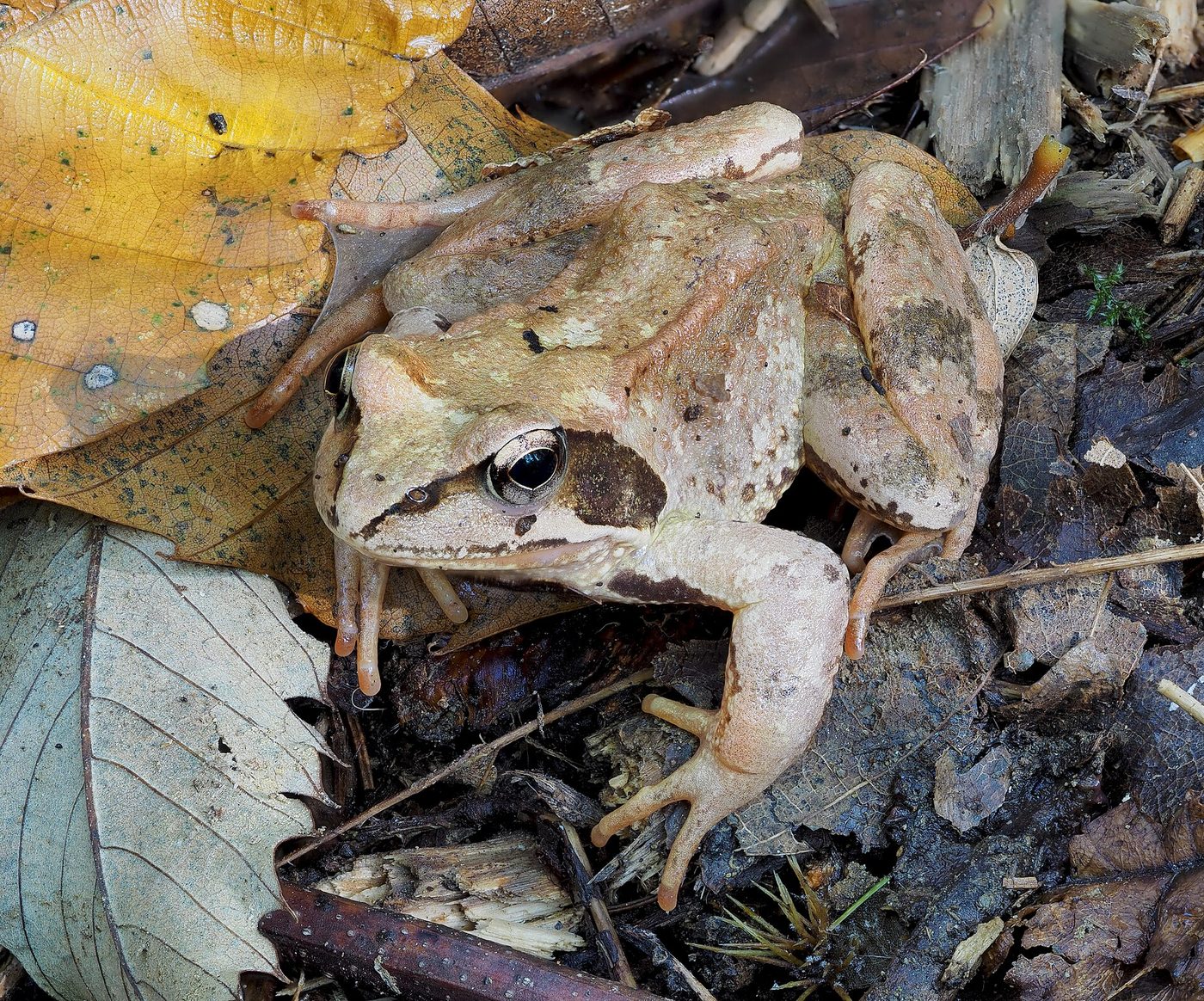
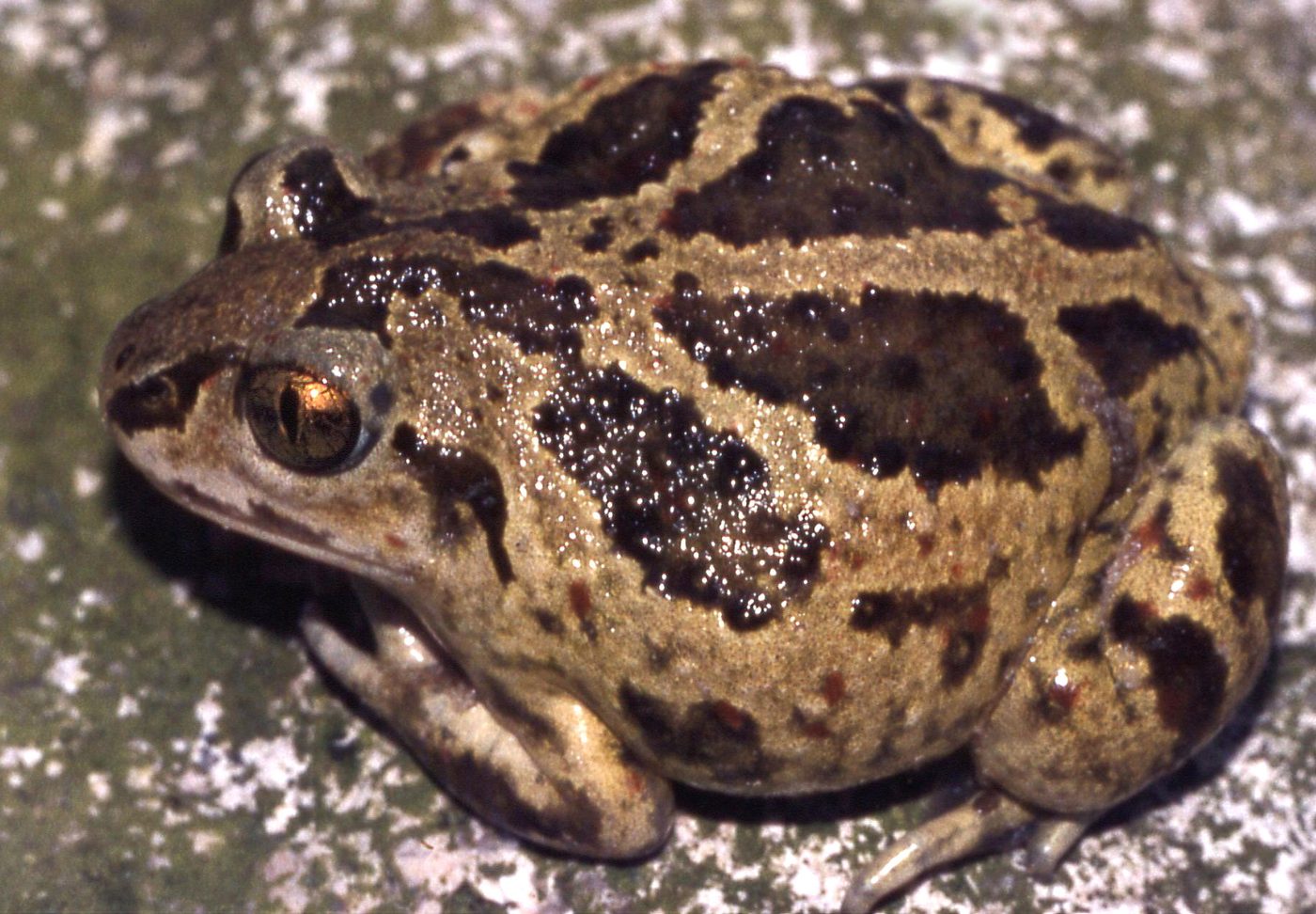
The common spadefoot is a small anuran amphibian, stocky in build with relatively smooth skin, brownish-grey in colour with darker blotches and sometimes reddish tints. It has large, protruding eyes with vertical pupils, and beneath its hind feet it bears stout, spade-shaped horny spurs that let it dig quickly into the soil. These "spades" give the group its common and scientific names.
Habitat and distribution
It occurs from Central Europe to Western Asia. It favours sandy, loose soils that are easy to dig, in open habitats such as dunes, cultivated fields, heaths and meadows near ponds and pools where it can breed. It is closely tied to the presence of soft ground.
Behaviour
It is a mainly nocturnal and burrowing animal: by day it stays hidden in burrows it digs itself, emerging at night to hunt insects and invertebrates. If disturbed it may puff up, utter calls and release a secretion with a pungent, garlic-like smell, hence the folk name "garlic toad".
Did you know?
Its tadpoles are among the largest in Europe: before metamorphosis they can reach a remarkable size, sometimes larger than the adult. Its hidden life and fragmented distribution make this species little known.
Conservation
It is classed as least concern globally, but in many European regions it is declining and protected. The main threats are the loss of wetlands for breeding and the disappearance of open sandy soils.
Pros
- Skilful digger, buries itself in seconds
- Useful predator of nocturnal insects
- Tadpoles among the largest in Europe
Cons
- Declining through loss of wetlands
- Depends on sandy, loose soils
- Hidden life, hard to observe