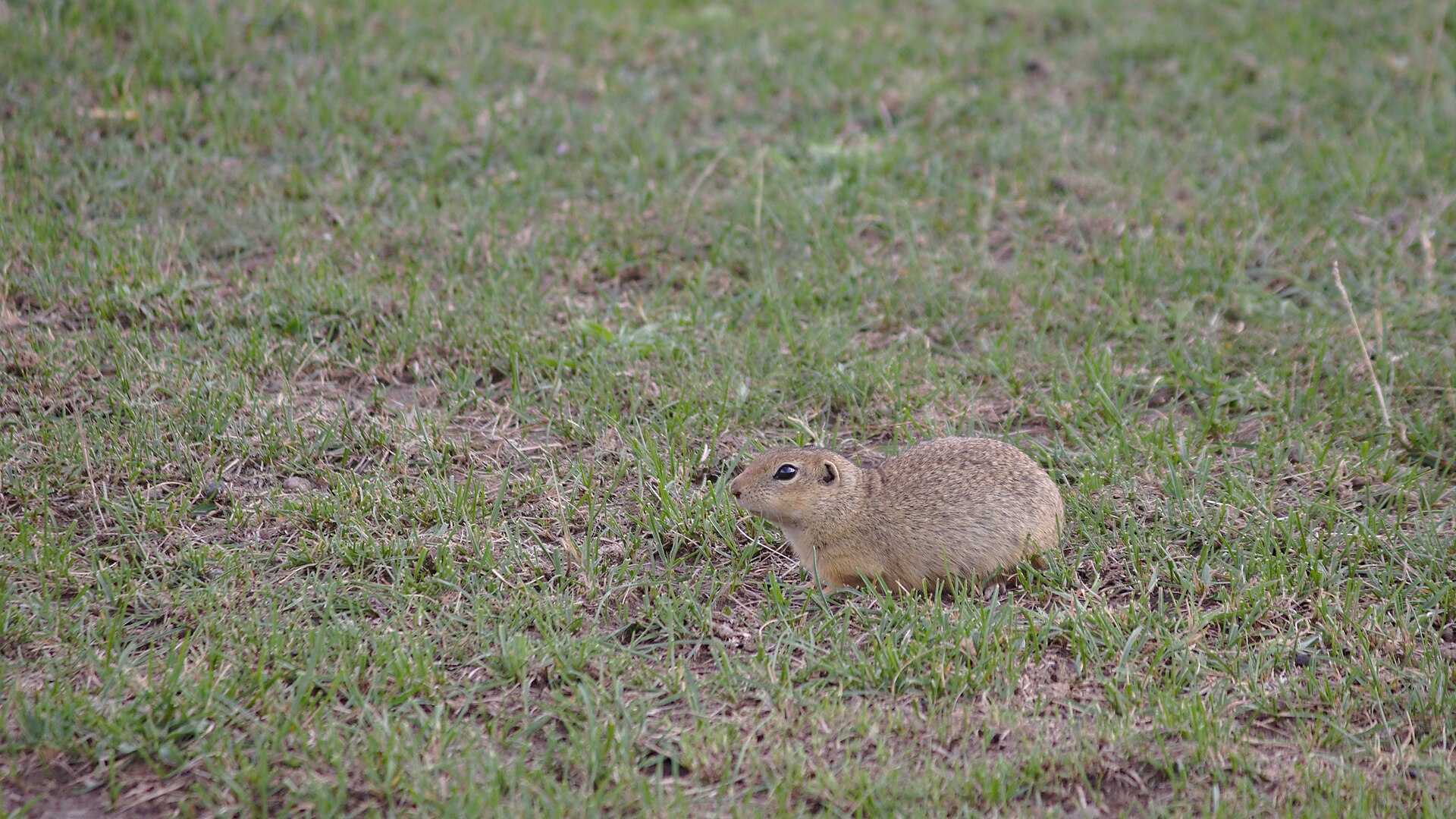
European Ground Squirrel
Spermophilus citellus
Characteristics
Temperament
A diurnal, social, very watchful wild rodent that lives in loose colonies of individual burrows in grasslands. It spends the warm season alternating foraging with moments of "guard duty" upright on its hind legs, ready to give an alarm whistle and dive into the burrow at the slightest danger. For much of the year it disappears into a long underground hibernation. It is NOT a pet: it is endangered native wildlife, tied to steppes and pastures, to be protected by conserving its grassy habitats.
Diet
Mainly herbivorous and granivorous, with an opportunistic component. It feeds above all on seeds and grains (hence the genus name Spermophilus, "seed-lover"), as well as grasses, shoots, roots and bulbs, and on insects and other small invertebrates. It feeds near the burrow, ready to take refuge in it, and carries seeds in its cheek pouches. In summer-autumn it eats a lot to build up the fat reserves essential for surviving the very long hibernation, during which it lives entirely on what it has stored in its body.
The European Ground Squirrel (Spermophilus citellus), also known as the European souslik, is a small, fascinating rodent of the steppes and pastures of our continent. Famous for:
- Being a "ground squirrel": it belongs to the squirrel family but lives on the ground and digs burrows instead of climbing
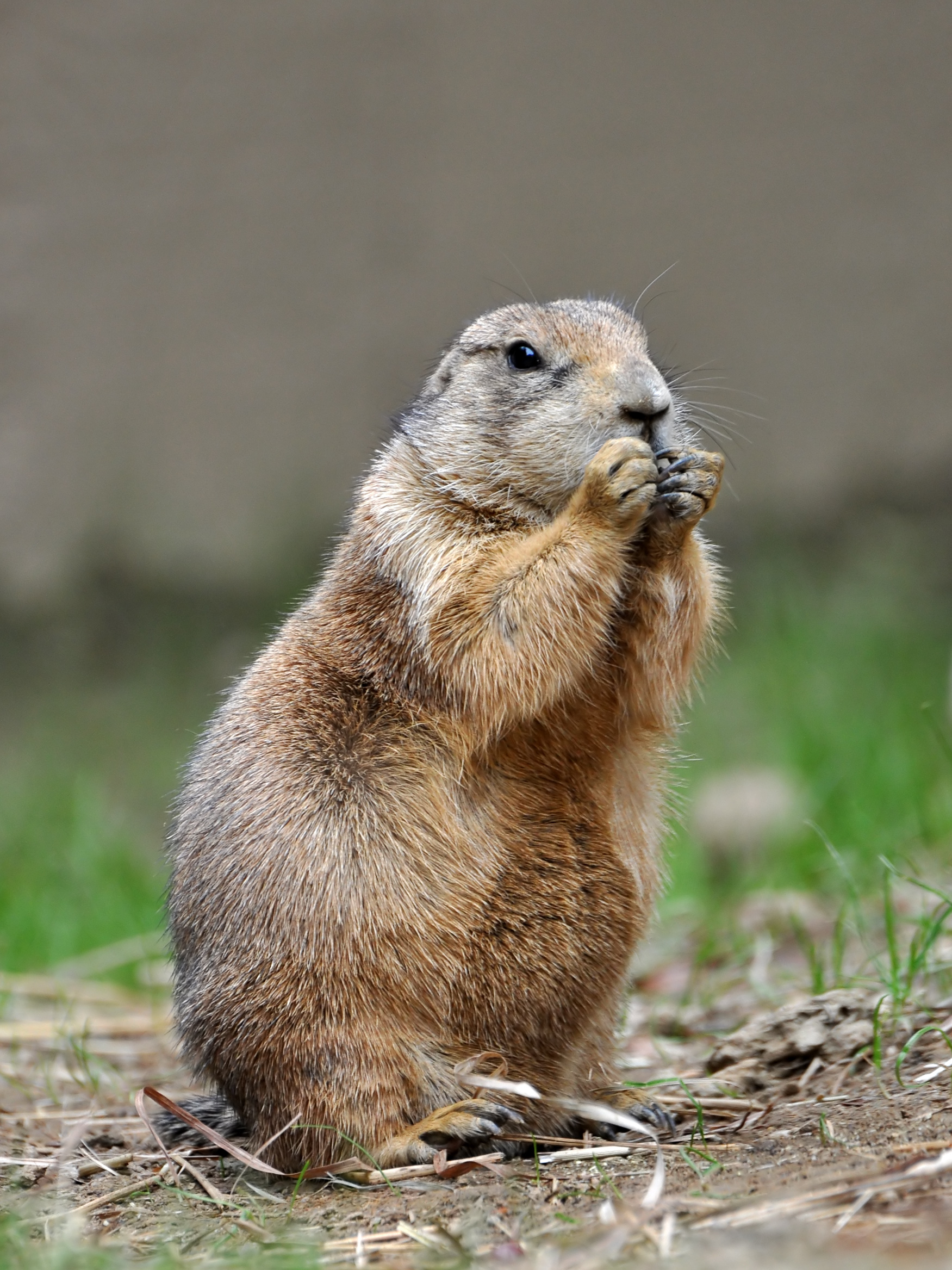
- The "sentinel" pose: it often rears up on its hind legs to scan the environment, like prairie dogs
- Colonial life: it lives in loose groups of individual burrows, in grasslands and steppes
- The long hibernation: it spends much of the year underground, in deep hibernation
- Alarm calls: it gives shrill whistles to warn its companions of danger
- Decline: from a common animal to a threatened species, a symbol of the crisis of Europe's grasslands
IUCN status: Endangered (EN). It enters the portal in the group of sciurids, alongside the prairie dog, the squirrels and the chipmunk: with the prairie dog in particular it shares, strikingly, colonial life, burrows and the famous upright posture — it is something of the "prairie dog of Europe".
Classification and category
Order Rodentia (the rodents), family Sciuridae — the same as squirrels, marmots and prairie dogs. It is one of the ground squirrels (genus Spermophilus). In the portal it is placed among the sciurids. It is useful to place it relative to its "cousins" already in the portal: the tree squirrels (red, grey, flying) live in trees; the ground squirrel instead lives on the ground and in burrows; the marmots (alpine, American) are much larger; the European Ground Squirrel is a small sciurid of a few hundred grams; the American prairie dog is its ecological "double": also a colonial, burrowing, "sentinel" ground squirrel, but of the New World. Etymology: the genus name "Spermophilus" comes from Greek and means "seed-lover", referring to its diet; "citellus" is behind the Italian name "citello"; the term "souslik" comes from Slavic languages. Parameters: Head-body length about 18-23 cm, plus a short tail of 5-7 cm. Weight about 200-430 g (heavier in autumn, before hibernation). Appearance a small sciurid with a tapered body and a short tail. Longevity: in the wild generally a few years (up to about 4-6), due to heavy predation pressure. Reproduction: one litter a year, in spring, of several young, raised in the burrow by the mother.
Habitat and distribution
The European Ground Squirrel is a typically steppe rodent of central-eastern Europe: its range runs from Central Europe (Austria, Czech Republic, Slovakia, Hungary) through the Balkans to Ukraine and European Turkey. Preferred habitats — open, grassy environments with soil suitable for digging: steppes, grasslands and short-grass pastures; meadows, embankments, field edges and even "artificial" grassy areas such as airfields, parks and golf courses; and dry, well-drained soils, essential for the burrows. It is a diurnal animal tied to the warm season. It needs grass kept short (once by grazing livestock) to be able to watch its surroundings: this is why the end of traditional grazing and the conversion of steppes into ploughed fields have severely harmed it. It lives in loose colonies and spends winter (and part of spring and autumn) in hibernation in its burrows, for more than half the year. IUCN: Endangered. It is one of the most rapidly declining European rodents: agricultural intensification, the loss of pastures and the ploughing of grasslands have fragmented and reduced its populations. Conservation and reintroduction programmes are under way, also because the souslik is a key prey for threatened raptors such as the saker falcon and the imperial eagle.
Diet
The European Ground Squirrel is mainly herbivorous and granivorous, but with an opportunistic component. It eats: seeds and grains (the basis of the diet — the name Spermophilus, "seed-lover", recalls it); grasses, shoots, roots and bulbs; and insects and other small invertebrates, and occasionally small animals. Feeding habits: eating near the burrow (it feeds close to its shelter, ready to dive in at the first alarm); fat accumulation (in summer-autumn it eats a lot to fatten up for the long hibernation); and stores (it can carry seeds in its cheek pouches and store them in the burrow). Crucially, as with marmots, much of the souslik's biology revolves around hibernation. Summer is devoted to accumulating fat reserves sufficient to survive the long months spent underground, during which it lives entirely on what it has stored in its body.
Physical features
A small sciurid of sober but pretty appearance, well adapted to ground life. Fur and colours: a yellowish-grey or sandy-brown colouring, often with a faint paler speckling on the back, excellent for blending into dry grass; paler underparts. The body and senses: a tapered body with a short tail (much shorter than that of tree squirrels); large dark eyes set high, ideal for watching the surroundings, and small ears; sturdy clawed legs, suited to digging; cheek pouches to carry food. Performance: an excellent digger (it builds burrows with tunnels and chambers); the upright "sentinel" posture, to spot predators from afar; and a shrill alarm whistle, to warn the colony.
Behaviour and curiosities
The European Ground Squirrel is a diurnal, social, watchful animal. It lives in loose colonies, where each individual has its own burrow but shares the environment and alarm signals with its neighbours. It spends the day alternating foraging with moments of "guard duty" in an upright position, always ready to dive into the burrow at the slightest danger. It is closely tied to the rhythm of the seasons, active only in the warm half of the year.
The "prairie dog of Europe": those who know American prairie dogs will notice in the souslik a striking European "double"; although belonging to different genera, the two animals share the same lifestyle: they are colonial, burrowing ground squirrels that rear up as sentinels and communicate with alarm whistles; it is a classic example of "convergence", in which related but distinct animals, on different continents, develop similar habits by adapting to analogous environments (grasslands). The sleepyhead of the steppes: the souslik spends a huge part of its life sleeping; it hibernates to face winter, but its underground "sleep" can last more than half the year: in some populations the animal is active above ground for only a few months, from spring to early autumn, before retreating again into the burrow; the whole active season is thus a race against time to feed, breed and fatten up enough. The "seed-lover": the genus name Spermophilus literally means "seed-lover", and well describes one of this rodent's feeding passions; like many sciurids, the souslik uses its cheek pouches to carry seeds and grain, which it can eat in safety or store, behaving as a small, busy gatherer of the grasslands. The standing sentinel: one of the most characteristic images of the souslik is the animal upright on its hind legs, motionless, scanning the horizon; this "post-like" posture lets it see over the grass and spot predators, especially raptors, in advance; at the first sign of danger it gives an alarm whistle and dives lightning-fast into the burrow, warning its colony neighbours too. The food of the kings of the sky: the souslik is important not only in itself but also as a key link in the steppe food chain; it is indeed a key prey for some of the rarest and most majestic raptors in Europe, such as the saker falcon and the imperial eagle, as well as for the steppe polecat and other carnivores; its decline therefore threatens not only itself but also the predators that depend on this small "game". The decline tied to grazing: the souslik's fate is closely intertwined with that of traditional pastures and grasslands; this rodent needs short grass to see and watch its surroundings, a condition once ensured by grazing livestock; with the abandonment of traditional pastoralism, the ploughing of steppes and intensive agriculture, many of its habitats have disappeared, making it one of the symbol-species of the biodiversity crisis in Europe's grasslands.
Pros
- Affascinante "scoiattolo di terra" europeo, sosia del cane di prateria
- Specie chiave delle steppe: preda fondamentale di rapaci rari (falco sacro, aquila imperiale)
- Vero ibernante, di grande interesse scientifico
- Simbolo della conservazione delle praterie e dei pascoli europei
Cons
- NON è un animale da compagnia: è fauna selvatica autoctona in pericolo
- IUCN Endangered: in forte declino per agricoltura intensiva e perdita dei pascoli
- Dipende da praterie a erba bassa: scompare dove finisce il pascolo tradizionale
- Visibile solo per pochi mesi l'anno: per il resto è in letargo sottoterra