Photo: Keven Law · CC BY-SA 2.0
European polecat
Mustela putorius
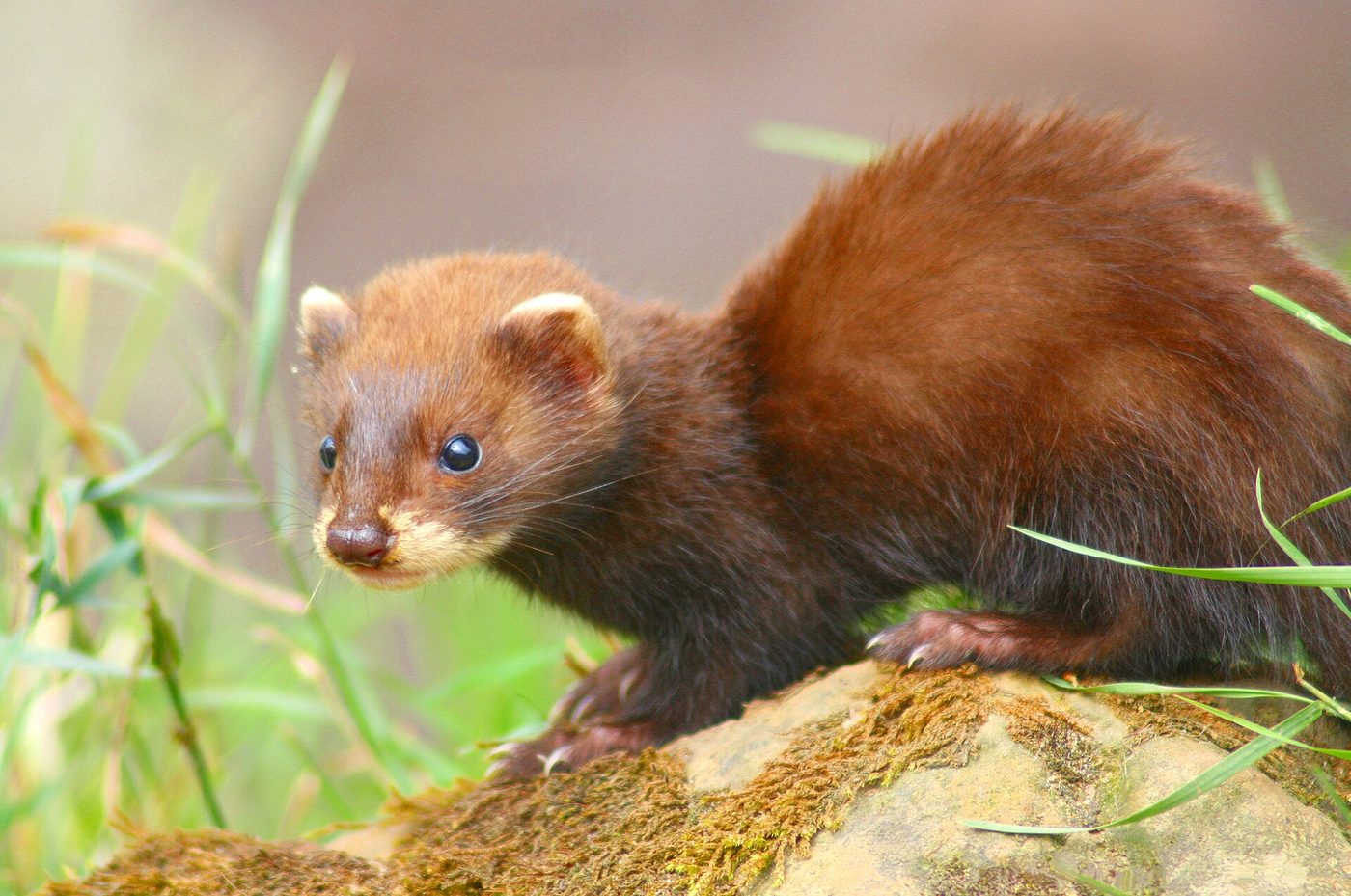
The European polecat is a small nocturnal mustelid with a dark brown coat and a distinctive dark facial mask, the wild ancestor of the domestic ferret.
Characteristics
Temperament
Nocturnal, solitary, shy
Diet
Carnivore: rodents, amphibians, birds and eggs
Description
The European polecat is a small carnivore of the mustelid family, with a long, supple body that is stockier and more sturdily built than that of related species. Its coat is a dark, almost blackish brown, with a paler undercoat showing through on the flanks and a typical dark mask around the eyes. Its name comes from the ability, shared by many mustelids, to release a pungent secretion from its anal glands, used to mark territory and as a defence.
Habitat and distribution
It is found across much of Europe and in parts of North Africa. It favours edge habitats: open woodland, hedgerows, riverbanks, farmland and the surroundings of villages. It often frequents barns and outbuildings, where it finds shelter and prey.
Behaviour
It is a mainly nocturnal and solitary animal, and an excellent hunter. It feeds chiefly on small mammals, amphibians, birds and eggs, with a particular fondness for toads and frogs. It digs burrows or takes over those abandoned by other animals.
Did you know?
The European polecat is the wild ancestor of the ferret, domesticated since antiquity to hunt rabbits in their burrows. In the wild it can hybridise with the European mink and with feral ferrets.
Conservation
Classed as least concern, it nonetheless remains vulnerable to habitat loss, road traffic and direct persecution. In some regions populations are declining and are closely monitored.
Pros
- Useful predator of rodents and surplus amphibians
- Highly adaptable to rural landscapes
- Wild ancestor of the domestic ferret
Cons
- Releases a very unpleasant-smelling secretion
- A wild animal, unsuited to domestic life
- Threatened by road traffic and habitat loss