Photo: Rabensteiner · Public domain
European water vole
Arvicola amphibius
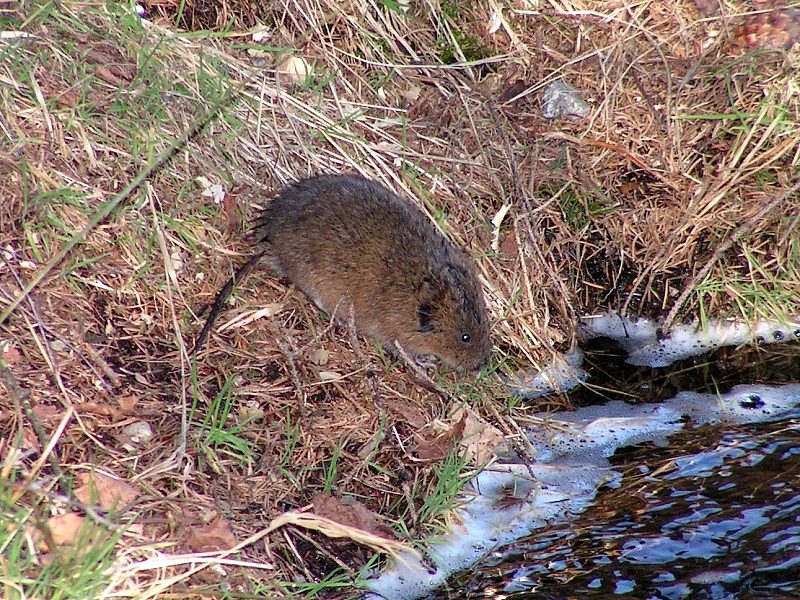
The European water vole is a semi-aquatic rodent with a round muzzle and dense brown fur, often mistaken for a rat but unmistakable along waterways.
Characteristics
Temperament
Semi-aquatic, shy, industrious
Diet
Herbivore: grasses, roots, shoots and aquatic plants
Description
The European water vole, also called the water rat, is one of the largest of the vole rodents. Unlike a true rat, it has a rounded muzzle, a chubby face, small ears hidden in the fur and a relatively short, hair-covered tail. Its coat is a warm dark brown, dense and velvety. Its paws and ears are also furred, an adaptation to aquatic life.
Habitat and distribution
It is widespread across much of Europe and Asia. The aquatic form lives along rivers, streams, canals and ponds with well-vegetated banks, where it digs burrows into the shore. There are also more terrestrial, burrowing populations that live in meadows and mountain pastures, digging extensive networks of tunnels.
Behaviour
It is a herbivore, feeding on grasses, roots, shoots and aquatic plants. It swims and dives nimbly, and at the slightest danger plops into the water with a characteristic splash. It digs burrows with entrances underwater or on the banks. It is short-lived and highly productive, with several litters a year.
Did you know?
Despite its common name, it is not a rat: it belongs to the voles, related to field mice. In terrestrial populations it can damage agriculture by gnawing roots. It is also an important prey for many predators, from birds of prey to mustelids.
Conservation
It is classed as least concern globally, but in some regions, such as the United Kingdom, it has suffered sharp declines due to habitat loss and predation by the introduced American mink.
Pros
- Excellent swimmer and digger
- Important prey for many predators
- Indicator of waterways with healthy banks
Cons
- Terrestrial populations can damage crops
- Short life and strong predation pressure
- Declining in some regions from habitat loss and American mink