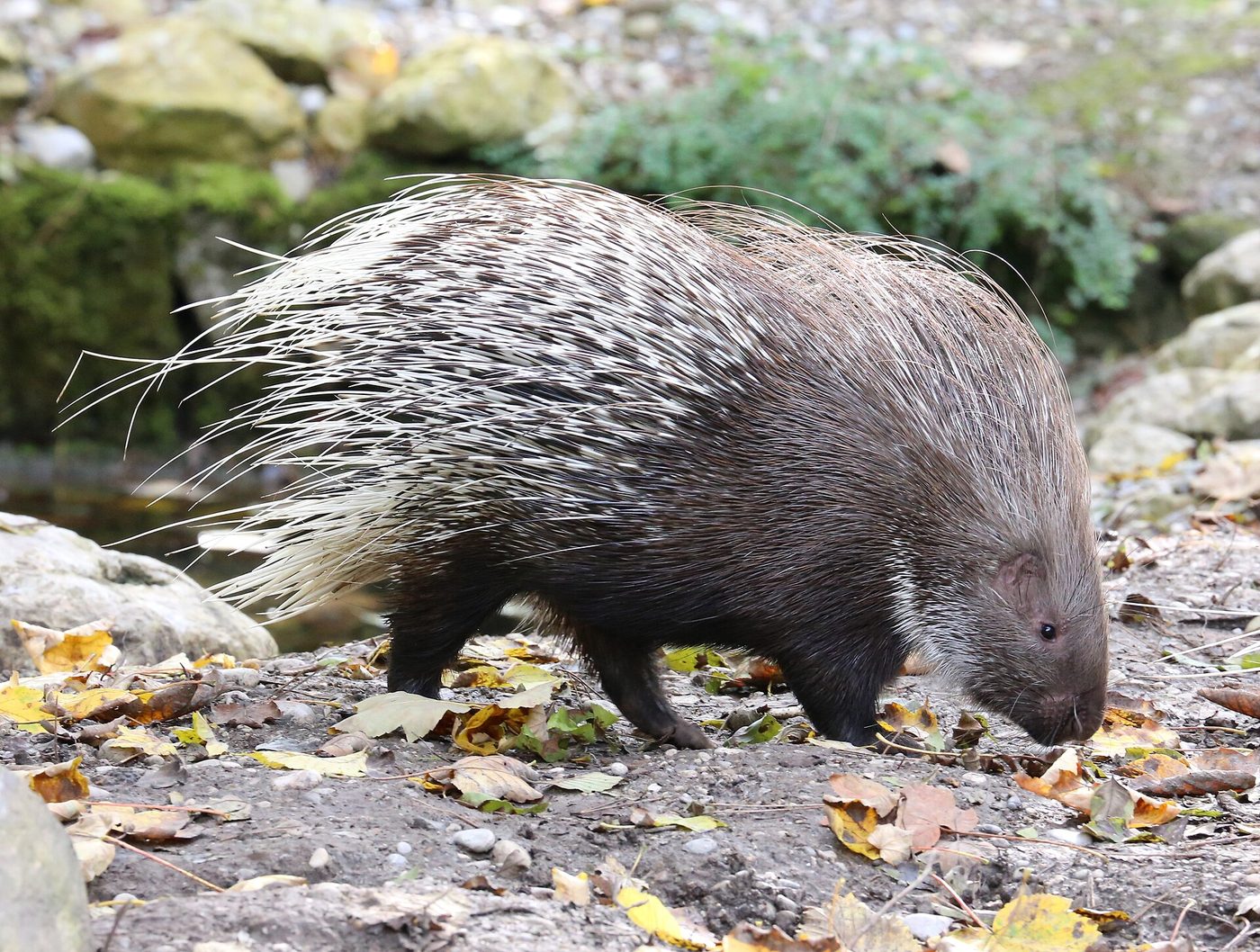
Photo: Rufus46 · CC BY-SA 3.0
Indian crested porcupine
Hystrix indica
The Indian crested porcupine is a large nocturnal rodent of southern Asia, protected by long black-and-white quills it raises when threatened.
Characteristics
Temperament
Nocturnal, shy, calm unless threatened
Diet
Herbivorous: roots, tubers, bulbs, fruit and bark
The rodent armoured with quills
The Indian crested porcupine is one of the largest Old World rodents, with a stocky body 60–80 cm long and a weight that can exceed 15 kilograms. Its most obvious feature is the long quills, actually modified, hardened hairs banded black and white, covering the back and tail. On the head and neck it bears a crest of erect bristles. The tail quills are hollow and, when shaken, produce a characteristic warning rattle.
Habitat and range
It lives across much of southern Asia and the Middle East, from India and Sri Lanka to Iran, Turkey and the Arabian Peninsula. It is a very adaptable species, found in mountains, grasslands, forests and even farmland and outskirts.
Behaviour and diet
It is a mainly nocturnal animal that shelters by day in burrows dug in the ground or in rock crevices. It is herbivorous, feeding on roots, tubers, bulbs, fallen fruit and bark, also gnawing bones to supplement minerals. When threatened it does not throw its quills — that is a myth — but raises them, turns its back to the aggressor and, if needed, reverses rapidly to drive them into the predator.
Notable facts
The quills detach easily and stay lodged in the aggressor, potentially causing serious wounds. Even large predators such as leopards and tigers can be injured or even killed by a well-defended porcupine. The quills regrow with moulting.
Conservation
The species is listed as Least Concern by the IUCN and remains widespread. Locally it is persecuted for damaging crops, and in some regions it is hunted for meat and quills.
Pros
- Spectacular defence with black-and-white quills
- Very adaptable to different habitats
- Long-lived, can exceed 15 years
Cons
- Can damage crops
- Lodged quills cause serious wounds to predators