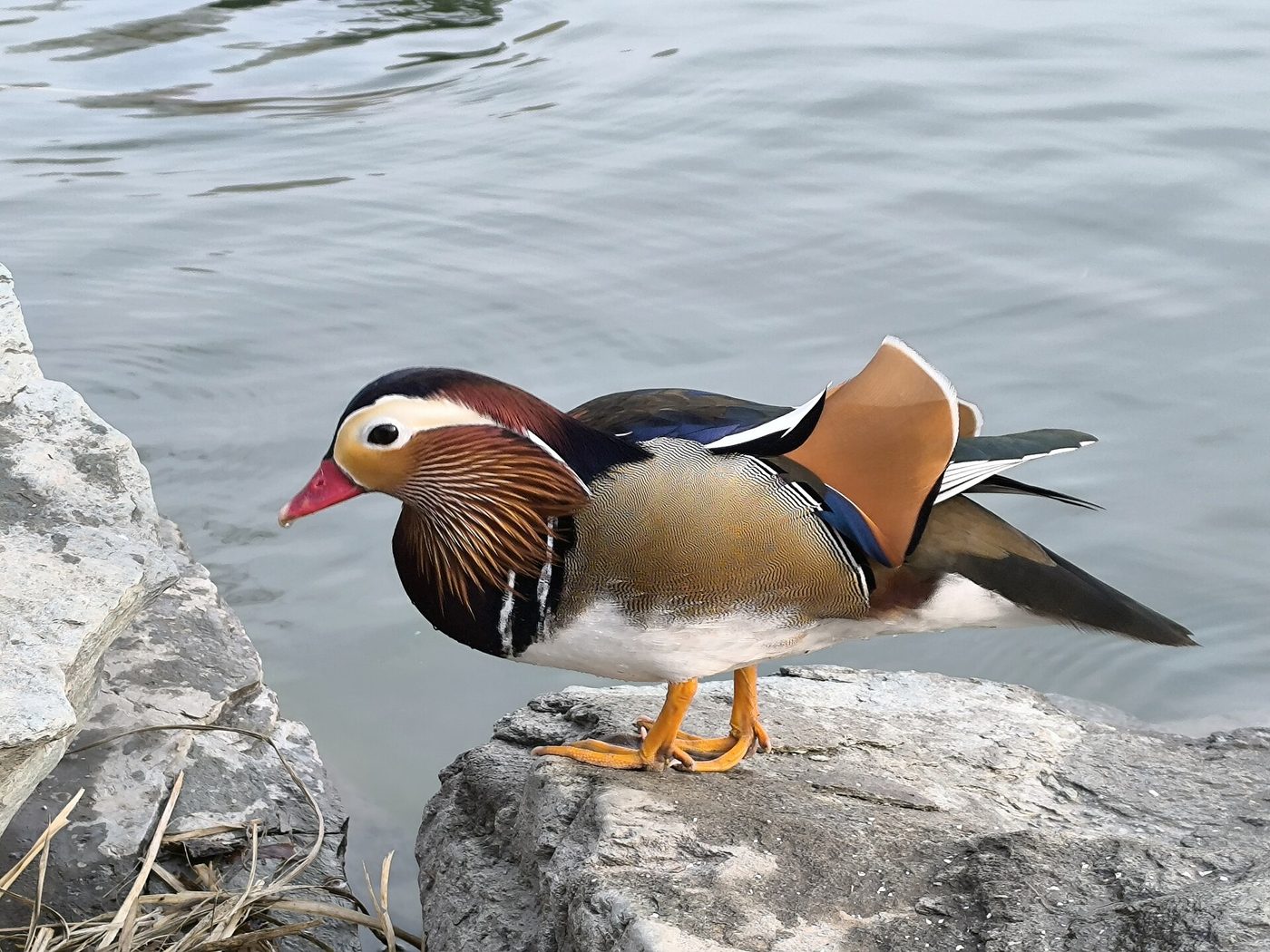
Photo: 星外之神 · CC BY-SA 4.0
Mandarin duck
Aix galericulata
With its spectacular, vividly coloured plumage, the male mandarin duck is considered one of the most beautiful ducks in the world and a symbol of love.
Characteristics
Temperament
Shy, elegant, tied to quiet waters and woodland
Diet
Omnivore: seeds, acorns, aquatic plants, insects
A duck of spectacular colours
The mandarin duck is a small waterbird famous for the extraordinary beauty of the male. In the breeding season, the male displays an unmistakable plumage: orange 'whisker' cheeks, a crest on the head with green and purple sheens, a purple breast and, above all, two showy orange 'sails' raised on its back, formed by modified feathers. The female, by contrast, has sober colours, with grey-brown tones and an elegant pattern around the eye, a camouflaged livery perfect for brooding away from prying eyes.
Habitat and distribution
Native to East Asia, in particular China, Japan and Korea, the mandarin duck frequents small lakes, slow rivers and ponds surrounded by woodland. It is in fact tied to trees more than many other ducks: it nests in hollows in trunks, even at considerable heights above the ground. Populations introduced by humans have also become established in some parts of Europe, where they now breed in the wild.
Behaviour
It is a rather shy duck, fond of quiet stretches of water fringed with vegetation. It feeds on seeds, acorns, aquatic plants, insects and small invertebrates, with a diet that varies with the season. A surprising moment is that of the newly hatched young: to reach the water, the ducklings bravely leap from the nest set high in the tree, gliding unharmed to the ground thanks to their very light weight.
Curiosities
In China and Japan the mandarin duck has for centuries been a symbol of love, fidelity and marital happiness, as it was believed that pairs stayed together. For this reason its image often recurs in Eastern art and is traditionally associated with good wishes for newlyweds.
Conservation
The mandarin duck is classified as a species of least concern, with widely distributed populations. Locally it may suffer from the loss of the wooded and wetland habitats it needs to nest. Protecting wooded wetlands remains important to ensure it has environments suitable for breeding.
Pros
- Male plumage among the most beautiful in the world
- Nests in trees, an unusual behaviour
- Wide, unthreatened populations
Cons
- The male loses its vivid colours out of season
- Sensitive to the loss of woodland and wetlands
- Shy and not always easy to approach