Photo: Badzil · CC BY-SA 3.0
Moose
Alces alces
The largest of the deer, with its huge palmate antlers and long legs, the moose dominates the forests and swamps of the north with unexpected elegance.
Characteristics
Temperament
Mostly solitary and shy, unlike other deer. Placid but potentially dangerous if disturbed or defending its young; males are aggressive in the rut.
Diet
Herbivore: shoots, leaves, bark and especially aquatic vegetation, reached even by diving.
The giant of the boreal forests
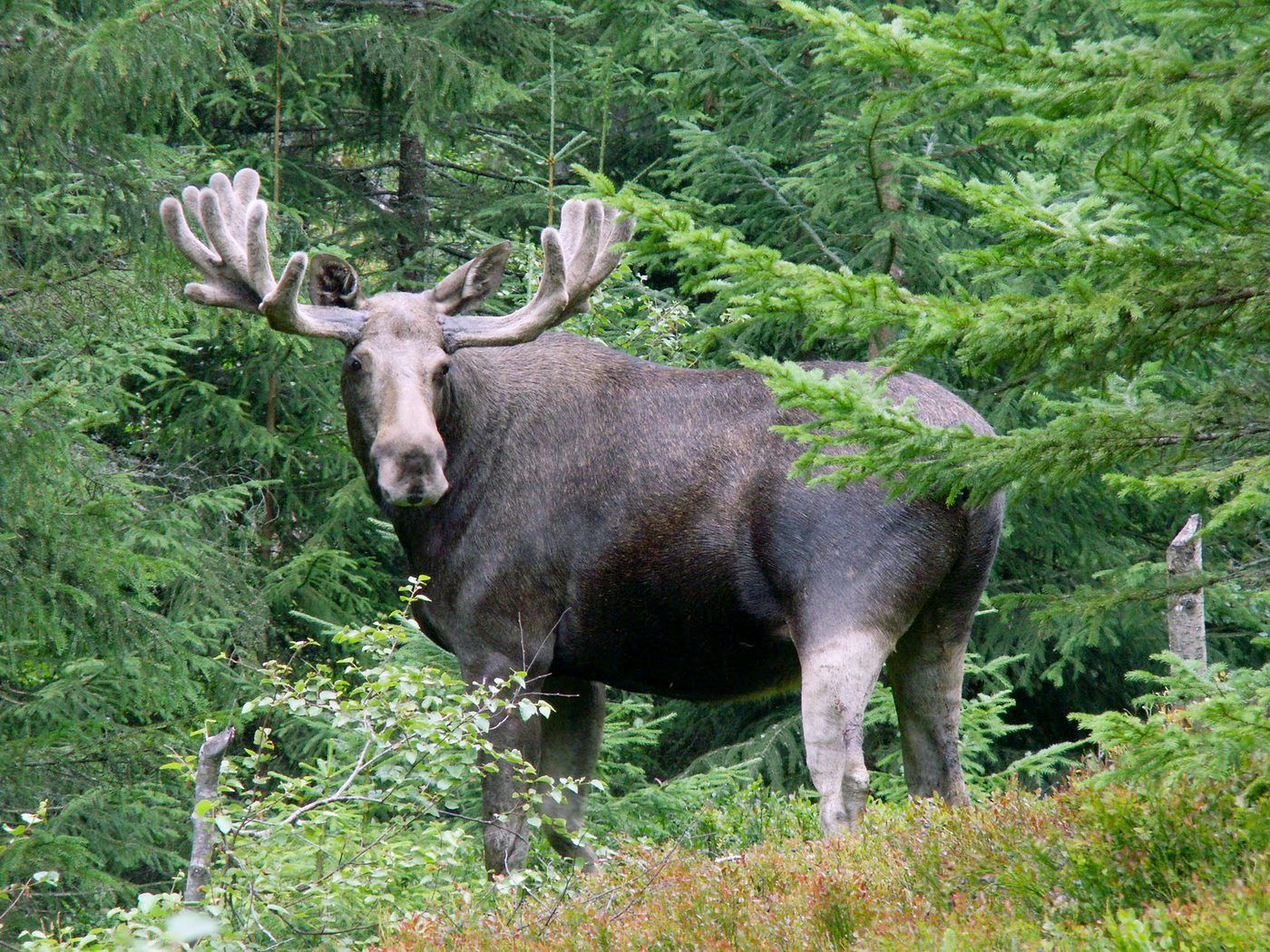
The moose is the largest member of the deer family. It has an imposing build, high shoulders, a long, drooping muzzle and very long legs that let it move through deep snow and boggy ground. Beneath its throat hangs a characteristic flap of skin and fur, called a 'bell'. But its most spectacular feature is the males' antlers: huge, shovel-shaped, which are shed and regrown every year, reaching some of the largest sizes in the animal kingdom.
Where it lives
The moose inhabits the boreal forests and wetlands of the northern hemisphere, from Northern Europe and Scandinavia to Siberia and North America. It favours cold, water-rich environments: lakes, rivers, swamps and woods. Cold does not trouble it; on the contrary, it suffers from heat, and often seeks relief in water.
A swimmer and a water herbivore
Despite its bulk, the moose is an excellent swimmer, able to cross lakes and even dive to reach the aquatic plants on the bottom. It feeds on shoots, leaves, bark and especially aquatic vegetation, of which it is fond during the summer. Its long legs and relatively short neck make it better suited to browsing shrubs and tall plants than short grass.
Behaviour
The moose is mostly solitary, unlike many other deer that live in herds. It is generally shy, but during the mating season males become aggressive and compete for females. A female defending her calf may also charge: despite its placid appearance, a disturbed moose is an animal not to be trifled with.
Conservation
The moose is classified as least concern and its populations are large and stable across much of its range. In some regions, however, climate change, diseases and parasites favoured by milder winters are putting some local populations under pressure. It remains, nonetheless, one of the great symbols of the northern wilderness.