Photo: patricia pierce · CC BY 2.0
Northern cardinal
Cardinalis cardinalis
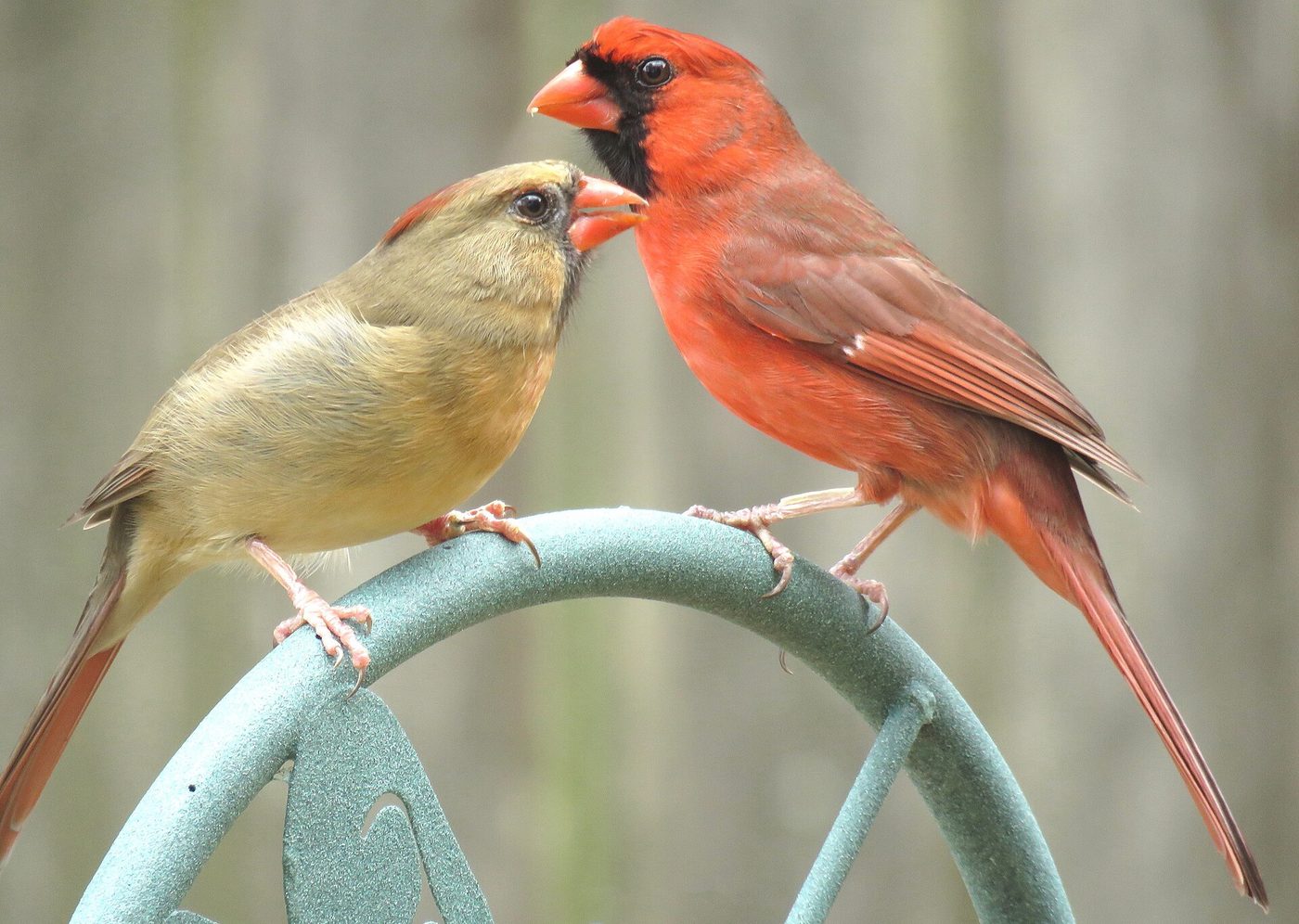
With the male's scarlet plumage, showy crest and melodious song, the northern cardinal is one of the most beloved and recognisable birds of North America.
Characteristics
Temperament
Songful, territorial, forms stable pairs
Diet
Granivore: seeds, with fruit, berries and insects
A bird of unmistakable red
The northern cardinal is a medium-sized songbird, famous above all for the male, whose plumage is a bright scarlet red over the whole body, with a small black mask around the beak and throat. On the head stands a showy pointed crest, which the bird can raise and lower. The beak, sturdy and conical, is a vivid orange, suited to cracking seeds. The female is more discreet, with a brownish-olive plumage marked by reddish touches on the wings, tail and crest.
Habitat and distribution
It lives across much of eastern North America, from south-eastern Canada through the eastern United States to Mexico, Belize and Guatemala. It frequents woodlands, gardens, shrublands and wetlands, and has adapted well to suburban environments, so much so that it is a regular guest at garden feeders. It has also been introduced to some locations such as Hawaii and Bermuda.
Song and behaviour
The northern cardinal is a tireless singer: both sexes sing, which is uncommon among birds, with a series of clear, melodious whistles. The song serves to defend the territory and to maintain the pair bond. It is a rather sedentary bird, which does not undertake long migrations, and forms stable pairs that remain together for much of the year.
Feeding
Its diet is based mainly on seeds and grains, which the sturdy beak is perfectly able to open, but it also includes fruit, berries and insects, especially in the breeding season, when the young need protein. At feeders it is particularly attracted to sunflower seeds.
Curiosities and conservation
The northern cardinal is so beloved that it is the emblematic bird of seven states of the United States. It is classified as a species of least concern: its populations are numerous, stable and in some areas even expanding, favoured by the presence of gardens and feeders.
Pros
- Unmistakable scarlet plumage
- Melodious song from both male and female
- Emblematic bird of seven US states
- Numerous, stable populations
Cons
- Very conspicuous males exposed to predators
- Depends on shrubs and hedges for nesting
- May compete at feeders with other species