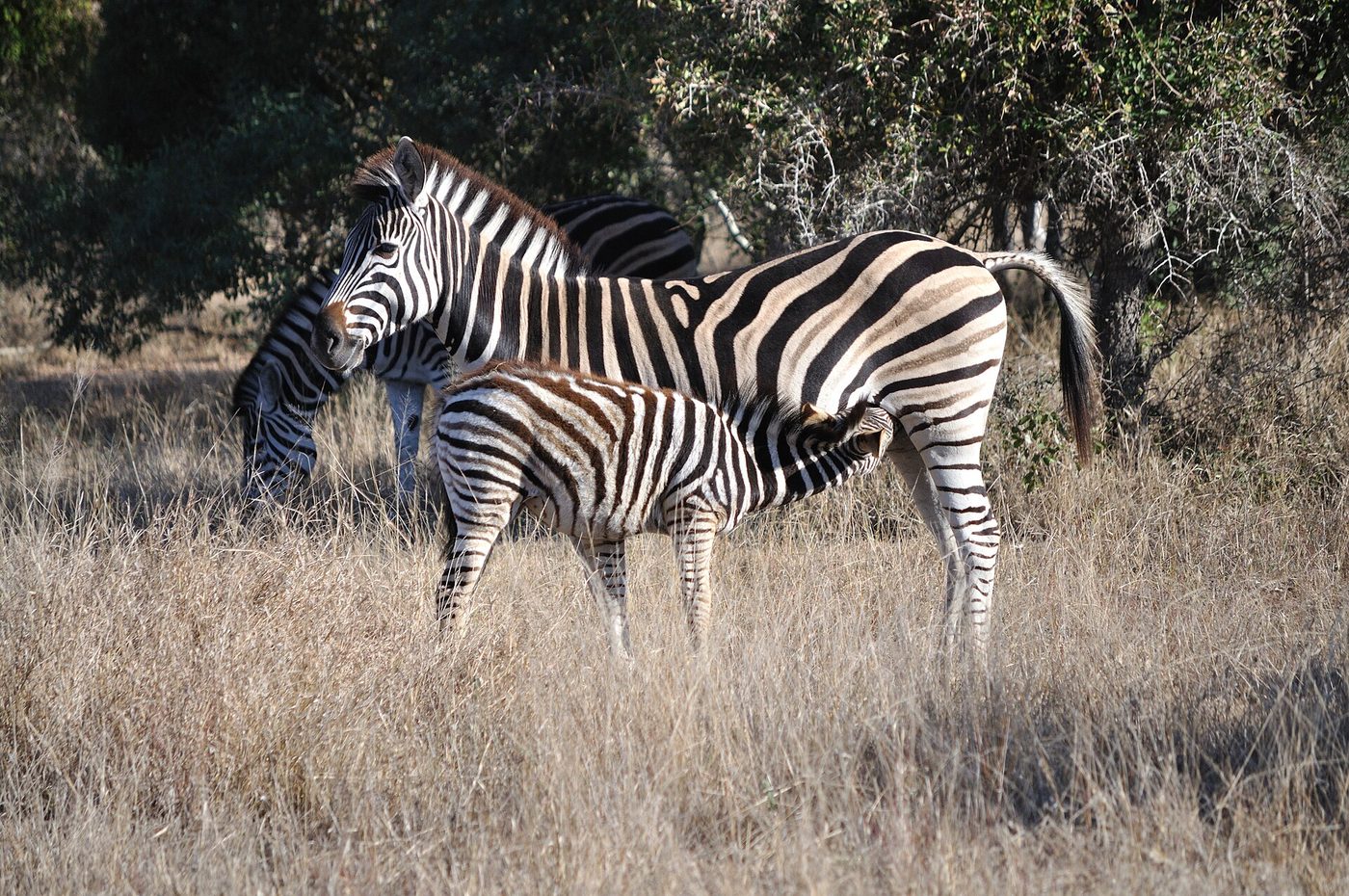
Plains zebra
Equus quagga
With its unmistakable black-and-white stripes, the plains zebra is Africa's most widespread wild horse, a protagonist of the great savanna migrations.
Characteristics
Temperament
Social and watchful, living in family groups and large herds. A peaceful herbivore but able to defend itself with powerful kicks; in some regions it takes part in seasonal migrations.
Diet
Herbivore: it feeds mainly on the grass of the African savannas and grasslands.
A striped horse
The plains zebra is the most widespread of the zebras and one of the most recognisable animals in the world. It belongs to the same family as horses and donkeys, but is distinguished by its famous black-and-white striped coat. Every zebra has a unique stripe pattern, like a fingerprint: no two individuals share the same design. It has a sturdy build, an erect mane and a tufted tail, and is built for running and for life in the great open plains.
Why the stripes?
The function of the stripes has long fascinated scholars and has no single explanation. Among the most accepted hypotheses are the confusion of predators when zebras move in a group, which makes it hard to single out one animal, and a disruptive effect on biting insects such as horseflies, which seem to avoid striped surfaces. The stripes probably serve several functions at once.
Where it lives
It lives in the savannas and grasslands of eastern and southern Africa. It is a social animal that forms small family groups, often gathered into large herds, sometimes together with other herbivores such as wildebeest. In some regions zebras take part in the great seasonal migrations, following the rains and fresh grazing across immense expanses.
Social life and defence
The zebra is a herbivore feeding mainly on grass. It lives in groups led by a stallion who protects the females and young. When threatened, it can defend itself with powerful kicks of its hind legs, able to deter even a predator. Group life, with many watchful eyes, is its main protection against lions and hyenas.
Conservation
The plains zebra is classified as near threatened. Although it remains relatively common, its populations are declining because of hunting, habitat loss and competition with livestock. Its conservation is tied to the protection of the great open spaces of the African savanna and of the migration routes.