Photo: Ajit Hota · CC BY-SA 4.0
Red panda
Ailurus fulgens
Small, reddish and with a long ringed tail, the red panda lives among the bamboo forests of the Himalayas: a shy and fascinating animal, unique of its kind.
Characteristics
Temperament
Shy, solitary and arboreal, active at dawn and dusk. Calm and agile in the trees; it sleeps much of the day curled up with its tail around its body.
Diet
Mostly herbivore: chiefly bamboo (tender leaves), supplemented with fruit, acorns, roots, eggs and occasionally small animals.
A unique animal
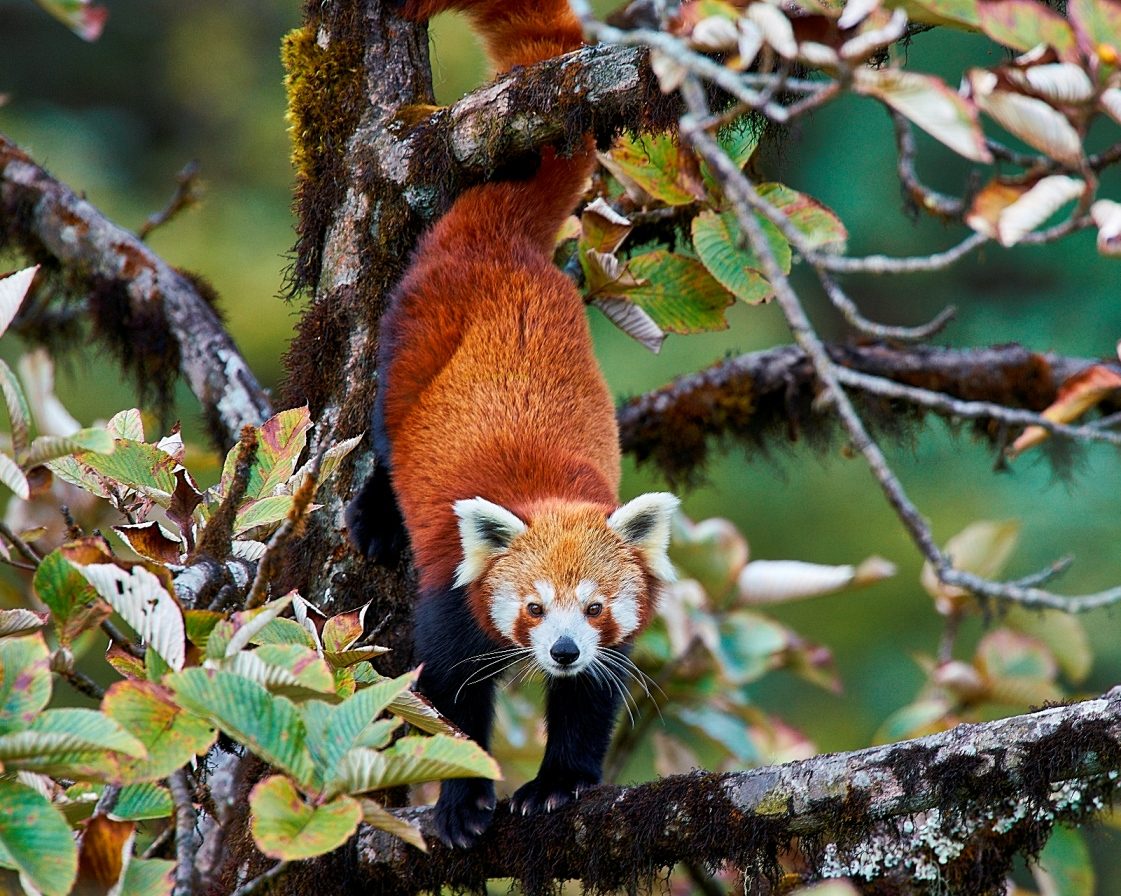
The red panda is a small mammal, a little larger than a domestic cat, with a delightful and unmistakable appearance. It has a thick reddish coat, a white face with characteristic dark 'tear' marks running from the eyes, and a long bushy tail ringed with light and dark bands, which it uses as a blanket to warm itself and as a balance when it climbs. It lives in the temperate mountain forests of the Himalayas and south-western China, between 2,000 and 4,000 metres of altitude.
Neither panda nor raccoon
Although its name and diet bring it close to the giant panda, the red panda is not related to it, nor is it a raccoon or a bear. It is the only living representative of its family, a branch of its own on the evolutionary tree. The name 'panda' in fact comes from it: it was discovered and named before the giant panda, which later took the name.
A bamboo-based life
Like the giant panda, the red panda feeds largely on bamboo, particularly the tender leaves. Bamboo, however, is a food poor in nutrients and hard to digest, so the animal must eat large quantities of it and conserve energy. It supplements its diet with fruit, acorns, roots, eggs and occasionally small animals. It has a 'false thumb', an elongated wrist bone that helps it grasp bamboo shoots.
Shy habits
The red panda is a mostly solitary, arboreal animal, active especially at dawn and dusk. It spends much of the day sleeping among the branches, often curled up with its tail around its body. It is agile and at ease in the trees, where it finds food and shelter from predators.
Conservation
The red panda is classified as an endangered species. Its populations are declining because of the destruction and fragmentation of bamboo forests, poaching and illegal trade. Its conservation depends on the protection of Himalayan mountain habitats, increasingly under threat. It has become a symbol of the conservation of these fragile high-altitude forests.