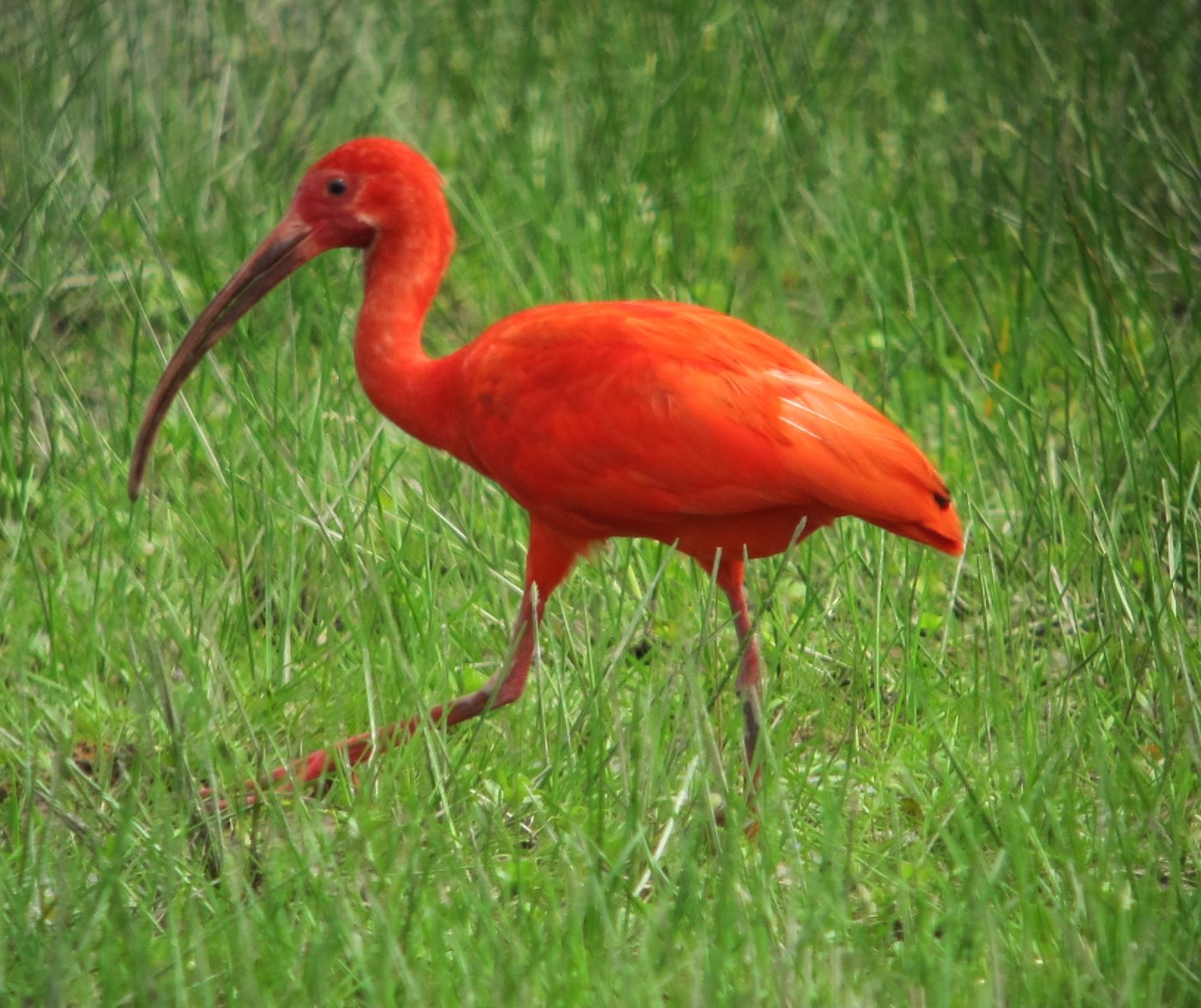
Scarlet ibis
Eudocimus ruber
The scarlet ibis is a fiery red bird of tropical South American coasts, one of the most vividly coloured birds in the world.
Characteristics
Temperament
Gregarious and social; lives and nests in large flocks.
Diet
Carnivorous: crustaceans, molluscs, aquatic insects and small fish.
A bird of fiery red
The scarlet ibis (Eudocimus ruber) is one of the most spectacular birds on the planet, unmistakable for its brilliant scarlet plumage, with only the wingtips tinged black. In form it resembles other ibises — a slender body, long legs and the characteristic long, downcurved bill — but its colour sets it apart from every other species. The young, by contrast, hatch grey and brown, taking on the red plumage only as they mature.
Habitat and range
It lives along the tropical coasts of northern South America and on the Caribbean islands, frequenting mangroves, estuaries, lagoons and coastal marshes. It moves in large flocks and nests in noisy colonies in trees, often alongside other wading birds.
Behaviour and diet
It feeds by probing its curved bill into mud and shallow water in search of crustaceans, molluscs, aquatic insects and small fish. The crustacean-rich diet is the source of its colour: the carotenoid pigments in shrimp accumulate in its feathers, turning them red. In captivity, without this diet, the colour fades towards pink or orange.
Did you know?
It is one of the two national birds of Trinidad and Tobago and appears on its coat of arms. Its Tupi–Guarani name, guará, has become part of the names of several coastal places in Brazil.
Conservation
The IUCN lists it as Least Concern. It is still widespread, but mangrove destruction, poaching and the collection of eggs and chicks are local pressures in some areas.
Pros
- Unmistakable brilliant scarlet plumage
- National bird of Trinidad and Tobago
- Least Concern, still widespread
Cons
- Depends on mangroves and wetlands
- Colour fades without its natural diet
- Poaching and egg collection in some areas