Photo: Wikimedia Commons · CC BY-SA 3.0
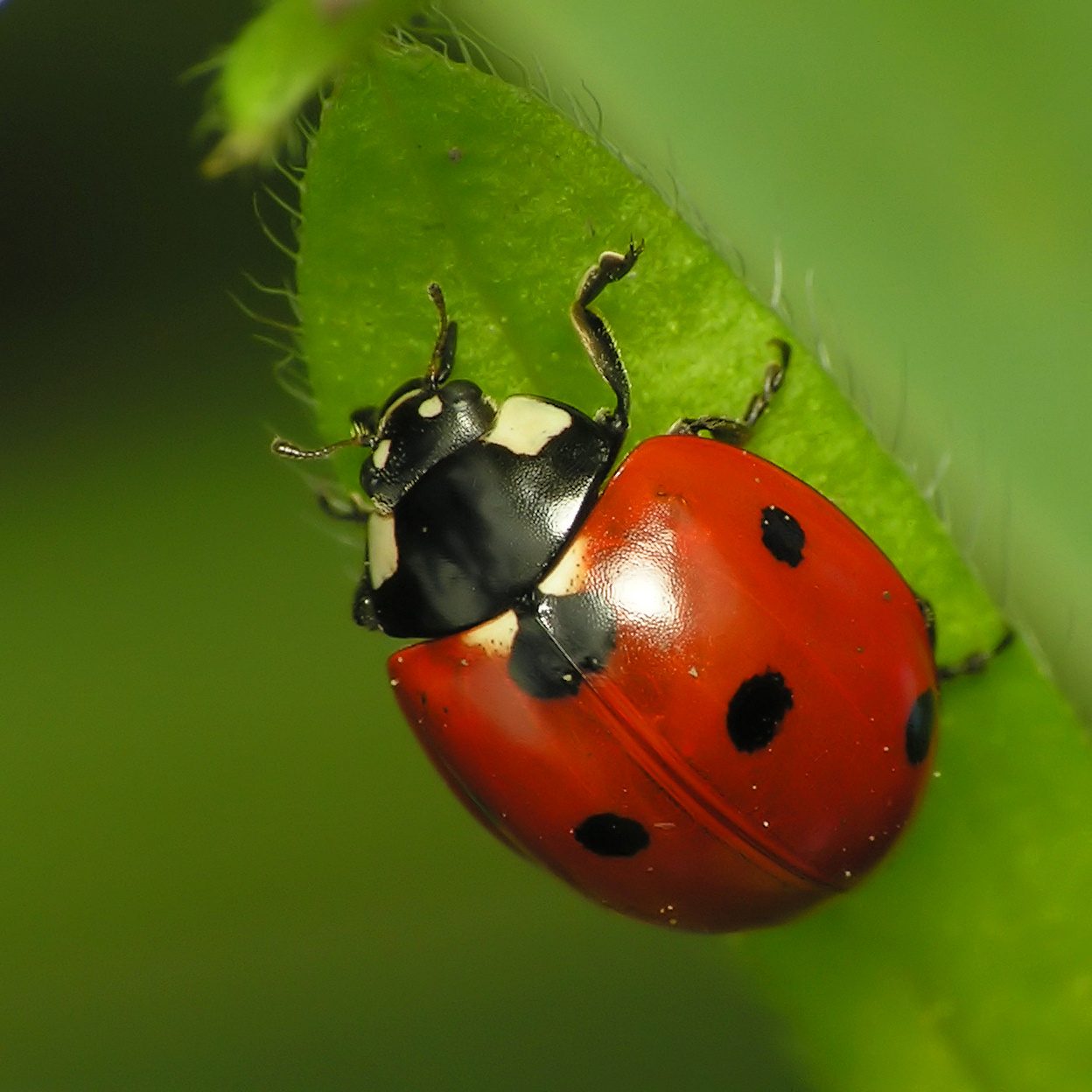
Seven-spot ladybird
Coccinella septempunctata
Red with seven black spots, the ladybird is perhaps Europe's most beloved insect and, behind its charming looks, a voracious hunter of aphids.
Characteristics
Temperament
A day-active beetle and voracious predator of aphids. Its red colour warns predators of its unpleasantness; when disturbed it releases a bitter fluid as a defence.
Diet
Predator: both adults and larvae feed voraciously on aphids and other small insects harmful to plants.
A small, lucky beetle
The seven-spot ladybird is one of the best-known and best-loved insects of Europe, often associated with good luck in many cultures. Its body is rounded and domed, covered by elytra of a bright red on which stand out seven black spots, three on each side plus a central one straddling the join. Beneath the glossy elytra hide the membranous wings, carefully folded, which the insect spreads to fly.
The bright red colour is no accident: it is a warning signal telling predators of the insect's unpleasantness, for it can release a bitter-tasting fluid if disturbed.
A hunter of aphids
Behind its charming looks hides a highly efficient predator. Both the adults and the larvae of the ladybird feed voraciously on aphids, the small insects that infest plants and suck their sap. A single ladybird can devour hundreds of aphids over its life, and for this it is regarded as one of the most valuable natural allies of farmers and gardeners, a true living pesticide.
Life cycle
The female lays her eggs, yellow and elongated, right beside aphid colonies, so that the newly hatched larvae find food in plenty. The larvae, elongated and very different in appearance from the adult, are tireless hunters. After several moults they turn into a pupa and finally into the adult ladybird. In temperate climates the adults spend the winter in groups, sheltered under leaves, bark or in crevices, before becoming active again in spring.
Curiosities and conservation
The number of spots does not indicate age, as a widespread folk belief has it, but is a feature of the species. The seven-spot ladybird is common and widespread, but in some regions it is put under pressure by competition with introduced exotic species. Encouraging environments rich in plants and aphids, avoiding pesticides, helps maintain its populations and make use of its valuable natural role.